Skip to content

Category: English

Chris Busby and “The Tall Tale Of Ten Tons Uranium Gone Missing”

Professor Chris Busby is a man that has made himself somewhat of a career in being the golden boy of nuclear opponents, saying just the things they want/need to hear. There is only one problem with this: he doesn’t have a foot to stand on when it comes to his tall tales about the evils of nuclear power. Previously we have exposed his claims that the Chernobyl disaster supposedly caused an increase in breast cancer in Sweden. This turned out to be an unfounded conclusion, based on frivolous interpretation of data along with some outright cherry-picking and willful suppression of data that didn’t fit the claim.

In the case of The Tall Tale Of Ten Tons Uranium Gone Missing, Busby and his colleague Cecily Collingridge have issued a report where they claim that there has been a leak of enriched uranium from the British nuclear power plants at Hinkley Point in the order of about 10 000 kg. We analyzed the data which he used to make his claim, and took the same steps as he did, following his chain of reasoning from data to conclusion. The result is hardly flattering for the Busby and Collingridge, because the claims they make hinge on…

– Unsupported postulates

– Sparse and highly uncertain data

– Graph fitting done on this data, while ingoring uncertainties

– Low resolution geological surveys

– Misreading of said surveys

– Ignoring local variations in said surveys

– Ignoring missing indicators that must be present if their claim was true

All over the place...
When you can fit any random graph of the data, in this case an elipsoid, something is not right.

The full analysis can be found in our forum. But I’ll just cut right to the chase and ask the obvious question: how would 10 tonnes(!) of uranium go missing without anyone noticing? And more important: why didn’t anything else go missing? The data that Busby uses to make his claim shows barely detectable levels of fission products, such as Cobalt-60 or Cesium-137. Considering that uranium is a lot less mobile than these products, if uranium goes missing but not the fission products, there cannot be a leak in the reactors because any such leak would have seen more fission products escape than uranium.

This leaves only one path as to how 10 tonnes of uranium could escape into the environment: when reactor fuel arrived fresh at the plants, someone took some fuel elements aside, stripped them of their cladding, ground them to dust and blew them out over the surrounding areas. Alternatively someone made a bonfire with them. And all of it happened without anyone noticing.

Since this is clearly not a reasonable explanation, we must conclude that Busby and Collingridge are wrong: there has not been a leak of 10 tonnes of uranium from Hinkley Point. The data they rely on does not support the claim, and it is only through their frivolous interpretation of the data, misreading some of it, and making unsupported assumptions that they arrive at the claim.

This begs a final question: claims have been made that there are numerous health problems around Hinkley Point, such as an increased incidence of childhood leukaemia. If there are no leaks from Hinkley Point, how would this be explained? Well… to find that answer, maybe you should go ask the one person making the claims: a certain professor Chris Busby.

/Michael Karnerfors and Mattias Lantz – members of Nuclear Power Yes Please

13 Comments

Say Yes To Fourth Generation Nuclear Power

By Michael Karnerfors, previsouly published at Currents, the Swedish-American Chambers of Commerse magazine

Today’s policies on nuclear energy dictate that we shall put fuel that is unspent – 95 percent of it – in an expensive hole in the ground. There are better ways. Fourth generation nuclear power helps save us from our own foolish plans.

Picture this…

You are on a family car trip. You need gas, so you stop at a station and fill up twenty gallons of fuel in your car. You drive ten-fifteen miles down the road, using up one third of a gallon of gas, and then you stop. To the puzzlement of your family you siphon all of the unused gas out of the tank. Two thirds of a gallon you pour out on the road and set fire to. The remaining nineteen gallons you give back to a gas station. Your family asks you: “Why are you doing that?!”. You reply to them: “Oh that gas will be sent back to the oil well and put it into the ground again, not to be used”

By now your family will call for an ambulance and have you committed on grounds of insanity, because such behavior is without doubt utterly ludicrous.

But what if I told you that this is how most counties in the world are managing their stock of nuclear fuel, including the US?

In the middle 1980’s most of the nuclear power plants that are in operation in the world today had been built. They are of the so called second generation nuclear power. After thirty years in operation the results from these plants are quite excellent. Apart from Three Mile Island (TMI) accident – which incidentally didn’t hurt anyone – none of the pressure and boiler water reactors of West or East Asia have had a major accident. They are sturdy and reliable designs.

They do have a few drawbacks though:

  • Only 5 percent of the energy in the fuel is extracted.
  • Of the energy extracted from the fuel, two thirds is washed away as waste heat.
  • When the fuel is taken out from the reactor, it is highly radioactive, necessitating storing it for 100,000 to 1 million years while it decays.

Today tens of thousands of tons of spent nuclear fuel are sitting in casks or storage pools around the world, waiting for us to come up with a solution for it. For countries that do not allow reprocessing, there has only been one solution seriously proposed so far: deep geological repositories. You build caves deep into stable bedrock, and stuff the nuclear fuel there. Seen from a safety perspective that is a good idea because we know from the natural nuclear reactor site in Oklo, Gabon, Africa, that such repositories are extremely safe. A geological repository will keep spent nuclear fuel locked inside for literally billions of years. The only major worry is human intrusion.

Seen from a resource and sustainable development standpoint though, this is an awful(!) idea. 95 percent of the energy in spent nuclear fuel is unused. Why would we want to put that in the ground for hundreds of thousands of years when we can use it to get clean, safe energy instead?

Fourth generation nuclear power is an umbrella term for emerging reactors designs. Some of them have existed as experimental plants for decades. Countries like the U.S., Russia, France and India have been working on fourth generation for quite some time. The advantages of this new nuclear power are substantial: 

  • Fourth generation reactors use what we call “waste” today as fuel and extract twenty times the energy, used nearly twice as effective.
  • The storage time for the nuclear waste goes down to approximately 500-1,000 years instead of 1,000,000 years.
  • They can use plutonium from dismantled nuclear weapons as fuel.

Two things have held fourth generation nuclear power back so far. First the negative attitudes towards nuclear power after TMI and Chernobyl. The second factor has been the fact that Uranium has been – and still is – dirt cheap considering the fantastic amounts of energy that is extracted from the material, even with the second generation reactors.

But today, when we are faced not only with the problem of nuclear waste but also the urgent need of phasing out fossil fuels, these accidents have in the grand perspective proven to be exceedingly rare and either harmless – like TMI – or not relevant to the issue of future nuclear power, because no one is building dangerous Soviet junk-reactors designed in the 1950’s anymore. Nuclear power is without doubt coming back.

While countries like the US and Sweden are mulling over how to get people to accept nuclear waste dumps in their neighborhoods, others – like Russia and South Korea – are moving forward aggressively in the field of new nuclear power. With the current rate of expansion China will be the world leader in a couple of decades; the country is breaking ground for ten(!) new nuclear reactors every year.

Until fusion power is commercially available, the question is what role the western world will take in the continuing history of nuclear power. Will we:

  • Stop the development of our own nuclear power and bury our nuclear fuel in the world’s most advanced and expensive garbage dumps, hoping no one touches it for a million years?
  • Move forward, develop new nuclear power and produce clean energy for hundreds of years while eliminating nuclear waste and nuclear weapons?

If the first option sounds good to you, I urge you to get a siphon and start draining your gas tank…

Michael Karnerfors, Lund, Sweden

The author is a Master of Science in Computer Science and Engineering, and co-founder of the independent network Nuclear Power Yes Please” (NPYP) which seeks to gather people who consider the issue of nuclear power too important to be squandered with junk arguments and outrageous claims aimed more to scare and terrify people rather than informing them on the issues for and against nuclear power.
2 Comments


Election gives no clear answer on nuclear power in Sweden

By Michael Karnerfors, 2010-09-20

After the election in Sweden september 19, 2010, the situation for the Swedish nuclear power remains uncertain. While the pro-nuclear Alliance coalition did take the biggest count, and the anti-nuclear redgreen leftist coalition fell flat on its face, neither coalition got majority which leaves the the xenophobic Sweden Democrats (sd) with tiebreaker seats in the Swedish riksdag (parliament).

For the past 30 years in Sweden, no permit for building nuclear power reactors has been given, because it has been prohibited by law. The center-right Alliance that won the last election in 2006 tore up that law in June this year… almost anyway: it’s not going away until the end of this year. The redgreen coalition, with the Green Party in it, promised they would rip up this decision and reinstate the law. For the most part it looked like a clean cut situation: if the Alliance wins, we get new nuclear power. If the redgreens wins, we get none.

Now when all the premilinary counts are in it turns out we landed on the knife’s edge: neither coalition got majority. The (sd) party are pro-nuclear, by all means, but the question is what the Alliance will do now.  Will they seek passive support from (sd), or will they – as has already been hinted – seek support from the greens and have that party move from their redgreen coalition just to keep (sd) out of the government? And if the greens – which are dogmaticly opposed to nuclear power – end up in the government, what happens then?! It’s completely impossible for them to go along with any pro-nuclear proposition, or they will split down the middle. On the other hand, three out of four parties in the Alliance are strongly pro nuclear and they went into this election that way, so they can’t back down either and suddenly say no to nuclear power again.

So… all in all: this election leaves us with no clear answers on the nuclear power in Sweden for now.

Comments closed

The Swedish ban on nuclear power lifted after 30 years


By Michael Karnerfors, 2010-06-17

By a narrow margin, after over 10 hours of debate (minus breaks), the Swedish parliament just made the decision to lift the 30 year old ban on giving permits for new nuclear reactors. While this is very uplifting, and certainly a big thaw in this deadlocked issue, it’s not over quite yet. We have an election coming…

4 Comments

We do not need nuclear power

By Michael Karnerfors, 2010-06-15

A common argument against nuclear power is this:

“We don’t actually need nuclear power, because we could potentially use other clean sources of energy”.

I am not going to argue against that particular statement, because it is true. We could potentially rid ourselves of nuclear power and have clean energy from other sources.

There are a few implications and practical matters that must be addressed though. So let’s take this kind of reasoning a few steps further. What other areas is this statement true for? What more could we potentially be without?

Not needed?
Do we actually need any of these?

2 Comments

On a lighter note: Money For Trolling

Credits to Mark Knopfler and Sting for this excellent song, 25 years and still going strong(er).

Everyone that has debated online has come across them: the trolls… the Phelps of forum debate… those that are living breathing proof of the Dunning-Kruger effect. And when it comes to haters of nuclear power, there certainy is alot of them!

They normally piss me off something immensely. But in two particular instances, I was inspired. I noticed that the trolls in question had lots of ads on their blogs where they did their inflammatory postings. And with that, a riff got stuck in my head.

So the next time you find yourself deadlocked against some troll that seems more impervious to logic, reasoning and science based fact than a vogon is to water, just hum this to yourself.

Enjoy. 🙂

You can find the music for listening on Spotify (requires client) or Grooveshark (web-based).

Money For Trolling (And The Clicks For Free)

Music and original lyrics: Money for Nothing – Mark Knopfler, Sting, 1984
Parody lyrics: Michael Karnerfors, 2010
License for music and original lyrics: Commercial – Vertigo Records (UK), Warner Bros. Records Inc. (US)
License for parody lyrics: Creative Commons 3.0 – Attribution, Share-Alike

I want my revenue…

Now look at them bloggers. That’s the way you do it.
You post some nonsense on the web with glee.
That ain’t working. That’s the way you do it.
Money for trolling and the clicks for free.

Now that ain’t working. That’s the way you do it.
Let me tell you. Them trolls ain’t dumb.
Maybe get a blister on your mousing finger.
Maybe get a blister on your thumb.

We got to post and do some more flaming.
Get TradeDoubler and some Google ads.
We got to click these ads and banners.
We got some mighty big trolls to feed.

That little spammer with the adverts for Viagra.
Yeah buddy that’s his own site.
That little spammer got his own web startup.
That little spammer he’s a millionaire.

We got to post and do some more flaming.
Get TradeDoubler and some Google ads.
We got to click these ads and banners.
We got some mighty big trolls to feed.

Ooh I click my…

Got to post and do some more flaming.
Get TradeDoubler and some Google ads.
We got to click these ads and banners.
Got some mighty big trolls to feed.

Look at him, look at…

I should’ve learned to post on WordPress.
I should’ve learned Blogspot too.
Look at that mama. She’s got it stickin’ in the webcam.
Man, we can have some.

And he’s up there. What’s that? A shocker website.
He’s banging some gorilla while he’s in a tree.
Oh that ain’t working. That’s the way you do it.
Get your money for trolling and the clicks for free.

We got to post and do some more flaming.
Get TradeDoubler and some Google ads.
We got to click these ads and banners.
We got some mighty big trolls to feed.

Listen here. Now…

That ain’t workin’. That’s the way you do it.
You post some nonsense on the web with glee.
That ain’t workin’. That’s the way you do it.
Money for trolling and the clicks for free.

Money for trolling
and the clicks for free.

Get your money for trolling
and the clicks for free.

Look at that, look at that.

I want my…
I want my…
I want my revenue.

I want my…
I want my…
I want my revenue.

1 Comment

Aiming for the climate change conference

UPDATE: Voting is now closed. Thank you all who did vote for us. We got 49 thumbs up and 10 thumbs down. Not too shabby. Now let’s aim for COP16. 🙂

Vote for us at COP 15.

Click here to go to the voting page.

At the time of writing, world leaders are gathering in Copenhagen for the United Nations Climate Change Conference.

YouTube, their owners Google, and the host of the conference, the Danish foreign ministry is allowing people to post questions to be voted for. On tuesday the 15’th, the most voted for questions will be asked to the world leaders.

Nuclear Power Yes Please has a question to ask too…

6 Comments

“Nuclear power is unsafe because it’s so safe”. Wait… what?!

By Michael Karnerfors, 2009-11-04
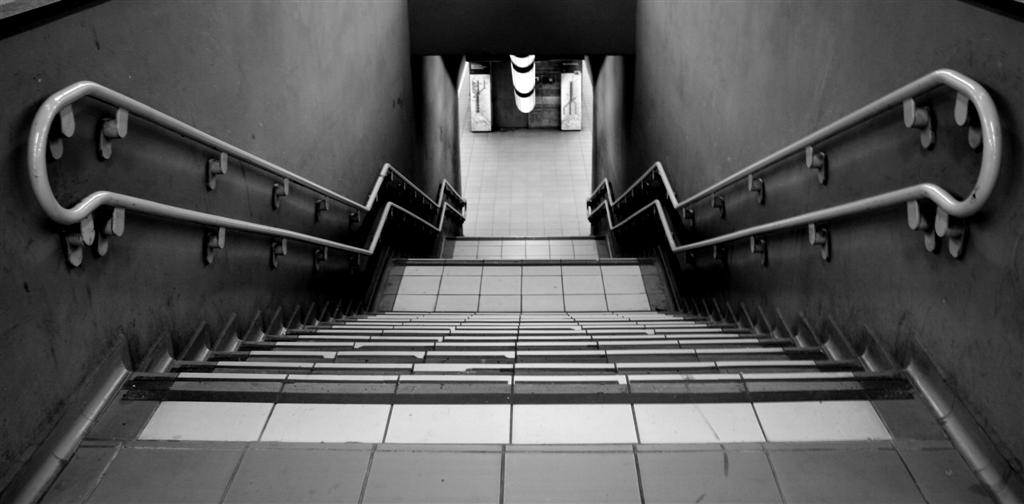
This is an very unsafe stairway, because it is physically impossible for you to fall over the side and hurt yourself. Uhm... what?!
This is a very unsafe stairway, because it is physically impossible for you to fall over the side and hurt yourself. Uhm... what?!

(Image source)

Every now and then I come across (link in Swedish) the following argument against nuclear power:

“All the safety devices, procedures, regulation and supervision prove that nuclear power is unsafe.”

And it baffles me every time, because what that boils down to is someone saying something that means: “It’s unsafe because it’s so safe!”.

The (lack of) logic reasoning applied to something else, say a staircase, is exemplified thus:

– This staircase is unsafe, because it has a railing!

– How do you mean?

– Because if the railing wasn’t there, I could fall over the side and hurt myself.

– Yes but the railing is there to stop you from falling over the side and hurting yourself.

– Exactly, so the staircase is unsafe, because it needs the railing.

– But the railing is an integral part of the staircase now. Are you suggesting you can run right through a two inch thick stainless steel railing?

– Well if I could I’d fall over the side and hurt myself.

– So… can you make your way through stainless steel railing or not?

– That’s not the point! The point is that it needs the railing so it’s unsafe!

– Look, not only does it have the railing, but the railing is in turn stuck to a concrete wall that goes all the way up to the ceiling.

– Oh my!! Then it’s really unsafe if it has that much safety! Now I won’t got near that damned thing because I just know I’ll fall over the side and hurt myself!

…and so on.

Kafka would have a field-day with this…

11 Comments

Michael, the saboteur?! Part 2: asking for email

By Michael Karnerfors 2009-10-31, continued from part 1

“Every Swedish citizen shall be entitled to have free access to official documents, in order to encourage the free exchange of opinion and the availability of comprehensive information.”

The paragraph above is the first act of the second chapter of The Freedom of The Press act, a cornerstone of the Swedish constitution. In short chapter two, titled “On the public nature of official documents”, says that if I as a Swedish citizen wish to take part of any official document, I am entitled to have swift access to it, no questions asked.

4 Comments

Michael, the saboteur?! Part one…

By Michael Karnerfors, 2009-10-24

I have had some crazy last few days, culminating with a Swedish newspaper calling me and asking me if I am a saboteur trying to wreck a scientist’s work on behalf of the nuclear industry! Whatever prompted anyone to ask something that bizarre? Well, the whole thing started over 30 years ago…

Anyone using fissionable material in Sweden is by law responsible for the safekeeping and disposal of the end-products. We’re not allowing reprocessing, and we’re not allowing the export of highly radioactive waste products, so we have to deposit any such materials.

To that end, the Swedish nuclear power companies formed the Swedish Nuclear Fuel And Waste Management Company, SKB for short for the purpose to researching a viable method to deposit spent nuclear fuel that is acceptable for the public as well as politically. Not that we didn’t know of viable methods since such methods were known since the early 70’s. But only very few of them were palatable, so we needed a bit of research of our own.  The project “KärnBränsleSäkerhet” (Nuclear fuel safety), or KBS for short, was started in 1976. In 1983 the third report of this project, KBS-3, was put forth and it proposed what is most likely a solution to the nuclear waste problem.

2 Comments