Skip to content

Category: Uncategorized

New graphics, updates to old graphics.


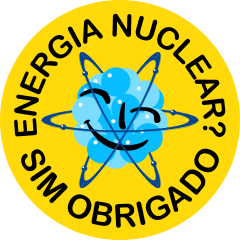
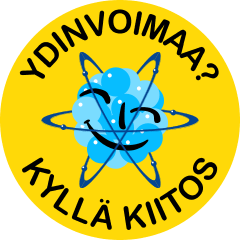
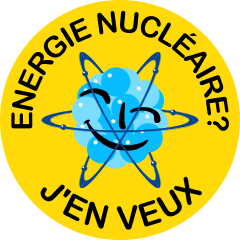
Hello all…. we have added a few new graphics to the download page. All new languages are Spanish, Portuguese, Swiss-German and Finnish. Also on the French page we have added a new version with a slightly more entusiastic message: Energie Nucleáire? J’en Veux.  (Nuclear power? I want it!)

See samples below with links to the download pages. As always these are released under a Creative Commons 3.0, Share Alike, Attribution, No Commersial License.

In short:

  • use it as you like as long as you share it with others.
  • tell people where you got it.
  • don’t make a profit out of it.

Enjoy. 🙂

Español – Spanish


Português – Portuguese


Schweizerdeutsch – Swiss-German


Suomi – Finnish


Français – French

Comments closed

Nuclear Power Yes Please anno 1980

Dokumentären på SVTs K-special med namnet Ström åt folket är en underbar genomgång av svensk elektronisk musik från 1953 fram till idag, allt i 125 bpm. Lustigt nog gör filmskaparna sig skyldiga till en faktoid då man kommer till 1980-talet. Se själva i denna filmsekvens, men var på hugget, för det går undan:


Klipp från dokumentären “Ström åt folket”. Klicka på bilden för att se filmsekvensen.


Bland alla minnesbilder avhandlas kärnkraftsomröstningen på några sekunder med ett par demonstrationsscener följt av knapparna för Linje 2, Nuclear Power Yes Please, Linje 3 och en smiley, sen hastar man vidare förbi ryska ubåtar och…

Men vänta nu, vad hände med Linje 1? Och vad sjutton gör NPYP-knappen där??? Även smiley-knappens närvaro i sammanhanget kan ifrågasättas men vi tillåter oss lite självupptagenhet och fokuserar på NPYP-knappen. Tror filmmakarna verkligen att Nuclear Power Yes Please och loggan fanns redan år 1980 (soundtracket kom förvisso till 1983…)? Det är väldigt roande, speciellt som hälften av oss inte ens var födda då. Men vi tackar och tar emot, det är ett gott betyg på att vi sedan starten 2008 har gjort ett avtryck i debatten. Så pass att en del tror att vi har funnits i mer än 30 år.

Eller hur var det nu, vi kanske var med ändå…?

Över 10 000 personer samlades för att demonstrera för kärnkraften i Stockholm den 21 mars 1981
Över 10 000 personer samlades för att demonstrera för kärnkraften i Stockholm den 21 mars 1981. Eller kanske inte… (originalet ligger som nummer 6 i bildsviten på den SvD-artikel man når genom att klicka på bilden)
Comments closed

För de som inte gillade Wechselmanns film…

…finns det hopp om en annan bild av kärnkraften på biodukarna. I dagarna har har Robert Stones film Pandora’s Promise premiär på Sundance Film Festival i Park City (Utah, USA), han gör i denna upp med de myter som tidigare legat till grund för hans kärnkraftsmotstånd. Vi får se om och när den lyckas leta sig över Atlanten till våra biosalonger.

pandora_image_02

Den bör givetvis granskas kritiskt, men vi har all anledning att tro att den kommer vara avsevärt mer saklig än Maj Wechselmanns Världens säkraste kärnkraftverk. Varför då då? Jo, han började ifrågasätta och faktakolla allt det han trott vara sant, och vågade komma fram till att han hade fel. Robert Stones egna ord:

Pandora’s Promise is without question the most personal and important film of my career.  I’ve learned that just about everything I thought I knew about energy turned out to be wrong.  And most of what I thought I knew about nuclear energy and its historical events has turned out to be precisely the opposite of what really happened.

Hatten av för Robert Stone…

Comments closed

Why don’t nuclear reactors go kaboom? A reactor kinetics primer part – 2

Advanced test reactor Foto: Matt Howard, Source: Wikimedia Licens: Creative Commons Attribution-Share Alike 2.0 generic

Its time for some more fun with reactor kinetics, in the last post we ended by looking at the point kinetics equation with one group of delayed neutrons. In this post as I promised we will talk about reactivity feedbacks. To brush up your memory, reactivity is defined as:

4 Comments

Why don’t nuclear reactors go kaboom? A reactor kinetics primer part – 1

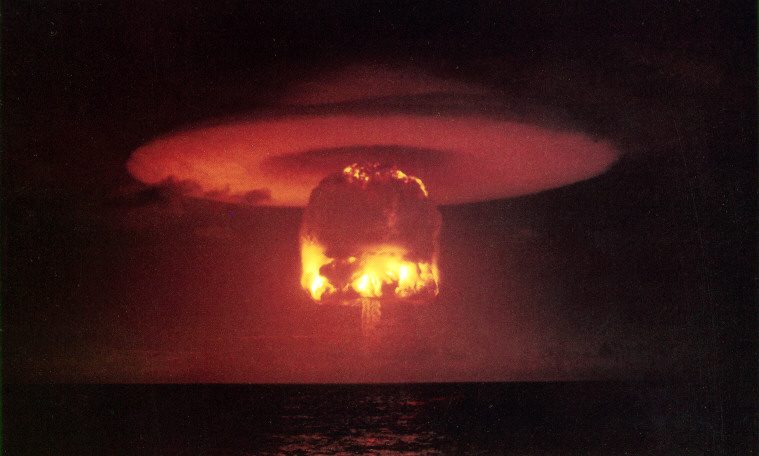
Nuclear reactors contain tons of fissile material and nuclear bombs contain only kilograms of fissile materials, so why does one of them explode with enough force to flatten a city but the other doesn’t? I will pull out some latex skillz and geek it out with equations to describe the physics behind whats in nuclear engineering is called reactivity excursions or RIA (Reactivity Insertion Accident). The level of these blog posts will be such that an interested and fairly math savy person can understand and calculate these kind of things on their own.

Castle Romeo photo: United States Department of Energy, Source: Wikimedia

Comments closed

Another stress test by activists

It has happened again: some activists have performed a stress test of another important Swedish facility, they call it Stresstest 2.0. This time, however, it was not  a nuclear power plant…


Activist Olof Bons explains why he participates in Stresstest 2.0

The stress test is covered on Facebook. It is in Swedish, but the picture on top of the link will give you the grim truth about how vulnerable these facilities are. Interestingly this stress test has received many more “likes” on Facebook than the original one by Greenpeace.

On this link one of the activists explains why he is participating in Stresstest 2.0.

Comments closed

Information for the foreign visitors to the Swedish nuclear power plants

The recent visits to the nuclear power plants at Forsmark and Ringhals and the surrounding nature, mainly by foreign citizens, raises a few concerns. Many Swedes are of course charmed by the sudden increase in tourism to the northern parts of Uppland and Halland counties, October is not the most attractive season. There are, however, some useful information that would be good for any foreign visitor to be aware of, and we will therefore give a bit of advice, should this increased level of tourism continue.

The beautiful nature near the Forsmark nuclear power plant

In Sweden we have something called “Allemansrätten” (usually translated as “Right of public access” or “Everyman’s right“). Allemansrätten gives you the right to access of our nature, not only at national parks and other dedicated areas. In principle you may go anywhere you like all over Sweden; our forests, pastureland, mountains, lakes and rivers are all available for you to enjoy, Swede or foreigner alike. But there’s more to it. You are also allowed to pick flowers, berries and mushrooms for your enjoyment, and you may raise a tent almost anywhere for a night or two without asking for permission.

6 Comments

Viskleken i media

Tisdagen 2 oktober bjöd på intressanta nyheter. Först Greenpeace så kallade rapport där de kommer till slutsatsen att svensk kärnkraft bör stängas ned omedelbart av säkerhetsskäl (vi lär få anledning att återkomma till den…).

Så någon timme senare rapporterades det från diverse nyhetsmedia (håll i er nu), bland annat SVT, att Dagens Nyheter berättar att en reporter hos Expressen har läst en artikel i den tyska tidningen Frankfurter Allgemeine som hävdar att läckt information från EU-kommissionen i en kommande rapport ger kärnkraftverken vid Forsmark och finska Olkiluoto svidande kritik av säkerheten. Puh!

Det är mycket riktigt en rapport som EUs energikommissionär kommer redovisa snart. Rapporten baseras på arbetet som  European Nuclear Safety Regulation Group (ENSREG) lett med de stresstester av kärnkraftverk som genomfördes i ett antal europeiska länder under förra vintern. ENSREG skapades år 2007 på initiativ av EU-kommissionen.

Den här rapporten kommer givetvis bli väldigt intressant läsning. Greenpeace har redan gått händelserna i förväg och lät en av sina “experter” döma ut kärnkraften baserat på de rapporter från stresstesterna som varje land lämnat in till ENSREG. Den “svidande kritiken” av Forsmark som läckt ut tycks tas med ro både av Strålsäkerhetsmyndigheten och av informationsansvarige på Forsmark. De vill gärna läsa rapporten först och inte förlita sig på rykten spridda via medias egen lilla visklek, men på grund av allt ståhej så har man lagt upp en del information kring säkerhetsarbetet och stresstesterna på Vattenfalls websidor.

Man kan förundras över att nyhetsmedier som SVT och DN är så snara med att återge vad andra nyhetsmedier grävt fram utan att ens låtsas att man försöker kolla upp saken själva först. Det kan inte vara lätt att vara reporter i dagens mediaklimat. Men om dagens reportrar tror att nyheter är något som man får av andra och bara vidarebefordrar som när man trycker på forward-knappen i sitt mailprogram, då bör man ta sig en allvarlig funderare på sin arbetsbeskrivning…

För den som vill läsa något mer utförlig rapportering rekommenderas exempelvis:

De franska och tyska originalartiklarna från 1 oktober 2012 finns här:

Mer information om stresstesterna:


Och för den som hellre vill köpa spelet: Ryktet går


Uppdatering lördag 6 oktober 2012

EU-kommissionens rapport släpptes i torsdags (4 oktober). Alla dokumenten finns på denna websida. Pressreleasen går att få i svensk översättning.

Energikommissionären Günther Oettingers uttalande finns här, se även här.

Givetvis går det inte att göra alla nöjda, här är uttalanden från den gröna alliansen i EU-parlamentet.

Men man kan förstås även tänka sig andra scenarier, som förslaget på stresstest av andra energislag.


4 Comments

Radioactive tourism – A trip to the Ytterby mine

I am taking a online geology course for fun right now, the subject has always interested me and it is quite different from the maths heavy physics I am used to. Sweden has a grand history in geology, mineralogy and chemistry and chief among historic locations must be the mine in Ytterby, a suburb to Stockholm. In 1787 the lieutenant, chemist and amature geologist Carl Axel Arrhenius was sorting through the mine heap at Ytterby and discovered a unusually heavy black rock. Realizing that it must be a undiscovered mineral he sent samples of the rock to several chemists for analysis. The man that did the best job was Johan Gadolin and the mineral was named Gadolinite in his honor. The mineral contains, among other things, the element yttrium and it was the first of the rare earth elements to be discovered. Another 6 new elements where discovered in minerals from Ytterby and no less than 4 is named directly after the location (Yttrium, Terbium, Erbium and Ytterbium along with Skandium, Thulium and Holmium).

I happen to live in Stockholm which means a small field trip to Ytterby is a must and there I went a few weeks ago. Anyone that has been following the rare earth situation in China also knows that where there is rare earths usually one also finds Thorium, properly armed with a dosimeter I was looking forward to some rads!

Comments closed

Friday arithmetic, the end of cheap energy?

It’s Friday, a thunderstorm is raging outside and I am on vacation so there is not much else to do than some simple calculations. On a Swedish blog I made a comment regarding how everyone is ignoring the uranium elephant when it comes to energy discussions. Pessimism abound regarding the reserves of fossil fuels and doomsday is commonly predicted. But I have long held the view that nobody can seriously claim humanity will ever run out of energy (however that doesn’t exclude bumps on the road), many might find that to be a naive idea, but some very simple arithmetic proves my point.

5 Comments