Skip to content

Category: Uncategorized

Utmaning till kärnkraftsmotståndare

Translation of the earlier post to Swedish

Det har alltid förbryllad mig (och jag tror att jag kan tala för oss alla inom NPYP) att någon kan vara anti mot någon energikälla. Anta till exempel att någon säger sig vara anti-kemisk energi, då skulle den logiska uppföljningsfrågan förstås vara “vilken typ av kemisk energi?”. Helt enkelt eftersom det finns så många olika sätt man kan utvinna kemisk energi på, allt från att elda kodynga i hyddor till förbränningen av bensin i din bilmotorn till högteknologiska gasturbiner till dynamit. Snubben som yttrade påståendet har antagligen inte ens tänkt på de distinktionerna när han gjorde sitt uttalande. Men låt oss säga att han funderar lite grann och specificerar att han är anti-kol. Även detta uttalande kan ifrågasättas. Uttalandet måste följas av en hel del villkor för annars är det idiotiskt. Om han är anti-kol på grund av luftföroreningar, borde han då inte ändra sig om man blir kvitt föroreningarna? Om någon utvecklar ett filter som minskar utsläppen till obetydliga nivåer, är kol då ok enligt honom? Logiskt sett borde han tycka det. Om han är anti-kol på grund av den oerhört destruktiva kolbrytning, skulle han ändra sig om miljövänligare brytningsmetoder utvecklades? Killen är förmodligen egentligen “anti luftföroreningar” eller” anti smutsiga gruvor”, inte anti kemisk energi eller anti kol. Han har bara aldrig brytt sig om att försöka specificera eller förstå vad för egenskaper hos kemisk energi han egentligen motsätter sig.

Detsamma kan sägas om vilken energikälla som helst, det finns det ingen rationell anledning att vara emot en energikälla i sig, snarare är man emot en viss oönskad effekt som uppkommer på grund av den nuvarande tillämpningen av en energikälla. Vi NPYPare är inga kolfantaster, men jag vågar svära på att om det fanns bra lösningar på problemen med kol, då skulle vi inte motsätta oss dess användning. Det finns ingen anledning att vara mot bruket av en energikälla om dess problem har lösts.

Fördelen med att gräva djupt och ange exakt vad man egentligen motsätter sig är väldigt konstruktivt, för det öppnar upp möjligheten att söka efter lösningar! Om någon bara säger att de är anti vindkraft så dör diskussionen ganska snabbt utan att ha kommit någonvart. Om personen i stället anger att buller från vindkraftverk är problemet, då kan diskussionen svänga in på möjliga lösningar för att minska buller. Alla vinner på det! Det finns ingen anledning att vara fruktansvärt känslomässig och klamra sig fast vid en “anti-något” idé så hårt att man blockerar alla slags givande diskussioner och blundar för lösningar.

Det viktigaste att diskutera är alltså vilka egenskaper hos en viss energikälla som gör att du motsätter dig den och och hur den kan förbättras så att du inte längre har några invändningar. Det mest frustrerande med kärnenergidebatten är att man aldrig tycks nå den punkten. Fråga ledande miljöaktivister den frågan och de kommer att häva ur sig 58 olika ursäkter utan att vara det minsta intresserade av eventuella lösningar.

Om någon är mot kärnkraft på grund av avfallsproblem så säger vi “Ok, men vad menar du exakt med avfallsproblemet och vad är det med avfallet som du anser vara så destruktivt?” Om du besväras av möjligheten att avfallet kommer att skada framtida generationer så kan vi börja diskutera hur man säkert kan förvara eller förstöra avfallet. Om du är anti kärnkraft eftersom du besväras av säkerheten, då är vår motfråga “hur säkert är säkert nog och hur ska vi uppnå det?”. Uppenbarligen måste det finnas en nivå där en verksamhet anses vara tillräckligt säker, annars skulle personen i fråga aldrig kliva ur sängen och gå till duschen av rädsla för att halka och dö.

Men diskussionen slutar alltid som sagt innan den nått denna punkt. “Anti-personer” verkar i regel aldrig vara intresserade av lösningar på de problem de nämner och för det mesta kan de inte ens specificera vad problemet är från första början. Det gäller inte bara för kärnkraftsdebatten, man ser precis samma tendenser i alla typer av diskussioner där det finns en tydlig anti-sida. Anti genteknik, anti bilar, anti kött, anti utforskning av rymden, anti vad som helst! Det verkar vara väldigt svårt för människor att släppa den trygga känslomässiga bindning som uppkommer när man är kraftigt mot något och istället inleda en meningsfull diskussion om problemen och lösningar. Det är alltför lätt att bara vara emot något, det är väldigt mycket svårare att faktiskt söka lösningar!

Så för att försöka vrida kärnenergidebatten i en mer givande riktning så skulle det vara fantastiskt om några kärnkraftsmotståndarna kunde ange vilka villkor kärnkraft måste uppfylla för att vara en godtagbar energikälla. Tro det eller ej så har även vi sådana villkor. Jag tror till exempel inte att någon av oss vill se fler RBMK byggas (den typ av reaktorn som Tjernobyl tillhörde) och personligen har jag ganska högt ställda krav på hur kärnenergi ska utvecklas på lite längre sikt för att vara en acceptabel energikälla. Jag är inte anti kärnkraft, men jag är verkligen anti mot vissa sätt att utvinna kärnenergi.

För att sammanfatta utmaningen:

Vilka villkor måste kärnkraften uppfylla för att du ska godta kärnkraften som en acceptabel energikälla?


14 Comments

Examining some old Fukushima news

An old news article is circulating around that states that 68 tons of fuel has melted in reactor number 1 and that it was close to breaching the bottom of the containment. The article is several months old but for some reason I have seen it pop up again on facebook so I though it is worth examining the article briefly. In particular I want to examine this statement.

Only 37 centimeters of concrete remains between the fuel and the vessel’s outermost steel wall in the most damaged area, TEPCO said.

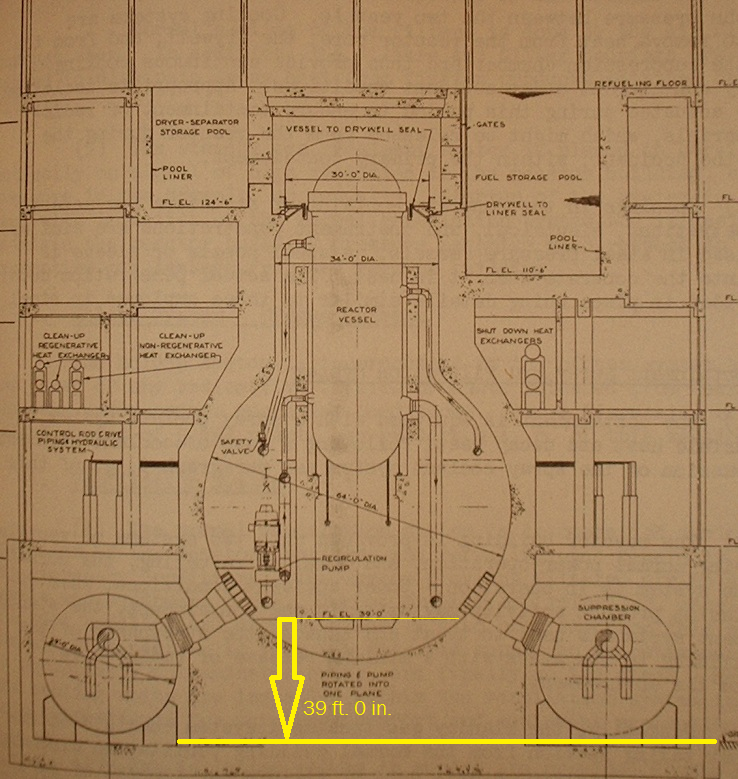
This wording is repeatedly used by anti nuclear sources to imply that a much worse disaster was very close to happening. What the articles fail to mention however is that there is A LOT more concrete between the ground and the molten core. The reactor building itself is a very thick concrete structure. Will Davis, on his excellent blog Atomic Power Review, talked about this the first time the news about the number one vessel failure showed up last November. Some of what he wrote is worth repeating and I hope he doesn’t mind me repeating it here and also posting a picture from his blog.

The NHK report indicates a melt depth of about 2.1 feet(64 cm, my note /Johan). The distance to the ground is roughly eighteen times this depth from the dry well interior floor to grade. Below is a drawing from WASH-1082 which I’ve marked to show the distance from the dry well floor to the grade outside, which on the particular plant shown is 39′ 0″(11.8 meters, my note /Johan). I do not presently know the exact measurement at Fukushima Daiichi No. 1 but it is likely within ten percent of this measurement… meaning that in the worst case that TEPCO is describing, by its own data, the core material may have melted only about as much as 5% of the distance to the grade.

I encourage everyone to read the rest of his blog as it is by far the best information source for the Fukushima accident.


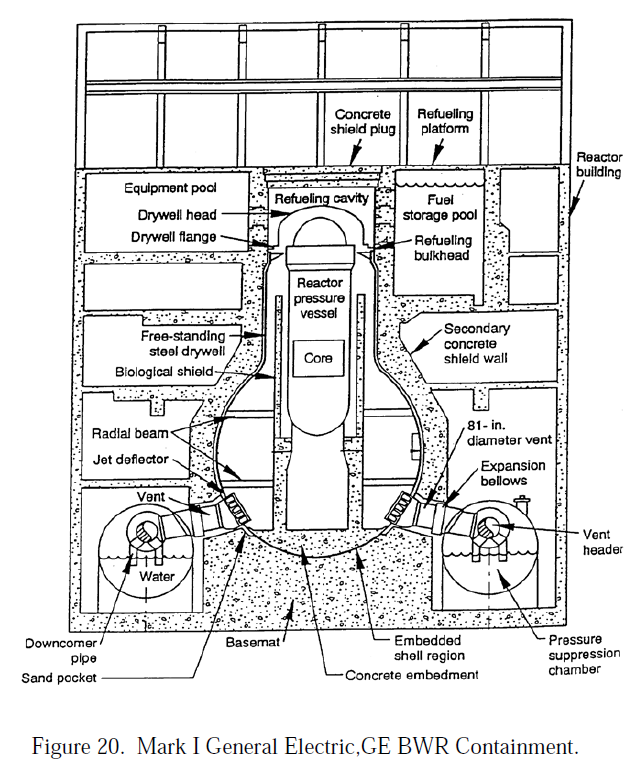
I also want to add this picture of the mark I containment that schematically shows the thick concrete even more clearly! Picture found at the blog “The capacity factor”.

So we see that there is a tremendous amount of concrete below the shell of the containment structure. The hints and suggestions that the core would only have to melt another 37 centimeters for a unnamed disaster to take place is obviously false. In reality the shell of the containment is integrated into a thick concrete structure and the molten core would have to melt through several more meters, likely around 10 meters, to get out of the reactor building itself.

The cleanup of the containment is going to be a very hard and messy job, much worse than the cleanup of TMI was. But the core is still a long long way from the ground.


/Johan


Comments closed

Challenge to nuclear opponents

It has always mystified me (and I think I can speak for all of us in NPYP) that someone can be anti-something when it comes to energy. Lets suppose for instance that someone declares himself to be anti-chemical energy, the logical follow up question to the fellow would of course be “what kind of chemical energy?”. The question is logical because there are so many different ways one can extract chemical energy, everything from burning cow dung in huts to the engine in your car to high tech gas turbines to dynamite. Our friend there probably didn’t even think of those distinctions when he made his statement, but what if he did? Let’s say he rebukes by stating he really means that he is anti coal. Even that statement can be challenged, it must by necessity be conditional otherwise it is moronic. If he is anti coal because of air pollution, then would he change his mind if there was a solution to the pollution? If someone developed a filter that reduced pollution levels to insignificant amount is fossil fuels then ok? Logically he should think so. If he is anti coal because of the immensely destructive coal mining, would he change his mind if environmentally sound mining practices where developed? The guy is presumably actually anti air pollution or anti dirty mines, not anti chemical energy or anti coal. He just never bothered to go through the chain of reasoning to understand what he really opposes in chemical energy.

Same can be said of any energy source, there is no rational reason to be against the energy source itself, rather one is against some undesirable effect due to the present application of the energy source. NPYP are not fans of coal by any means, but I dare say that if there was solid solutions to its problems, then none of us would oppose its use. There just isn’t any justifiable reason to oppose it if the problems are solved. There is no other way to rationally look at energy production.

The advantage with digging deep and specifying exactly what one is actually opposed to means opening up to the possibility of finding solutions! If someone simply state that they are anti windmills then the discussion pretty much ends right there. If the person instead states that the noise from windmills is disturbing then the discussion can turn to possible solutions to reduce noise. Everyone wins on that! There is no reason to be horribly emotional about the whole thing and cling to an anti-something idea so hard that one blocks any fruitful discussion and becomes blind to solutions.

A discussion goes no where until one gets to the core of the argument, which is, what properties of a specific energy source makes you oppose it and and how can it be improved so you no longer oppose it?

The frustrating thing in the nuclear debate is that the discussion never seems to reach that point. Ask leading environmentalists that exact question and they will squirm like a worm on a hook.

If someone specifies that they are opposed to nuclear energy due to the waste problem. Fine we say, but what exactly do you mean by the waste problem and what effect does the waste have that you find repulsive? If you are bothered by the possibility that the waste will hurt future generations, then lets discuss how to safely dispose of the waste. If you are anti nuclear because you are bothered by the safety of nuclear installations, then specify what level of safety is safe enough (obviously there must be a level where an activity is considered safe enough, otherwise the person in question would never get out of bed to shower for fear of slipping and dying) and lets discuss how to reach that.

But the discussion always ends before reaching that point because the “anti person” generally never  seems to be interested in solutions to the posed problems and they are usually not even able to state clearly why they consider the issue as a problem in the first place. This is not only valid for the nuclear debate, one sees the same tendencies in all kinds of discussion where there is a clear anti side. Anti genetic engineering, anti cars, anti meat, anti space exploration, you name it! It seems very hard for people to go past the simple emotional attachment of being against something and instead engage into a meaningful discussion about the issues. It is too easy to just be opposed to something, it is damned much harder to actually find solutions.

So to move the nuclear discussion into a more fruitful direction it would be enlightening if some nuclear opponents could specify what conditions nuclear would have to fulfill to be an acceptable energy source. Believe it or not even we have such conditions. I don’t think for instance anyone in NPYP wants to see more RBMK reactors built (the type of reactor at the Chernobyl plant) and just to speak for myself I have quite strict demands on what nuclear energy should be in the long run to be an acceptable energy source. I am not anti nuclear, but I am certainly anti towards some ways of extracting nuclear energy.

To summaries and to state the challenge again clearly.


What conditions would have to be fulfilled for you to consider nuclear an acceptable energy source?


26 Comments

The world has forgotten the real victims of Fukushima

I just had to make a quick post about this excellent article.

The world has forgotten the real victims of Fukushima

It was at this point, at around day three, that I realised that something had gone seriously wrong with the reporting of the biggest natural disaster to hit a major industrialised nation for a century. We had forgotten the real victims, the 20,000-and-counting Japanese people killed, in favour of a nuclear scare story.

/Johan

2 Comments

Nuclear history: Part 1 – The nuclear rocket that never flew


Back when the cold war was still hot, and everyone was searching for communists in the closet, nuclear was still fresh and awe inspiring. The fascination with everything nuclear spawned a tremendous variety of projects and ideas to realize the full potential of nuclear energy and find out its utility in many different applications. When looking back at those projects in this age, after being born into a “precautionary principle” ruled society, some of the ideas might seem like utter madness or amazing brilliance. Pretty much without exception all those projects involved solid engineering and the scientists back then dared to think big, really really big. It is fascinating to look back at those days and realise how many times the world was within centimeters of big revolutions in energy production or space travel. Many of the projects share the same depressing end, getting shut down by political, rather than technical, reasons. Thinking big might not be fashionable anymore in the west, but it will never cease to be educational and it gives hope for what we can accomplish in this century. That is why I will dedicate some time to write a series of “Nuclear History” blog posts that looks into the crazy, the fascinating and the plain ingenious projects of the first nuclear era. A maths warning is in its place, I will not be afraid to throw in equations into the blog posts if I feel it will explain something better than words. I am using MathJax to write the equations and it might not display properly if you read this through a RSS feed, in that case just jump to the blog. If you are put off by equations just skip them and read the text and graphs, they should be self explanatory anyway.

This first post will be about one of my favorites, the fission rocket!

Let us start back in the 50’s. In 1954 the first nuclear powered submarine, USS Nautilus, was launched into the seas and the development of a nuclear jet engine for bomber planes were under way. The grand space race had just started and it was only natural to ask what part nuclear energy could play. In 1955 the Atomic Energy Commission and the US Air Force got together and started the Rover program, the original goal of the program was to create a nuclear driven ICBM. Parallel to this a project called Pluto was started with the goal of creating a nuclear driven ramjet for a cruise missile that could potentially cruise for months on end carrying a large arsenal of nuclear weapons. Both programs where hedges against the possibility that conventional (chemical rocket driven) ICBM’s might not work as well as was hoped. After the success of traditional chemical ICBM’s in the end of the 50’s and beginning of the 60’s project Pluto became redundant and was cancelled (one must also mention that it was so dirty that one could have ignored weaponizing it and just letting it fly low over cities and the radiation from the darn thing would take care of business). Project Rover was left in a position where its military value was diminished but the possibility of a nuclear rocket was still intriguing. Therefor Rover was handed over from the Air Force to the Space Nuclear Propulsion Office (SNPO) which was a collaboration between NASA and ACE started in 1961. Rover continued as the development program for the rocket itself, regardless of what end use it would have, and a new program called NERVA (Nuclear Engine for Rocket Vehicle Application) was started to examine the utilization of the Rover rockets for civilian space exploration. I will a bit sloppily refer to both projects as NERVA.

But before we look into the developments that took place in those two programs, lets stop for a moment and ask what advantage does nuclear energy have in space exploration? After Gagarins first flight into space in 1961 it became blatantly obvious that it was possible to put people in space with chemical rockets, so why even bother with nuclear rocket? Was it simply because nuclear was the cool kid on the block? The traditional rocket engineers certainly did not want anything to do with nuclear, they understood chemicals perfectly well, thank you very much! The nuclear engineers on their side was equally oblivious to the demands of space flight.

The match between space and nuclear isn’t obvious until one starts to look into what is really important for good rocket performance. There are two key parameters that rule supreme, thrust and specific impulse. Thrust is just what it sounds like, the force the rocket is producing, good old fashion Newton’s second and and third laws (for those who have forgotten, the first law is force equals mass times acceleration and the second law is, every action has an equal and opposite reaction). You need a hell of a lot of thrust to overcome Earths gravity well! Specific impulse is a bit more complicated, it is a measure of the efficiency of a rocket engine. It tells you how much mass a rocket needs to expel in order to achieve a certain amount of velocity. In space the only mass you have to play with is the mass you bring and the only way to gain velocity is to throw some mass in the opposite direction of where you want to go. The less mass you need to bring to achieve a certain velocity the cheaper it is to send that bloody thing into orbit. Impulse is just another word for momentum (force) and specific impulse is the momentum gained per unit mass of propellant expelled. Total impulse given by the propellant to the rocket is just the mass of the propellant times the effective exhaust velocity of the propellant. If we assume constant thrust and constant exhaust velocity we can get the specific impulse by dividing the total impulse with the total propellant mass and all that is left is the effective exhaust velocity.

$$I_{sp}= \frac{\int F dt} {m} = \frac{\int \frac{dM}{dt} V_e dt}{m} =\frac{MV_e}{M} = V_e$$

Where:
$$I_{sp}$$ = specific impulse
F = Force
$$V_e$$ = effective exhaust velocity
M = total propellant mass

Now that is a lot of word simply to state that exhaust velocity is important. I go through all of this to explain the concept of specific impulse since it is a term one never gets away from when reading about rockets. Sometimes specific impulse isn’t defined as above either, but it preserves its importance. In another definition, for some reason I don’t understand at all (after all I am only a physicist and not a rocket scientist), specific impulse is often defined per propellant unit of weight (on Earth) instead of unit of mass. The strict definition of weight is the force a mass experiences in a gravitational field. A scale doesn’t really measure your mass in kilos, it measures your weight in Newtons! Using that one then ends up with a definition if specific impulse that looks like this.

$$I_{sp} = \frac{V_e}{g_o}$$
Where:
$$g_0$$ = gravitational acceleration at earths surface (9.81 m/s^2)

In the first definition specific impulse has the unit of velocity, m/s, and in the second definition it has the unit seconds. So if you see people talking about specific impulse of this and that many seconds you know the reason. I explain this because I will consistently use the second definition of specific impulse from now on due to the fact that it is more common to find tables in units of seconds.

Now to realise why specific impulse is important lets have a look at the famous rocket equation formulated by Tsiolkovsky. This equation tells you how much velocity a rocket will gain from a given amount of propellant with a certain exhaust velocity.

$$\Delta V=V_e*Ln(\frac{M0}{M0+Mr}) = I_{sp}*g_0*Ln(\frac{M0}{M0+Mr})$$
Where:
$$\Delta V$$ = the speed given to the rocket
$$V_e$$ = rocket exhaust velocity
$$M_0$$ = Rocket mass without propellant
$$M_r$$ = propellant mass
$$g_0$$ = Gravitational acceleration at the earth surface

The higher the specific impulse the higher the $$\Delta V$$, that much is obvious. Looking at the masses involved is even more enlightening. So lets breaks out the $$M_r$$ term from the last equation and we get:

$$M_r = M_0*[e^{\frac{\Delta V}{I_{sp}*g_0}}-1] $$ = $$M_0[e^{\frac{\Delta V}{V_e}}-1]$$

Lets plot this function! Lets assume we want to go from low earth orbit to orbit around the moon. This will require a $$\Delta V$$ somewhere in the neighborhood of 4000 m/s (to get into low earth orbit in the first place one needs about 10 000 m/s, but lets assume we are already there). Lets also assume we want to deliver about 55 tons of material there. That is about the weight of the Apollo command module plus the lunar lander module plus the empty weight of the S-IVB last stage of the Saturn V rocket. This will give the resulting plot with Isp’s ranging from 100 to 1000 seconds (exhaust velocities of 981 m/s to 9810 m/s).


There are two blue X drawn on the plot. The first X is drawn at the $$I_{sp}$$ value 475, this happens to be the specific impulse that the third stage of the Saturn V rocket had, the part of the rocket that was supposed to give the final $$\Delta V$$ to go to the moon. It turns out that the reaction mass according to the plot above for $$I_{sp}$$ = 475 is 75 metric tons. In reality the S-IVB burned about 80 tons of fuel to reach the moon, so we are playing in the correct order of magnitude here! What about the second X drawn with a $$I_{sp}$$ of 925? To jump forward a bit in time, that happens to be the $$I_{sp}$$ of the final NERVA design, how much reaction mass does that correspond to? 30 tons! Less than half of the S-IVB, a dramatic reduction and a potential cost saver!

To show an even larger advantage for the nuclear rocket, lets look at missions requiring higher $$\Delta V$$. In the figure below I have plotted the reaction masses needed given an $$I_{sp}$$ of either 475 or 925 seconds. At the far right end of the graph one can see the propulsion mass needed to deliver 550 tons from Earth to landing on Mars.


For the nuclear rocket one would need a propellant mass of about 1200 tons while the chemical rocket needs 4900 tons. Given that the weight to launch something into low earth orbit right now is over 2000 US dollars per kg the cost saving on mass alone is close to 7.4 billions! To be fair to the chemical case, the cost to get things into orbit might be cut by a factor of 10 within the foreseeable future (if space x manages to make a reusable rocket), but even in such an optimistic case the potential cost saving might be close to one billion dollars.

The above plots shows why a nuclear rocket is desirable, but it doesn’t explain why a nuclear rocket performs so much better compared to chemical rockets. Why does a nuclear rocket have a much higher $$I_{sp}$$ ? Lets first consider how a chemical rocket works, in a chemical rocket the energy source and the reaction mass is one and the same. You mix two chemicals, they explode in a semi controlled fashion and the resultant products are sprayed out through the rocket nozzle and creates thrust. A common example of liquid rocket fuel is hydrogen and oxygen. There is also examples of solid fuels, the boosters for the space shuttle is one example that uses some kind of aluminum mixture. The chemical reaction heats the reaction products and throws them out of the rocket with a certain velocity. Temperature of a gas is proportional to the average energy of the gas molecules and energy is simply $$E=\frac{mV^2}{2}$$. Velocity of the particles are then $$V=\sqrt{2E/m}$$ and we instantly see that the smaller the mass, with a given temperature, the higher the particle velocity. Ideally, whatever we heat up, we want it to to be made of as light a particle as possible. In chemical rockets we don’t really have the luxury of choice, the reactions that gives the most energy doesn’t necessarily also give the reaction products with the smallest masses. The smallest possible mass is the hydrogen atom since it is the lightest element. The hydrogen + oxygen reaction is one of the most energetic chemical reactions, but the product of the reaction, water molecules, is 18 times heavier than the hydrogen atom. A heated hydrogen gas with the same temperature as a heated water gas will have a velocity more than 4 times higher.

A chemical rocket will never have the ideal propellant due to the fact that one has to introduce other compounds since the energy is generated by the compounds themselves. To have the ideal propellant the energy production has to be separate from the propellant. This is where a nuclear reactor finally enters the picture. If the heat source is nuclear fuel rods and the propellant is hydrogen heated by flowing over the rods. Then one can indeed get a pure flow of hydrogen out of the rocket. In that way one can maximise the $$I_{sp}$$ from the energy produced. Why can’t one do this with chemicals, may be by having some kind of contained chemical that produces heat that is transferred to a pure hydrogen gas? It is due to the fact that chemical reaction releases so little energy compared to nuclear reactions, this means the mass of the chemicals needed for the reaction would be as large or larger than the mass of the propellant. Fission however releases about a million times more energy from the same amount of mass compared to a chemical energy source. The energy required to put the space shuttle in orbit, of the order of $$10^{13}$$ joules, is contained in such a petty amount as roughly 100 grams of uranium. With fission it becomes feasible to separate the energy production from the propellant without having the energy production part being to massive. We can then have a rocket that runs with the same temperature as the best chemical rockets but have 4 time the $$I_{sp}$$ .

In reality everything isn’t quite so rosy, one can not expect to put 100 grams of uranium togheter with some hydrogen into a rocket and easily get a $$I_{sp}$$ that is 4 times higher than the space shuttle rocket. The $$I_{sp}$$ will rather be a bit more than double because hydrogen atoms form H2 molecules and thus the specific weight of the propellant is only one ninth of the weight of water. Hydrogen needs to be heated to over 5000 degrees Celsius before it forms free hydrogen atoms. Also a full reactor weights significantly more than 100 grams of uranium, even if only 100 grams needs to be fissioned to produce the total energy, one still needs a hefty amount of uranium for the reactor to go critical in the first place.

But even taking into accounts those pessimistic facts the nuclear rocket is still very promising. This first part of the series is already long enough. So lets save the fun stuff for the next part. Then we will look at what kind of things they actually built during the NERVA program and the basis for the reactor designs!

Johan
9 Comments

Rapporten är klar

Hej kära kärnkraftsbloggen!

Minns ni oss? Två studenter från Falun som åkte ner till Ukraina, för att undersöka kärnkraftsattityder i den norra regionen Polesien. Nu har det gått lite tid sedan vi kom hem till Sverige mitt i natten, i ett flygplan som lät som att det hade ont i magen. Nu är det nämligen så att vår rapport “RBMK-reaktorerna är de säkraste på marknaden” är klar imorgon, på självaste Assars namnsdag!

Vi har fått mail av många som vill ta del av vad vi diskuterar i den över 50 sidor långa rapporten. För att tacka för vår korta vistelse här på bloggen så postar vi rapporten till intresserade! Så maila, om du fortfarande är intresserad, ditt namn, adress, postnummer och ort till oss så har du förhoppningsvis en papperskopia innan jul. Vill du inte ha någon papperskopia skickar vi via mail också.

alicegrudd@gmail.com
SP09SarGom@falufri.se

Comments closed

Tack och farväl


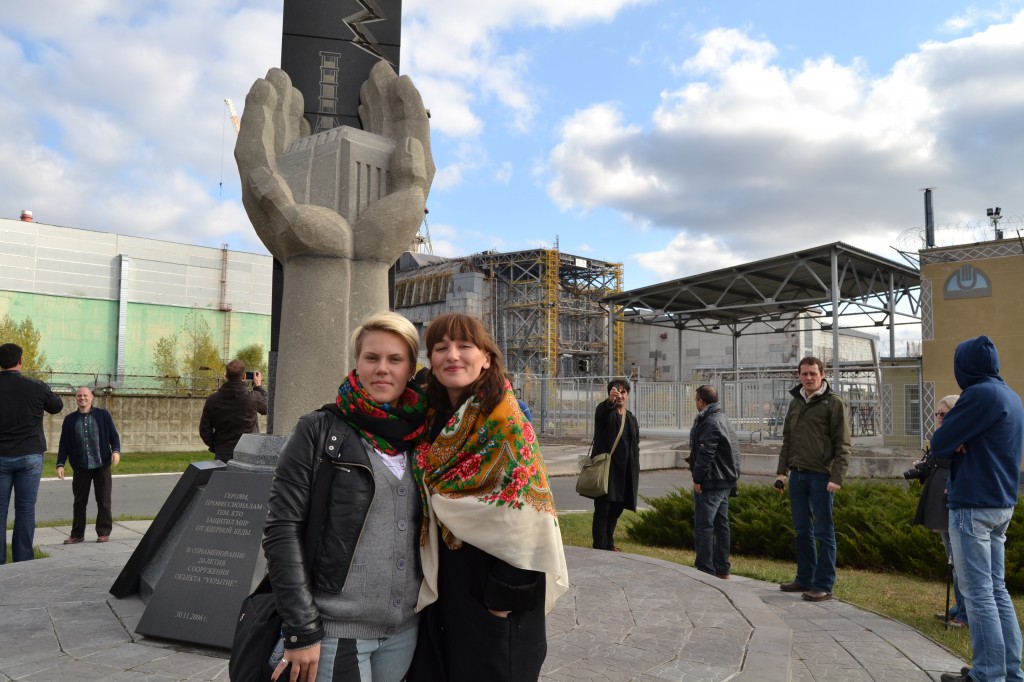
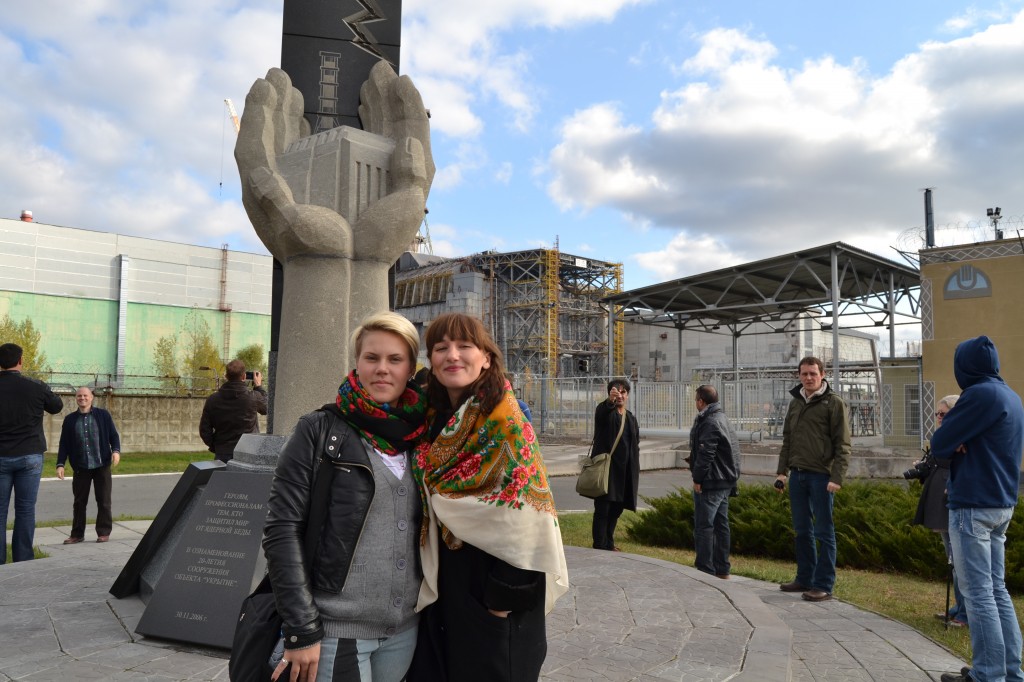
Nu kommer tiden då vi ska börja skriva ned all vår research från Ukraina i ett worddokument –  som kommer att bli vår projektrapport! Ps: på bilden ovan står vi 400 meter från Reaktor 4.

EDIT: Rapporten finns att läsa på denna länk.

Vi åkte till Ukraina med föreställningen om att det skulle finnas en misstänksamhet mot kärnkraft, med tanke på vad som hänt i Tjernobyl. Vi trodde också att det skulle finnas större folkligt engagemang för kärnkraftsfrågor (och andra politiska frågor). Men människor i Ukraina har svårt att engagera sig på grund av den korrupta politiska situationen i landet. Man måste söka tillstånd för att t ex prata på gatan, och man får inte tillstånd om man vill prata om saker som ifrågasätter den rådande politiken. Konsekvenserna kan leda till fängelsestraff om man trotsar lagen och pratar utan tillstånd. Även media är kontrollerad och stryper yttrandefrihet. Det är ingen som vet vad Energoatom (det statliga kärnkraftsföretaget) egentligen gör. Vi hörde ett rykte om att en ansvarig på Rivnes kärnkraftsverk var psykiskt sjuk, men att han fick jobba kvar ändå.

Eftersom det inte finns någon insyn i Energoatoms verksamhet, ingen medial diskussion om kärnkraft, ingen Tjernobylkatastrofen och kärnkraft idag eller ens möjligheter till folkligt engagemang i sakfrågor, diskuteras och debatteras inte kärnkraftsfrågor offentligt. Energoatom för sina affärer till sin egen fördel, inte till folkets. Ukraina kärnkraftsverk producerar fyra gånger så mycket energi som landet förbrukar, och detta säljer Energoatom till angränsande länder. Men folket får ej ta del av dessa pengar, och ingen vet vad Energoatom gör med pengarna heller. Anmärkningsvärt är att Ukrainas el i Vitryssland är hälften så dyr i jämförelse med nationellt och att Ukraina påstår sig inte ha tillräckligt med pengar att betala för den sarkofag som MÅSTE byggas för att omsluta Reaktor 4. En annan anekdot är att när vi åkte mellan Kiev och Tjernihiv så var gatulamporna avstängda för att spara in på el, vilket också enligt en källa var vanligt förekommande. (All fakta presenterad ovan är från våra egna källor ifrån Ukraina, inkluderar en vetenskapsman i naturtekniska ämnen, Sveriges vice ambassadör och andra privatpersoner.)

Men den största bidragande faktorn till icke-intresse för kärnkraftsfrågor är fortfarande den utbredda fattigdomen. Intresse för energifrågor (och miljöfrågor i allmänhet) är en klassfråga i Ukraina. Samtidigt har människor en känsla av att inte kunna påverka den politiska eliten på grund av korruption och avsaknad demokrati. Ukraina behöver komma längre i sin demokratiprocess, avskaffa sitt korrupta system som genomsyrar samhället och balansera upp klyftan mellan överklass och underklass för att intresse för kärnkraft/energifrågor ska infinnas. Glöm då inte heller det Sovjetiska arvet som också spelar en stor roll för Ukrainas mentalitet.

Med detta inlägg kommer vi att avsluta ett kort men intensivt och innehållsrikt samarbete här på bloggen. Vi hoppas att ni har följt vår resa med nöje och att ett intresse eller större nyfikenhet för Ukraina har skapats. Det är ett fantastiskt land med så mycket möjligheter att utvecklas, låt oss alla hoppas på en utveckling mot demokratiska ideal! Skulle ni vilja resa dit (kanske kombinera med Fotbolls EM som arrangeras där nästa år!) så har vi en uppsjö med restips. Det är bara att höra av er!

I och med vårt rapportskrivande kommer vi nu att behöva lite material till vår bakgrund. Sitter du och ruvar på massa värdefull vetskap om kärnkraft och atomklyvning får du väldigt gärna maila oss och dela med dig. Eller kanske vill du läsa vår rapport när den är klar i december? Släng iväg ett mail till oss på följande adresser:
alicegrudd@gmail.com &/eller
SP09SarGom@falufri.se

Comments closed

Chernobyl Exclusion Zone

På grund av lite uppkopplingsproblem uteblev några dagars summering på bloggen från Ukraina. Detta tar vi igen nu efter att vi har landat i Sverige och smått försökt att återgå till vardagen. Efter att vi besökt Olga i Tjernihiv, ätit middag hos Yuliya och Tatanya i förorten så begav vi oss till Tjernobyl i en fullsmockad turistbuss. Tjernobylturisterna var av blandad kompott, vilka vill egentligen besöka en radioaktiv zon och begrunda Sovjetarv? Våra medpassagerare bestod av två amerikanska tanter med varsin käpp och en viss förvirrad uppsyn, heterogena kärnfysikstudenter från Tyskland, pinsamma ungkarlar från Sverige som knappt släppt berusningen (och vad som hänt kvällen innan), tre par på kärlekssemester i Kiev (av blandad nationalitet), ett gäng glada serber och vi, två artonåringar från Falun!

Gemensamt för alla vi som besökte Tjernobyl denna 22:a oktober var att vi betalat först en depositavgift (som vi inte fick tillbaka trots löften) på 50 dollar, plus 160 dollar per person och icke-obligatorisk geigermätare på 20 dollar. Vi reste med företaget SoloEast Travel och på deras hemsida finns all information att tillgå. Dock står det att resor inte genomförs längre, men med lite dollar och korrespondens är allting möjligt i Ukraina. Liksom att arrangera en individuell resa, så som en man från Sidney hade gjort. Honom träffade vi på Tjernobyl Museet i Kiev och han berättade att han hade spenderat tre dagar i Tjernobylområdet tillsammans med en privat guide. Det kostade dock 550 dollar per dag, men är absolut möjligt vid speciella önskemål.

Men hur var det att besöka Tjernobylområdet då? För att sammanfatta alla våra intryck under ett och samma spann kan vi säga att det var svårt att ta till sig att det en gång har funnits ett fungerande samhälle där. Skogen hade verkligen fått leva sitt eget liv och allt av något värde var plundrat. Sedan kände vi också att våra tidigare diskussioner om kärnkraft hade påverkat oss i den grad att vi delade den ukraina föreställningen av att detta är något som har hänt i det förgångna, att Ukraina har gått vidare och behandlar nya problem. Befolkningen i Ukraina vill inte  endast bli förknippade med Tjernobylkatastrofen, utan försöker bli förknippade med andra positiva kännetecken för landet så som rik arkitektur osv.

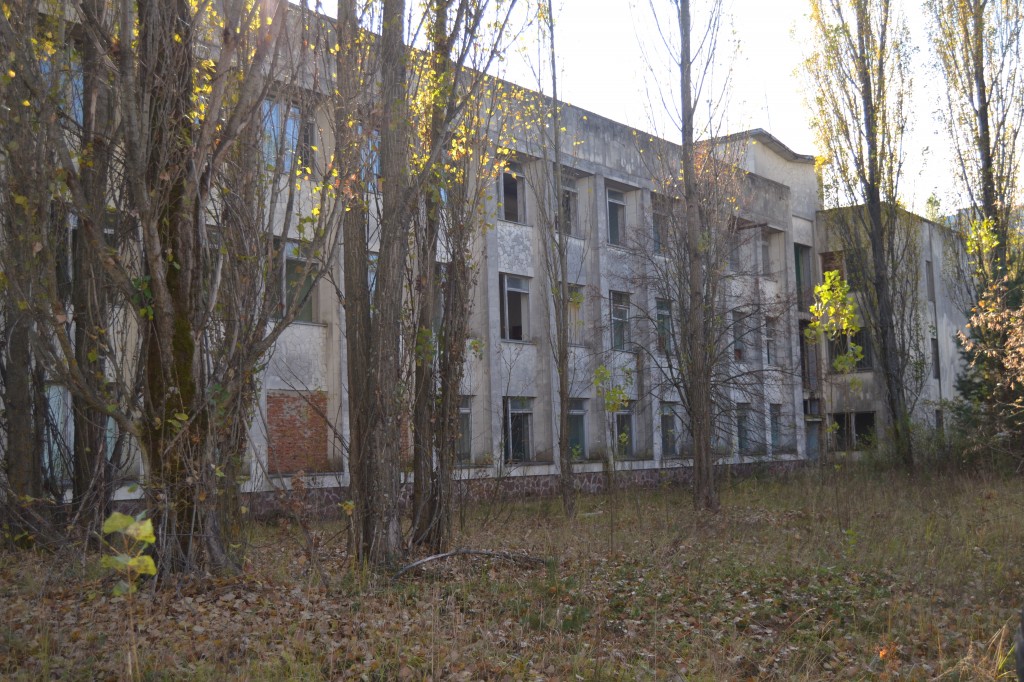
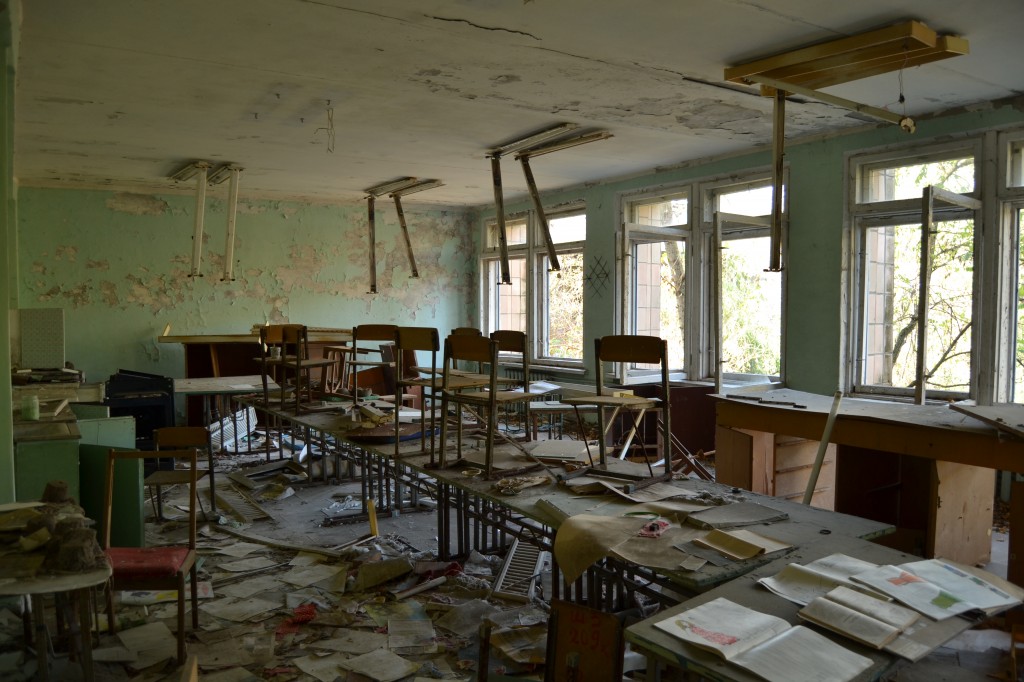
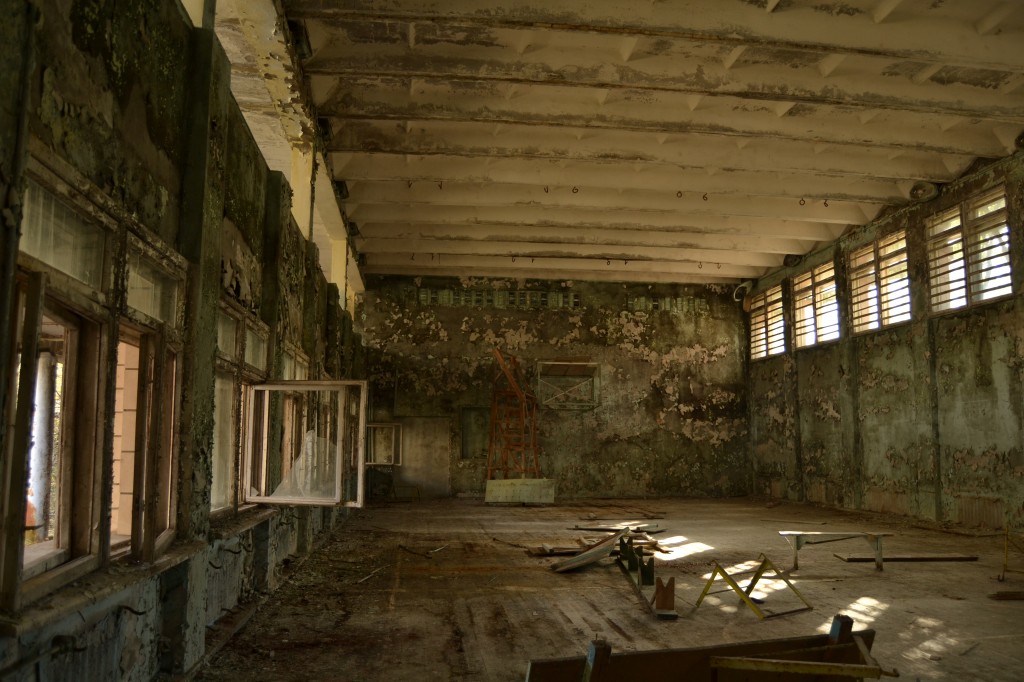
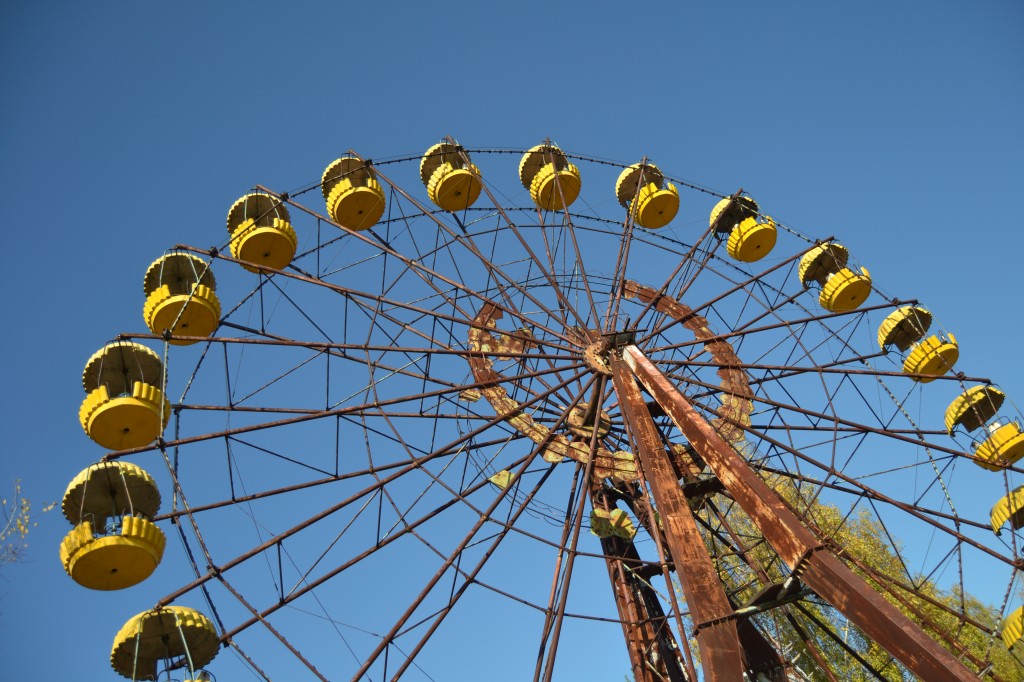
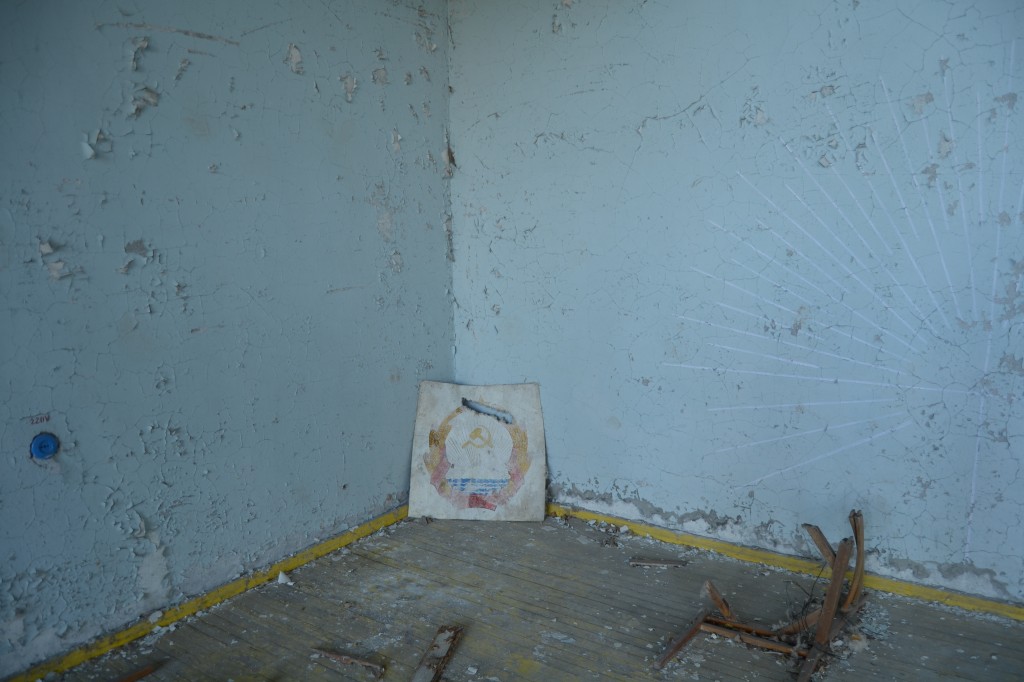
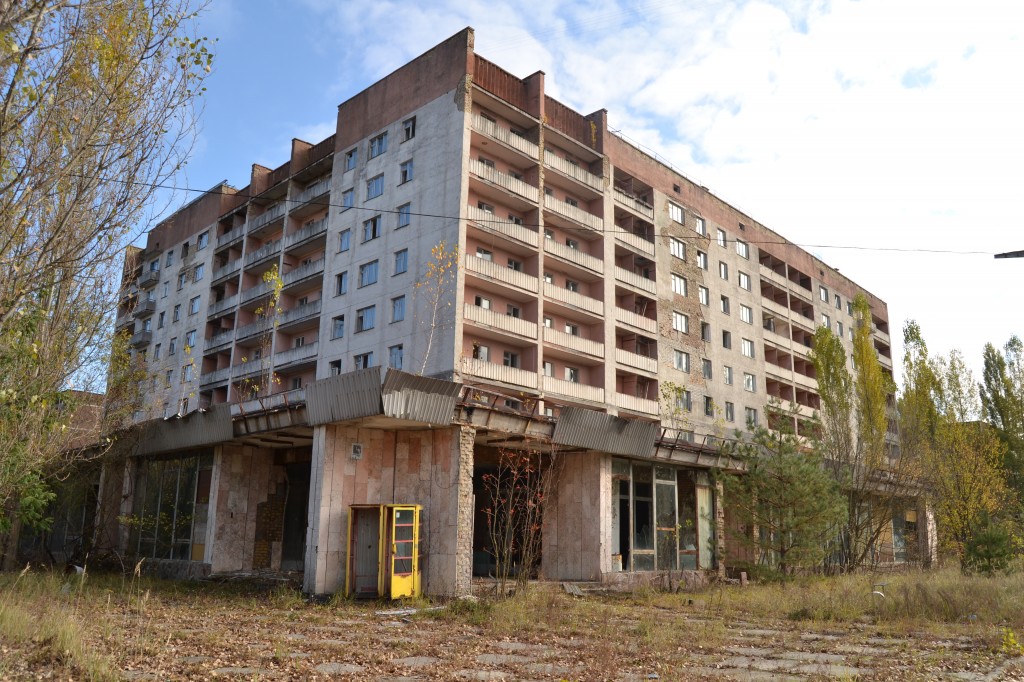
Men det var en speciell känsla att vandra på en gågata med vägskyltar om att se upp för lekande barn, samtidigt som träden bildade en tät snårskog runtomkring. Bakom träden stod de tomma lägenhetskomplexen och gapade rostigt tomma. Det ligger inte i Ukrainas intresse att bevara Tjernobylområdet  och de andra evakuerade byarna som de en gång varit, men av respekt till de som en gång bott där går man inte in i vissa bostadshus osv. Vår guide (som egentligen inte var en guide, utan var en kille på 30 bast som arbetade 15-dagarsintervaller på inne i Tjernobyl exclusion zone) guidade oss inne i Pripyjats gamla kulturhus, men i övrigt fick man ströva fritt på området. Det fanns som sagt inget engagemang att hålla stället intackt och inte heller våran säkerhet var bejakad då vi vandrade i fallfärdiga hus och skolor. Det var väldigt intressant att vara där, men det var skrämmande att se att det inte fanns intresse att bevara det som ett kulturarv. Antagligen så var det vår naiva och svenska sida som fick oss att reagera på detta. Vi menar, att om man till exempel ska besöka Zorn Muséet eller något annat kulturarv i Sverige så finns det ju bestämda vägar man får följa och man får inte gå på vissa områden med risk för att det ska slitas för mycket och falla i glömska. Detta avsaknade helt Tjernobylområdet.  Även det faktum att besöka Tjernobylområdet kostar mer än en årslön för en ukrainier genererar att området inte besöks utav inhemska personer utan bara turister.


Skolan i Pripyjat, där uppmätte vi faktiskt högst strålning på vår Geigermätare under hela turen. Inte ens 400 meter nära reaktorn var det så högt


Inhemsk mat som vi blev bjudna på inne på en resturang för de som jobbade med att bygga en ny sarkofag runt Reaktor 4

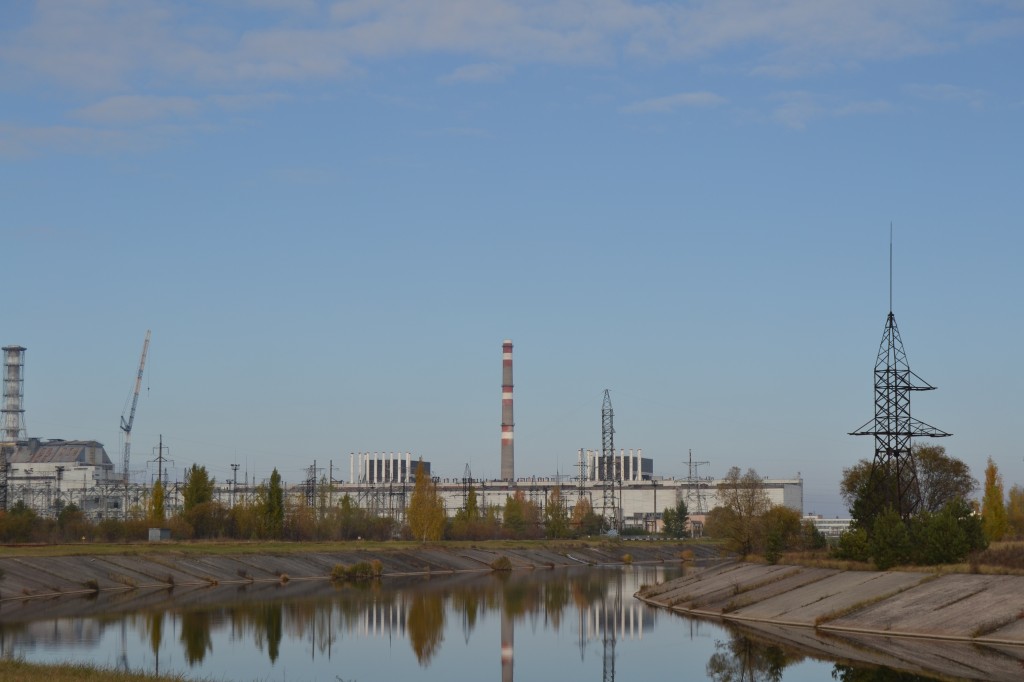
Det bör tilläggas som slutplädering i vårt inlägg om Tjernobyl, att vi kanske är några av de sista som har fått se Tjernobylområdet och Reaktor 4 som de är och var sedan katastrofen. Nu håller man på att så sakteliga montera ned Reaktor 4-tornet bit för bit, och man håller i stunden även på att bygga en ny sarkofag runt hela reaktorn för att förhindra ytterligare radioaktiva läckor. Tjernobyl är ett väldigt rostigt och sönderfallet ställe, så det är verkligen på tiden att någonting görs för att undika ytterligare skador i radioaktivitetens tecken.

Tack & bock / Alice&Sara

6 Comments