Skip to content

Nuclear Power? Yes Please Posts

Chris Busby and the Fallujah sex ratio – Part 1 (dishonesty)

The city of Fallujah in Iraq suffered through intense fighting during 2004, and US troops bombarded the city heavily. The US military has admitted to the use of white phosphorous, which is quite toxic though not necessarily cancerogenic. Whether depleted uranium (DU) weapons were used or not is still an open question, there is a number of statements in both directions from many different sources.

During the last few years there have been news reports about an alarming number of children born with deformities, and other serious health effects among the Fallujah population. In July 2010 a study by Chris Busby and coworkers was published in the International Journal on Environmental Research and Public health (here). The title of the article is the rather alarming Cancer, Infant Mortality and Birth Sex-Ratio in Fallujah, Iraq 2005–2009, and it reports on the results of a survey done in Fallujah that reveals drastic increases in various forms of cancer and birth defects.

The details of the study can be found directly in the paper (here), or from Busby’s presentation about it in Stockholm in August 2010 that is available on Youtube (here). A transcript of what he says in the presentation and the discussion after is given here.

There are many things that can be said about the survey and the quality of it. Considering the difficulties of performing the survey, and the limitations of this kind of survey (knocking on doors and asking about the health status of the people living there), one has to be very careful and consider all the weaknesses before drawing any conclusions. Busby and coworkers cover much of these concerns in section 2.3 of the article; Strength and Weaknesses. It says, among other things:

One weaknesses of this type of study is population leakage due to migration. Although ten years is used on the questionnaire, from analysis in earlier studies of this kind [7] it has become clear that there is leakage of cases (due to deaths and subsequent population movements) and so the recent five year period is employed.

In other words, if the survey gives the result that 100 people in a population of 1000 suffer from a certain disease, giving a rate of 10%, it means that the actual rate can be different due to the fact that some of the people suffering from the disease may have died or moved away before the survey was done. This makes sense, but then there is a strange passage:

However, as a consequence of such a population leakage it is clear that the result will show the minimum cancer rates existing in the study group. In earlier studies this effect was especially found for lung cancer which has a high mortality to incidence ratio.

This part is not so obvious. Of course, if the people who died or moved away suffered from the same disease, the rate would be higher if they had still been alive and had participated in the survey. But it could also be the opposite, the people who died or moved away did not suffer from the same disease, and if they were still alive and participated in the survey the rate would be lower. So, if the disease we are looking at has a high mortality rate, as in the case with lung cancer, then the assumption may be reasonable, depending on how many people that have moved away or died of other causes. Clear it is certainly not.

Another interesting thing is that, while Busby and co-authors in the article are very careful about not stating that uranium is the cause of the health effects, Busby has no qualms about laying out the words in other places. For instance, in the Green Audit report where he claimed that 10 tonnes of enriched uranium had leaked from the Hinkley Point nuclear power plant, he puts them together without further explanation:

Most recently, alarming increases in breast cancer, leukaemia, childhood cancer and congenital malformation/infant mortality increases were found in Fallujah, Iraq, a city where uranium weapons were employed and uranium particles will have been inhaled (Busby et al 2010).

So even though the original paper does not show any connection between uranium and the health effects, he makes it sound like there is an obvious connection when he refers to the paper in other works.

Well, let’s move on. In section 2.5 of the article the sex ratio is defined in one line as:

The population data in 5-year age groups was used to examine the sex ratio in 5-year birth cohorts.

In section 3, which covers the results of the survey, we read the following regarding the sex ratio:

The responses show that there is an anomalous sex ratio in the 0–4 age group. There are 860 males to 1000 females, a significant 18% reduction in the male births from the normal expected valueof 1,055 (267 boys expected, 234 observed; p < 0.01)

860 boys to 1000 girls after the 2004 battle, this does indeed sounds serious if the normal ratio is 1055. To use Busby’s own words from the BSRRW meeting:

“It is absolutely standard, and very rarely diverse at all, that number, unless there is some problem.”
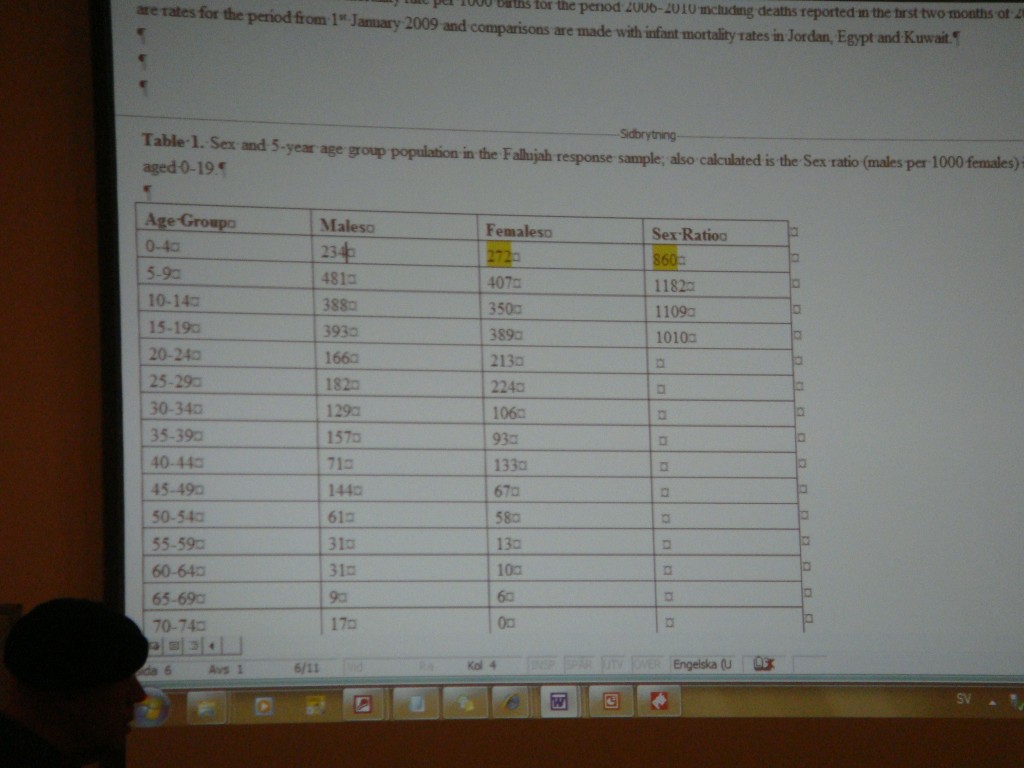
 

Chris Busby explaining the significance of the results with deviating sex ratio in Fallujah, at the BSRRW meeting in Stockholm, 10 August 2010.

But what possible reasons could there be for it? Section 3 of the paper continues:

Perturbation of the sex ratio is a well known consequence of exposure of mutagenic stress and results from the sensitivity of the male sex chromosome complement to damage (the females have two X chromosomes whereas the males have only one).

So according to Busby and co-authors, mutagenic stress is the cause of why less boys than girls are born. The text continues with an explanation of what can cause mutagenic stress (emphasis is mine):

A number have studies have examined sex-ratio and radiation exposure of mothers and fathers. Of relevance is the study of Muller et al. [10] of the offspring of 716 exposed fathers who were Uranium miners. There was a significant reduction in the birth sex ratio (fewer boys). Lejeune et al. (1960) [11,12] examined the offspring of fathers who had been treated with pelvic irradiation; at high doses there was an increase in the sex-ratio, but this reversed in the low doses (around 200 mSv). Schull et al. 1966 [13] found a reduction in the sex ratio in A-Bomb survivor fathers (mothers “unexposed”) for children born 1956–1962 a reversal of an earlier finding by Schulland Neel 1958 [14] of a positive effect in the 1948–1955 births. It should be noted that there were external and internal irradiation effects in these groups, with the internal effects predominating in the later years. Yoshimoto et al. 1991 [15] found an overall reduction in the sex ratio for A-Bomb survivors for children born 1946–1984. Thus the evidence suggests that exposure to ionising radiation at low doses and specifically exposure to Uranium may cause a reduction in the sex ratio.

The quoted references deal with uranium miners, medical radiation treatment, and radiation from the Hiroshima bomb. So, exposure to radioactivity among the parents may cause mutagenic stress, which leads to a reduction in the number of boys born. At least there were scientific reports about it during the 1950’s and 1960’s, five of the six references are quite old. One would expect that such a world famous radiation expert as Chris Busby should be able to back his reasoning with references that covers the development of the field until present instead of what happened more than 45 years ago. There is nothing wrong with referring to old articles, but if you only do it and ignore later developments (if they exist) then your line of reasoning may be very weak.

Regarding the low sex ratio in the case of Fallujah, could there be other reasons than uranium-based weapons? Please note that Busby and co-authors do not mention any of the studies that show a connection between deviating sex ratio and exposure to chemicals, heavy metals, smoking and other environmental effects (see for instance the Wikipedia entry on sex ratio). Busby does not even acknowledge the chemical toxicity of uranium, instead it has to be the radioactivity of uranium, if it is the cause. The authors mention depleted uranium several times, but are very cautious about drawing any conclusion regarding what is the reason. That is a wise approach considering all the uncertainties related to a study like this, and the fact that there are a number of other possible causes.

It is less wise, however, to emphasize uranium as a likely cause, or to claim that the 18% reduction of the sex ratio is significant when you are not even sure about what you have measured. During the talk at the BSRRW meeting in Stockholm in August 2010, a person in the audience, Dr. Eckerman, wanted to have a clarification of what the data really showed. After some confusion it turned out to be that the sex ratio was not derived from the number of born children, but from the number of children available at the time of the survey.

So, to repeat the quote from Busby’s presentation again:

“It is absolutely standard, and very rarely diverse at all, that number, unless there is some problem.”

As it turned out during the BSRRW meeting, there was indeed a problem. Not only did Busby ignore the earlier so cautious approach when he claimed that the deviation was significant, he also based the sex ratio on the wrong assumptions about the group of children.
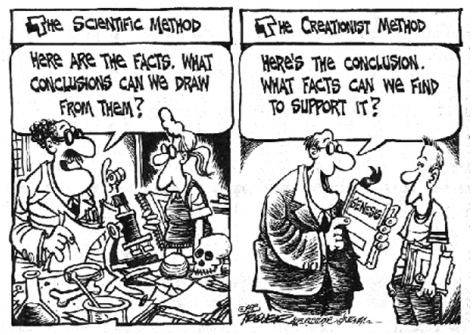
Somehow this classic picture seems appropriate...

You may wonder what’s the big fuss about? Well, if the sex ratio is to be trusted it has to be derived from the number of born children in the study group. If you instead only have data on the number of living children at the time you make the survey, then you are missing the children who may have died or moved away. Busby disqualified the method himself when I asked about the age group 5-9 years old, which seem to deviate in sex ratio in the opposite direction, i.e. there are significantly (13%) more boys than expected. To be fair to Busby, for the age group 5-9 there are more children that may have died or moved away (or moved to the city) than for the age group 0-4 years, there have been 5 more years when things can happen. But even with that in mind, it is very irresponsible of Busby to claim that it is such a significant finding, when he ignores all the weak points in his reasoning.

So all the time Busby has known that the reported sex ratio is based not on the number of born children, but instead on the number of children available at the time of the survey. The message from Dr. Eckerman is quite clear; to speculate about the causes of the deviating sex ratio should not be done without keeping the limitations of the study in mind. And if you are honest in your approach, you make a clear statement about this the next time you present the study. In spite of this, when Busby a few weeks later has a presentation about his study at the Human Rights Council in Geneva (22 September 2010) he repeats the same thing without any caveats. In fact he says:

Then most important, we found the sex ratio… […] This is the most important result that we had here.

It seems as if he has forgotten Eckerman’s objections. To be fair, he does say that there are some structural problems with the study, and that those concerns are brought up in the paper. But he gives no details about these structural problems during the talk. Instead he goes on with all sorts of explanations about the causes (including some ludicrous speculation about cold fusion based weapons!), as if they were clearly established facts. A year later all concerns about weaknesses in the study seem to be forgotten. The new article about Fallujah (Alaani et al., Conflict and Health 5:15 (2011)) starts off with the following statement in the second sentence (emphasis is mine):

In addition to the increased cancer and rates and infant deaths, the epidemiological study [1] showed that there was a sudden significant drop in the sex ratio (an indicator of genetic stress) in the cohort born in 2005, one year after the battles which occurred in the city, suggesting that the cause of all these effectsis related to the time of the US led invasion of the city in 2004.

I could buy the argument if it was phrased something like “the epidemiological study [1] gave an indication, although with large uncertainties, of a reduction in the sex ratio…” But as we have seen before it is not in the interest of Chris Busby to be clear about the details, at least not when the details make the case weaker. Instead he never misses a chance to bring it up, for instance in the RT interview from 26 October:

http://rt.com/news/uranium-birth-defects-fallujah-729/

or in the LLRC press release:

http://llrc.org/du/subtopic/fallujah20oct2011.htm


Busby has to push the line that there has been a significant change in the sex ratio, and without stating it clearly he and his co-authors do everything but saying it straight out that it must be due to uranium.

So we now have seen how Busby in writing is very careful with stating too clearly that there is a clear connection between the deviating sex ratio and some sort of uranium based weapons. In talks and interviews however, he clearly gives a different message. And he consistently ignores all other possible explanations, just as if they wouldn’t even exist.

Now the question is, is the deviating sex ratio in Fallujah even relevant? We will look at this issue in part 2. Stay tuned.


Mattias Lantz – member of the independent network Nuclear Power Yes Please


Related blog posts:

Chris Busby and the Fallujah sex ratio – Part 2 (incompetence)

Bad science – Chris Busby and his articles on Fallujah


7 Comments
Tack och farväl


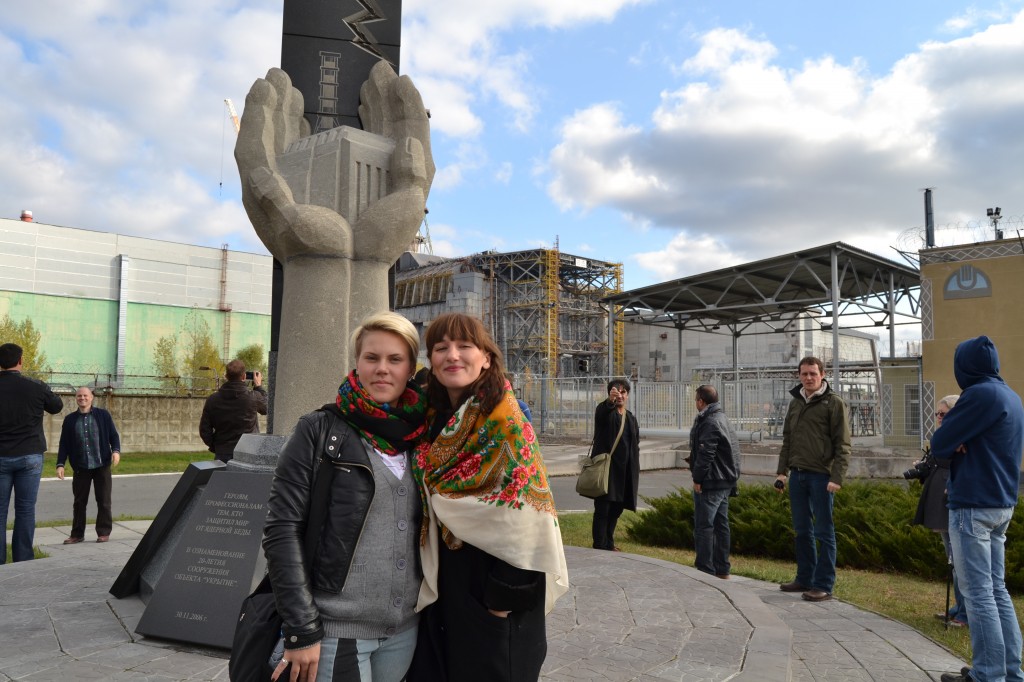
Nu kommer tiden då vi ska börja skriva ned all vår research från Ukraina i ett worddokument –  som kommer att bli vår projektrapport! Ps: på bilden ovan står vi 400 meter från Reaktor 4.

EDIT: Rapporten finns att läsa på denna länk.

Vi åkte till Ukraina med föreställningen om att det skulle finnas en misstänksamhet mot kärnkraft, med tanke på vad som hänt i Tjernobyl. Vi trodde också att det skulle finnas större folkligt engagemang för kärnkraftsfrågor (och andra politiska frågor). Men människor i Ukraina har svårt att engagera sig på grund av den korrupta politiska situationen i landet. Man måste söka tillstånd för att t ex prata på gatan, och man får inte tillstånd om man vill prata om saker som ifrågasätter den rådande politiken. Konsekvenserna kan leda till fängelsestraff om man trotsar lagen och pratar utan tillstånd. Även media är kontrollerad och stryper yttrandefrihet. Det är ingen som vet vad Energoatom (det statliga kärnkraftsföretaget) egentligen gör. Vi hörde ett rykte om att en ansvarig på Rivnes kärnkraftsverk var psykiskt sjuk, men att han fick jobba kvar ändå.

Eftersom det inte finns någon insyn i Energoatoms verksamhet, ingen medial diskussion om kärnkraft, ingen Tjernobylkatastrofen och kärnkraft idag eller ens möjligheter till folkligt engagemang i sakfrågor, diskuteras och debatteras inte kärnkraftsfrågor offentligt. Energoatom för sina affärer till sin egen fördel, inte till folkets. Ukraina kärnkraftsverk producerar fyra gånger så mycket energi som landet förbrukar, och detta säljer Energoatom till angränsande länder. Men folket får ej ta del av dessa pengar, och ingen vet vad Energoatom gör med pengarna heller. Anmärkningsvärt är att Ukrainas el i Vitryssland är hälften så dyr i jämförelse med nationellt och att Ukraina påstår sig inte ha tillräckligt med pengar att betala för den sarkofag som MÅSTE byggas för att omsluta Reaktor 4. En annan anekdot är att när vi åkte mellan Kiev och Tjernihiv så var gatulamporna avstängda för att spara in på el, vilket också enligt en källa var vanligt förekommande. (All fakta presenterad ovan är från våra egna källor ifrån Ukraina, inkluderar en vetenskapsman i naturtekniska ämnen, Sveriges vice ambassadör och andra privatpersoner.)

Men den största bidragande faktorn till icke-intresse för kärnkraftsfrågor är fortfarande den utbredda fattigdomen. Intresse för energifrågor (och miljöfrågor i allmänhet) är en klassfråga i Ukraina. Samtidigt har människor en känsla av att inte kunna påverka den politiska eliten på grund av korruption och avsaknad demokrati. Ukraina behöver komma längre i sin demokratiprocess, avskaffa sitt korrupta system som genomsyrar samhället och balansera upp klyftan mellan överklass och underklass för att intresse för kärnkraft/energifrågor ska infinnas. Glöm då inte heller det Sovjetiska arvet som också spelar en stor roll för Ukrainas mentalitet.

Med detta inlägg kommer vi att avsluta ett kort men intensivt och innehållsrikt samarbete här på bloggen. Vi hoppas att ni har följt vår resa med nöje och att ett intresse eller större nyfikenhet för Ukraina har skapats. Det är ett fantastiskt land med så mycket möjligheter att utvecklas, låt oss alla hoppas på en utveckling mot demokratiska ideal! Skulle ni vilja resa dit (kanske kombinera med Fotbolls EM som arrangeras där nästa år!) så har vi en uppsjö med restips. Det är bara att höra av er!

I och med vårt rapportskrivande kommer vi nu att behöva lite material till vår bakgrund. Sitter du och ruvar på massa värdefull vetskap om kärnkraft och atomklyvning får du väldigt gärna maila oss och dela med dig. Eller kanske vill du läsa vår rapport när den är klar i december? Släng iväg ett mail till oss på följande adresser:
alicegrudd@gmail.com &/eller
SP09SarGom@falufri.se

Comments closed

Chernobyl Exclusion Zone

På grund av lite uppkopplingsproblem uteblev några dagars summering på bloggen från Ukraina. Detta tar vi igen nu efter att vi har landat i Sverige och smått försökt att återgå till vardagen. Efter att vi besökt Olga i Tjernihiv, ätit middag hos Yuliya och Tatanya i förorten så begav vi oss till Tjernobyl i en fullsmockad turistbuss. Tjernobylturisterna var av blandad kompott, vilka vill egentligen besöka en radioaktiv zon och begrunda Sovjetarv? Våra medpassagerare bestod av två amerikanska tanter med varsin käpp och en viss förvirrad uppsyn, heterogena kärnfysikstudenter från Tyskland, pinsamma ungkarlar från Sverige som knappt släppt berusningen (och vad som hänt kvällen innan), tre par på kärlekssemester i Kiev (av blandad nationalitet), ett gäng glada serber och vi, två artonåringar från Falun!

Gemensamt för alla vi som besökte Tjernobyl denna 22:a oktober var att vi betalat först en depositavgift (som vi inte fick tillbaka trots löften) på 50 dollar, plus 160 dollar per person och icke-obligatorisk geigermätare på 20 dollar. Vi reste med företaget SoloEast Travel och på deras hemsida finns all information att tillgå. Dock står det att resor inte genomförs längre, men med lite dollar och korrespondens är allting möjligt i Ukraina. Liksom att arrangera en individuell resa, så som en man från Sidney hade gjort. Honom träffade vi på Tjernobyl Museet i Kiev och han berättade att han hade spenderat tre dagar i Tjernobylområdet tillsammans med en privat guide. Det kostade dock 550 dollar per dag, men är absolut möjligt vid speciella önskemål.

Men hur var det att besöka Tjernobylområdet då? För att sammanfatta alla våra intryck under ett och samma spann kan vi säga att det var svårt att ta till sig att det en gång har funnits ett fungerande samhälle där. Skogen hade verkligen fått leva sitt eget liv och allt av något värde var plundrat. Sedan kände vi också att våra tidigare diskussioner om kärnkraft hade påverkat oss i den grad att vi delade den ukraina föreställningen av att detta är något som har hänt i det förgångna, att Ukraina har gått vidare och behandlar nya problem. Befolkningen i Ukraina vill inte  endast bli förknippade med Tjernobylkatastrofen, utan försöker bli förknippade med andra positiva kännetecken för landet så som rik arkitektur osv.

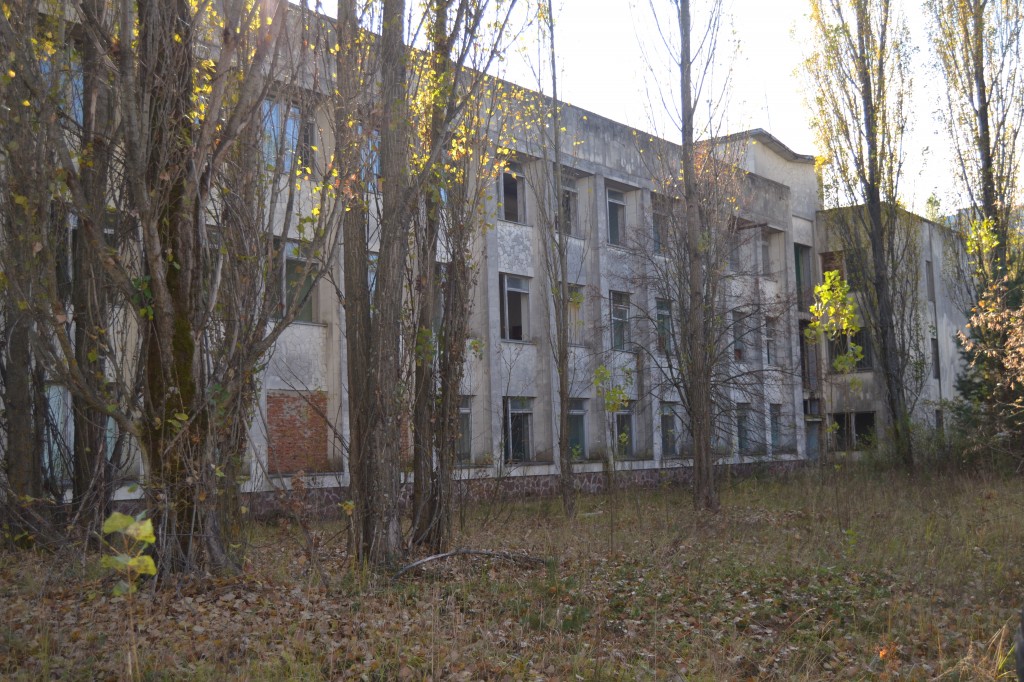
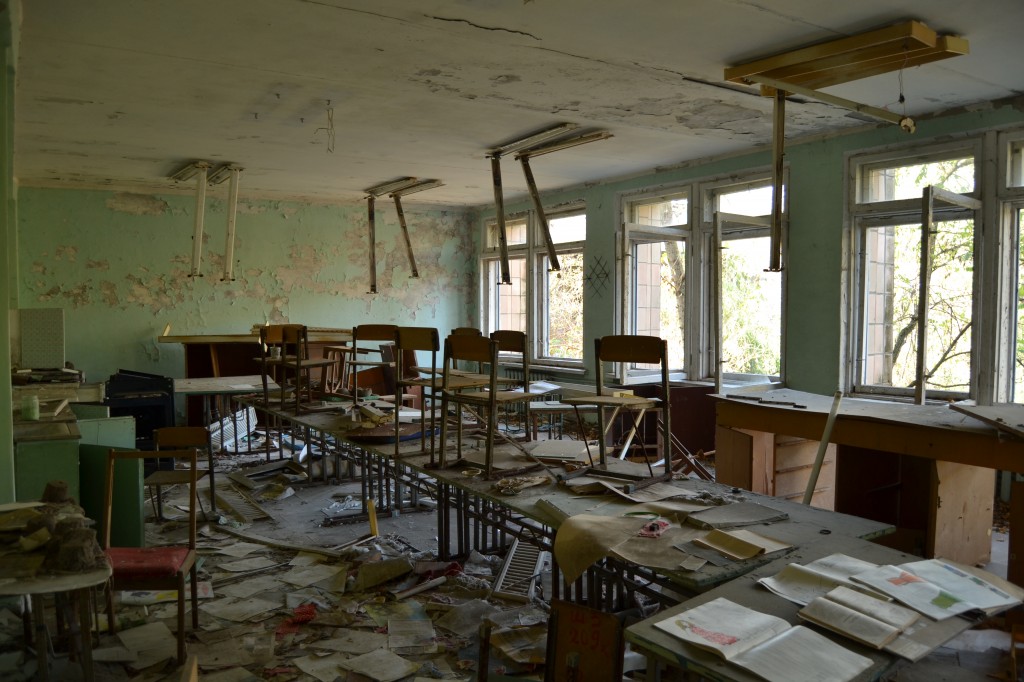
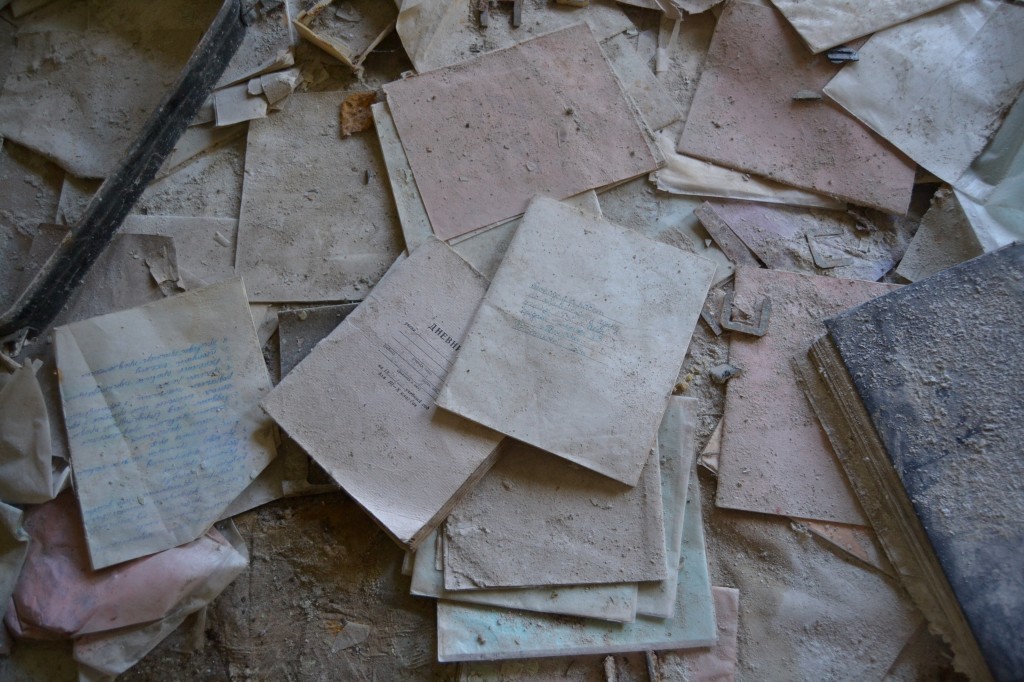
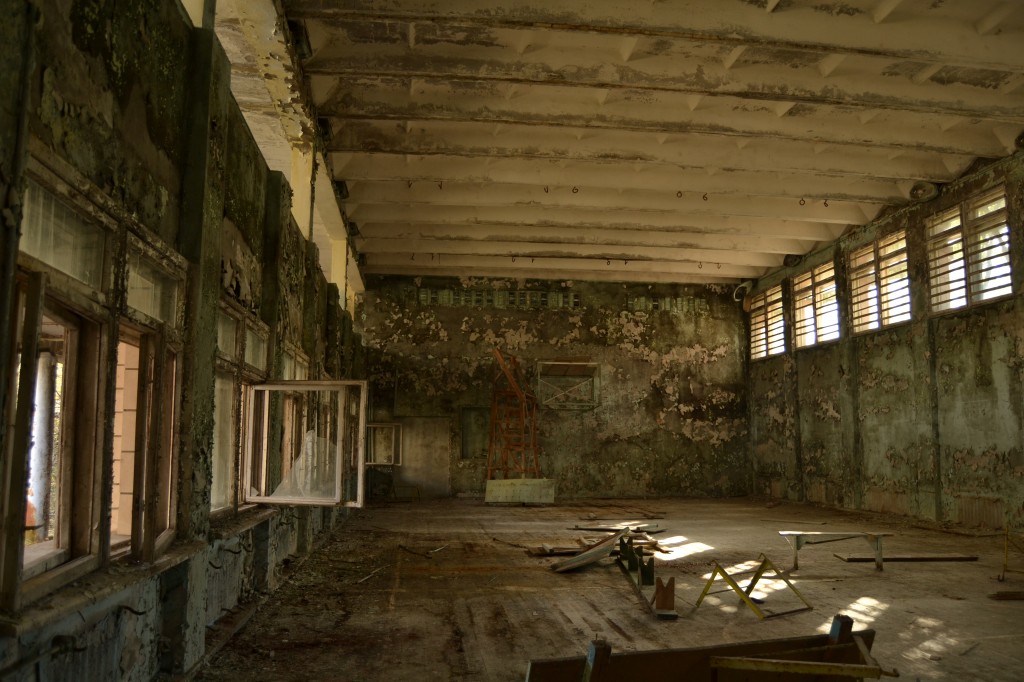
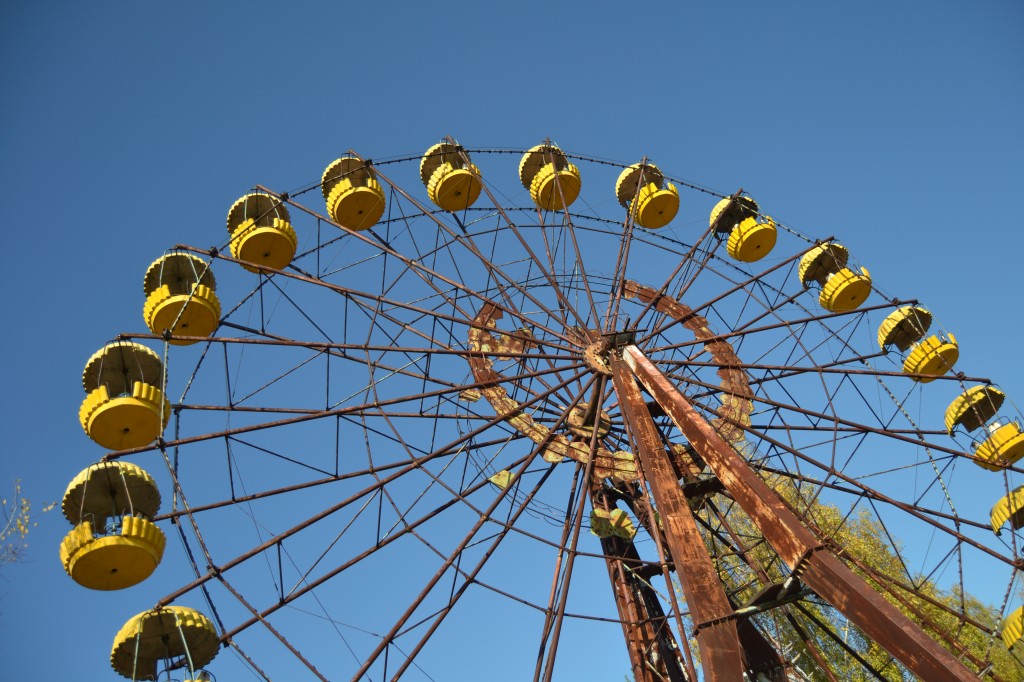
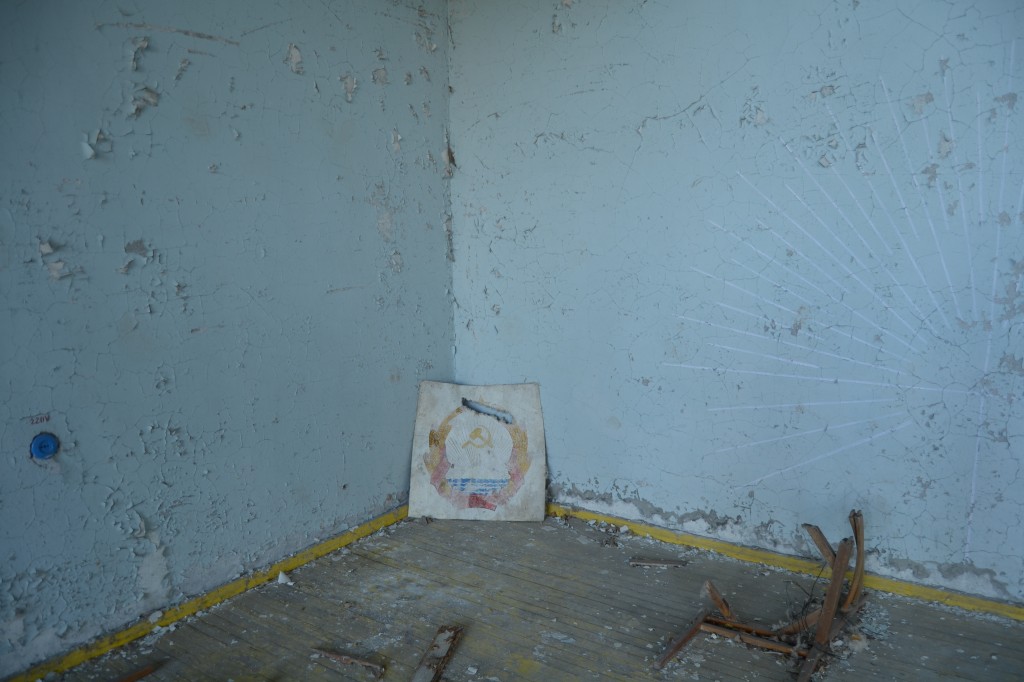
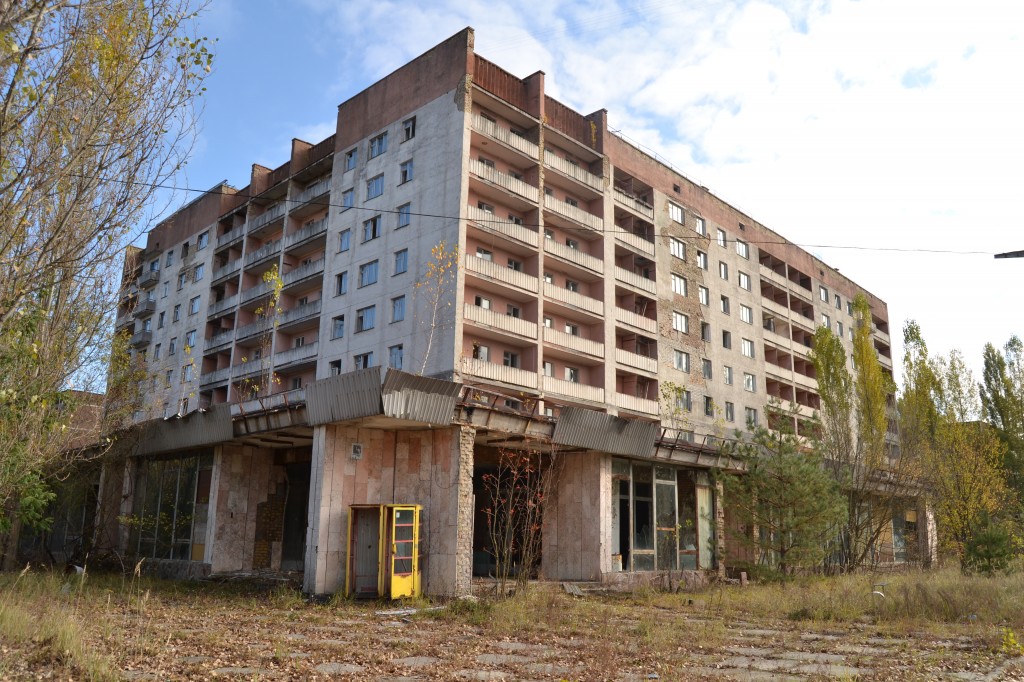
Men det var en speciell känsla att vandra på en gågata med vägskyltar om att se upp för lekande barn, samtidigt som träden bildade en tät snårskog runtomkring. Bakom träden stod de tomma lägenhetskomplexen och gapade rostigt tomma. Det ligger inte i Ukrainas intresse att bevara Tjernobylområdet  och de andra evakuerade byarna som de en gång varit, men av respekt till de som en gång bott där går man inte in i vissa bostadshus osv. Vår guide (som egentligen inte var en guide, utan var en kille på 30 bast som arbetade 15-dagarsintervaller på inne i Tjernobyl exclusion zone) guidade oss inne i Pripyjats gamla kulturhus, men i övrigt fick man ströva fritt på området. Det fanns som sagt inget engagemang att hålla stället intackt och inte heller våran säkerhet var bejakad då vi vandrade i fallfärdiga hus och skolor. Det var väldigt intressant att vara där, men det var skrämmande att se att det inte fanns intresse att bevara det som ett kulturarv. Antagligen så var det vår naiva och svenska sida som fick oss att reagera på detta. Vi menar, att om man till exempel ska besöka Zorn Muséet eller något annat kulturarv i Sverige så finns det ju bestämda vägar man får följa och man får inte gå på vissa områden med risk för att det ska slitas för mycket och falla i glömska. Detta avsaknade helt Tjernobylområdet.  Även det faktum att besöka Tjernobylområdet kostar mer än en årslön för en ukrainier genererar att området inte besöks utav inhemska personer utan bara turister.


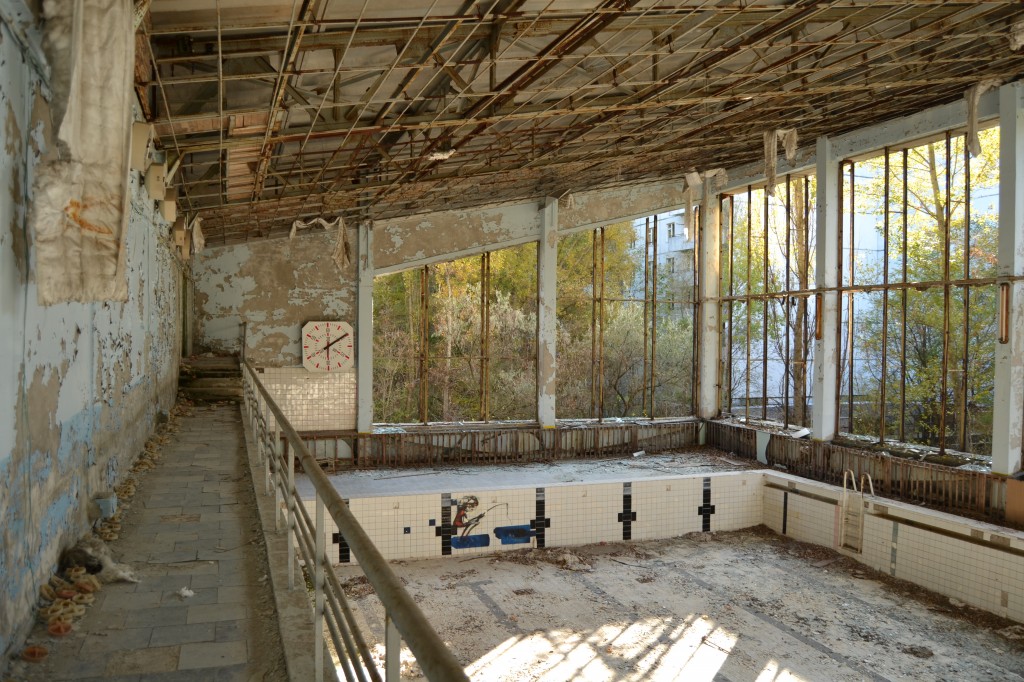
Skolan i Pripyjat, där uppmätte vi faktiskt högst strålning på vår Geigermätare under hela turen. Inte ens 400 meter nära reaktorn var det så högt


Inhemsk mat som vi blev bjudna på inne på en resturang för de som jobbade med att bygga en ny sarkofag runt Reaktor 4

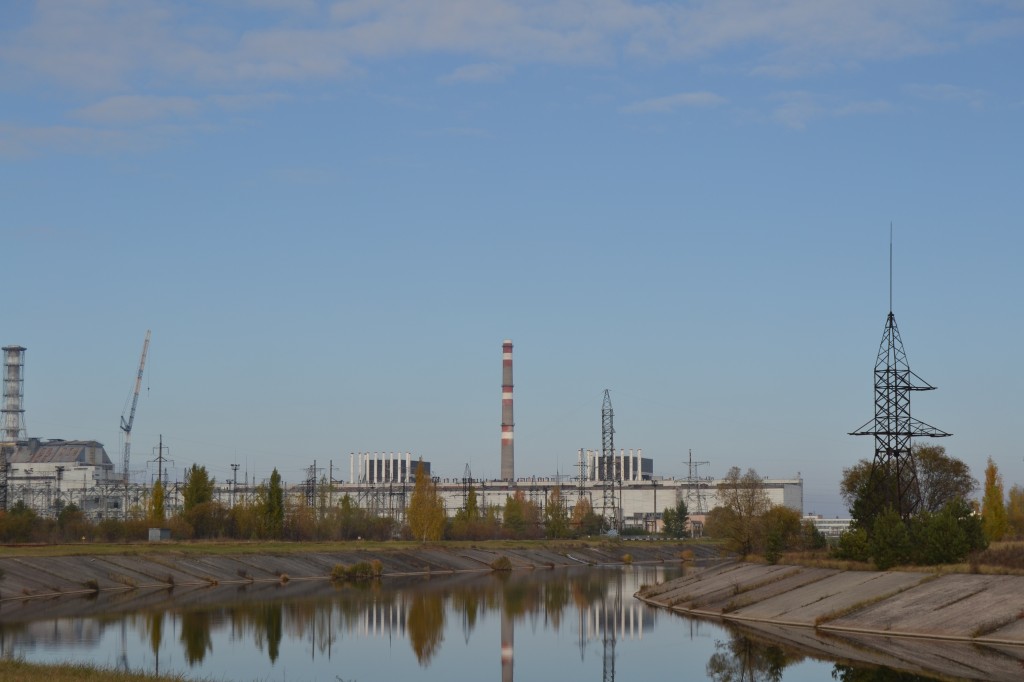
Det bör tilläggas som slutplädering i vårt inlägg om Tjernobyl, att vi kanske är några av de sista som har fått se Tjernobylområdet och Reaktor 4 som de är och var sedan katastrofen. Nu håller man på att så sakteliga montera ned Reaktor 4-tornet bit för bit, och man håller i stunden även på att bygga en ny sarkofag runt hela reaktorn för att förhindra ytterligare radioaktiva läckor. Tjernobyl är ett väldigt rostigt och sönderfallet ställe, så det är verkligen på tiden att någonting görs för att undika ytterligare skador i radioaktivitetens tecken.

Tack & bock / Alice&Sara

6 Comments

Tjernihiv

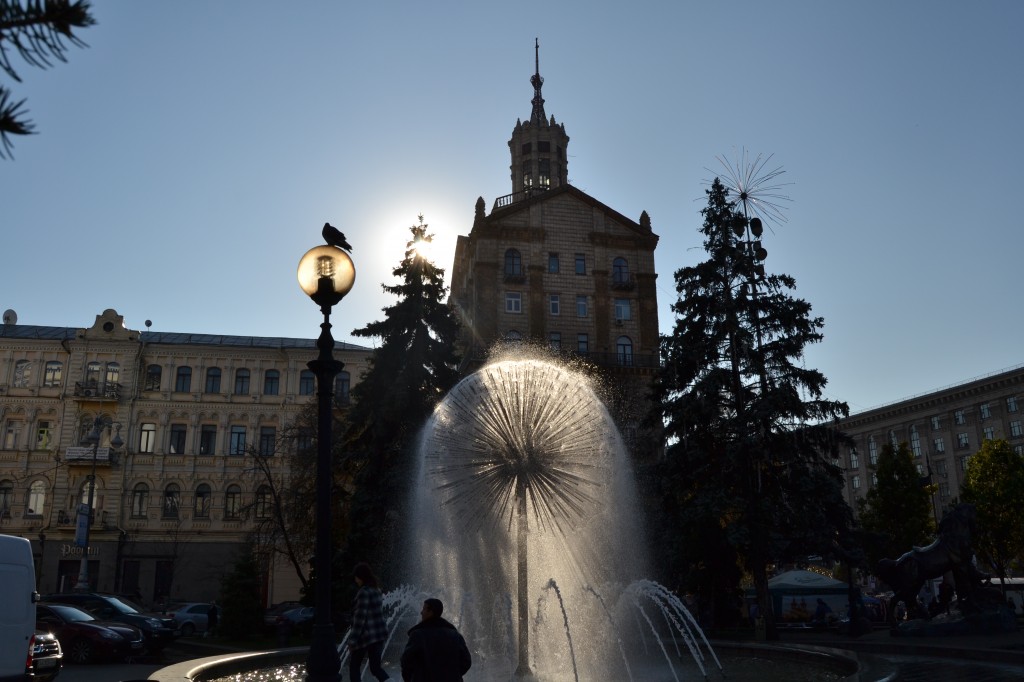
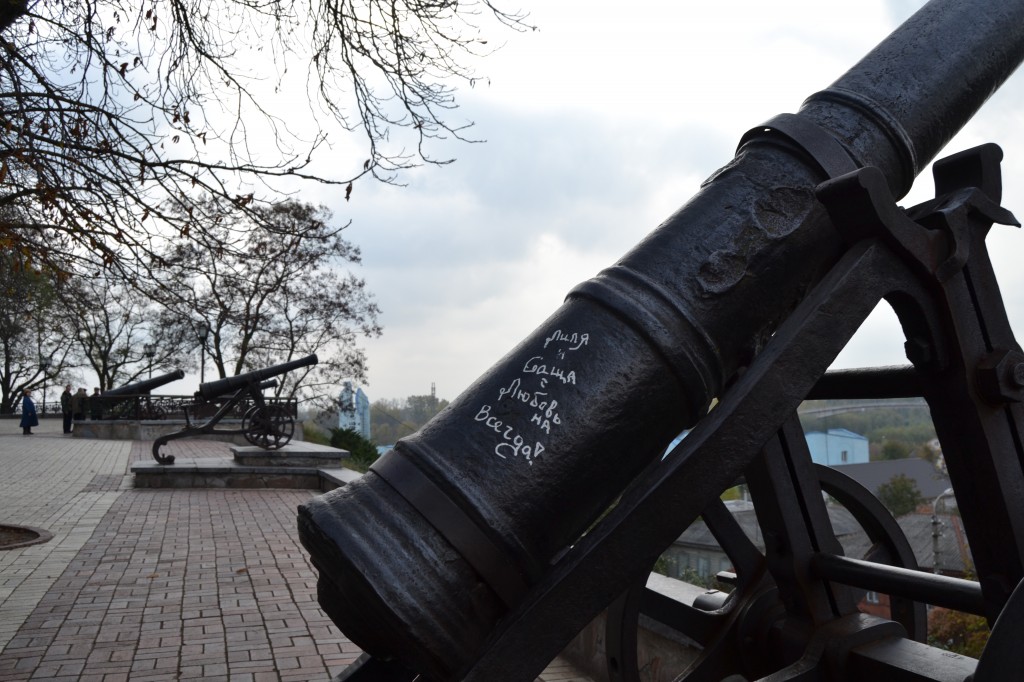
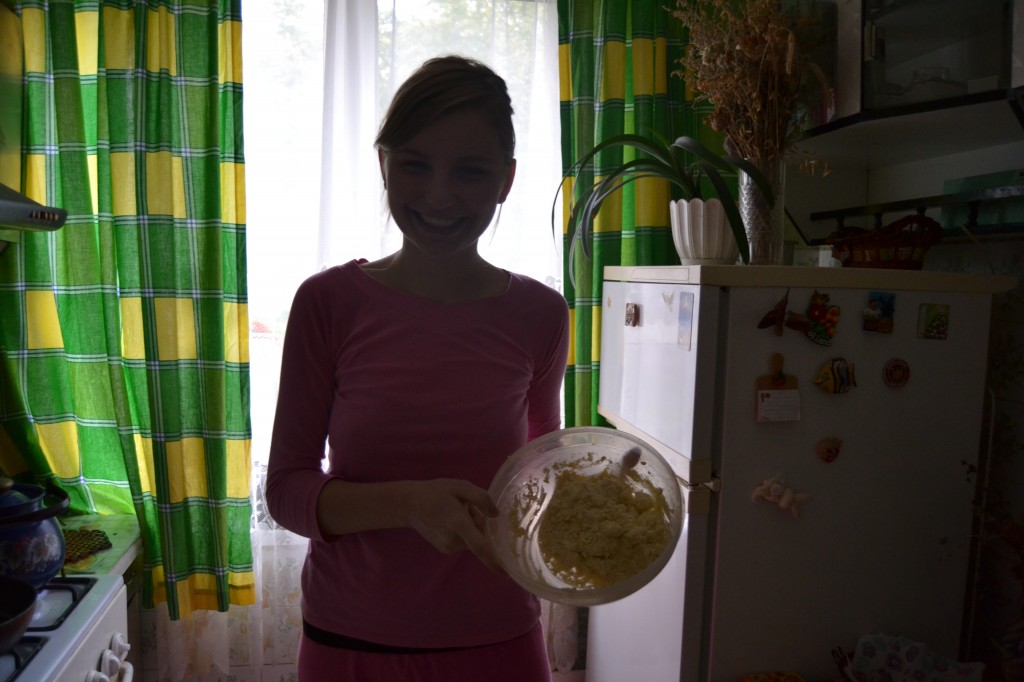
Igår hade vi ett otroligt givande möte på svenska ambassaden där vi träffade Mårten Ehnberg och hans assistent och diskuterade vad ligger bakom attityderna till kärnkraft här (lovar att uppdatera mer ingående). Sedan tog vi en minibuss till Tjernihiv. En relativt stor stad på väg till Vitryssland. Där möttes vi av en fantastisk student vid namn Olga. Hon bjöd oss in på traditionell ukrainsk mat samt sightseening och intressanta diskussioner kring kärnkraft. Nu är vi så så himla trötta efter en middag med Yuliya & Tanya i en av Kievs förorter. Imorgon åker vi till TJERNOBYL. Ofattbart. Hela resan. Allting. Här kommer några bilder. Vi skriver mer imorgon.

Comments closed

Chris Busby – Scary Rider

A few weeks ago there were some absurd information posted on the BSRRW web site, portraying our favourite alarmist Chris Busby (who recently turned into a quack) in some sort of road movie. In this movie he is accompanied by Ditta Rietuma, member of the supporter club BSRRW, as well as the Baltic Sea Regional Office of the ECRR (sounds fancy, doesn’t it?). First they go to Socialstyrelsen (The Swedish National Board of Health and Welfare) in order to request data from the cancer registry for the purpose of investigating cancer rates after Chernobyl, with the supposed increased effect from the Baltic Sea (the world’s most radioactive sea, as they call it).

The information is on the main page of the BSRRW web site, but here is a direct link to the Youtube film in case that the other link changes.

Below is a transcript of what Busby says before entering Socialstyrelsen:

Here we are. Ok I’m standing outside the Socialstyrelsen in Stockholm. This is the social welfare place that involves itself with human health, and the director, the medical director of this outfit is Lars-Erik Holm who is the ex-director of the International Commission on Radiological Protection. So this is a little like putting Genghin Khan in charge of something. Because this guy, Lars-Erik Holm, believes that radiation is safe and can’t harm you, and he says that the outcome of the Chernobyl accident is that there were just a few thyroid cancers and that’s it.

So we’re going in now to talk to some apparatchik here, trying to get data on cancer. Because of course the Baltic Sea is very radioactive and we want to see if it’s having any effect on the people who are living on the shores of the Baltic Sea. So, we’re going to try to get the data, but of course so far they’ve said that they’re not going to give us the data.

So we’re going to see what kind of data that we can get, and put a little bit of pressure on them, you know, about this matter, which is really essentially a question about human rights. Because after all if you have a country and you have a government and you have a Socialstyrelsen, that are supposed to look after the people, but actually allows the north to die of cancer because the director of the outfit happens to be a nuclear industry stooge from way back. Then this is a matter of human rights, and at some point it has to go to court.

Some statement indeed, sounds pretty serious. And it is quite some claim that the director of Socialstyrelsen is payed by the nuclear industry to allow people in northern Sweden to die from cancer. Typical scaremongering from a scaremonger, but hardly a typical behaviour from a person who claims to be professor and scientist (and makes a big deal about others who are not).

Busby leaves Socialstyrelsen after having been denied the data. The second part of the road movie (here) shows Busby and Rietuma, on a motorcycle, delivering a letter of complaint to the Chancellor of Justice, with the title “Human Rights and Environmental Protection Laws addressing the issue of the most radioactive sea in the world – The Baltic Sea.

The letter of complaint is signed by the following notable persons:

  • Chris Busby — Scientific secretary of the ECRR
  • Ditta Rietuma — General secretary of the Baltic Sea Regional office, ECRR
  • Roland von Malmborg — Chairman of the Baltic Sea Regional Radioactivity Watch NGO
  • Åke Sundström — Board of the International Foundation for Research on Radioactivity Risk
  • Olle Johansson — ECRR group at the Karolinska Institute

The signatories reveal some interesting information regarding their supporter clubs. For instance we find that Karolinska Institutet, who awards the Nobel Price in Physiology or Medicine, has an ECRR group. Are there more members than Olle Johansson at KI? It is at least a relief to see that he is not a member of the Nobel Assembly (here). Then we find a connection between Åke Sundström and the mysterious IFRRR web site which sponsors some of the ECRR work. Good to know that it isn’t some Russian gas company behind it, there are enough conspiracy theories floating around as it is.

The complaint starts with referring to various declarations and resolutions from the United Nations and other organisations regarding people’s fundamental rights of good health and environment. In summary, they state that the public authorities in each country should protect the environment of its population and give adequate information about the environment and related health risks. If this is not done, they should be taken to national court, and if such a court process is not given, the matter is to be taken to the international court. Sounds pretty reasonable to me, if you have a valid claim.

After this introduction the main part of the complaint starts:

“Now therefore we refer to the matter of: Widespread radioactive pollution of the Baltic Sea and Baltic Sea coasts and projects involving further such contamination:”

Hm, we have heard these claims before, haven’t we? They were not valid then, are they now? Let’s return to that issue later on, now we continue with the letter of complaint. There are 7 points being made:

  • 1. Much information on the radioactivity of the Baltic Sea region is missing. Whilst some information on the current levels of environmental contamination is available in scientific literature, the public is left uninformed. Missing is even the interpretation in terms of effects of environmental contamination on public health (see below). The issue is not properly discussed, nor is it open to such discussion by those citizens affected by environmental degradation. Huge efforts are made to limit pollution from cigarette smoke even though the evidence of ill health from passive smoking is weaker than the evidence of ill health due to radioactive contamination following Chernobyl effects in Sweden (Martin Tondel et al., 2004)

Missing information? Well, the HELCOM documentation is out there for anybody to read. And for those who have the patience to read the full report on radioactivity in the Baltic Sea, rather than BSRRW’s cherry picked extract, it is clear that the radioactivity is of some concern but hardly the most urgent environmental matter for the Baltic Sea. If Busby and his supporter gang really cared about bringing the information out to the public they could do much better than spreading the misinformation that nuclear power plants are the main source of the radioactivity in the Baltic Sea. For the record, there is a contribution of radioactivity to the Baltic Sea from the running plants, but it is only about 0.04% of the total amount, more than 80% comes from the Chernobyl accident. And besides a number of hot spots in the bottom sediments, which admittedly are of some concern, the levels of radioactivity in the sea water, and in fish, are not near any values where health effects can be suspected. Furthermore, the total amount of man-made radioactivity in the Baltic Sea amounts to about 30% of the natural levels. This is information that you will not find if you choose to listen to Busby and BSRRW (credit to the anti-nuclear group MILKAS for keeping the presentation by Sven P. Nielsen on their web site).

The claim about weak evidence for ill effects due to passive smoking is quite remarkable. There have been some controversy on the issue, but mainly due to studies sponsored by the tobacco industry. So it is interesting to see that Busby and his gang choose to disregard most of the scientific studies on the issue (see for instance the Wikipedia page on passive smoking) and prefers to side with the tobacco industry. All this in order to try to make the point that the evidence for health effects in Sweden after the Chernobyl accident are better established.

So what are the evidence? There are, to my knowledge, only two studies regarding health effects due to Chernobyl in Sweden:

  • The first is the highly criticized PhD thesis by Tondel. Besides the fact that the opponent more or less cut it into pieces, it had the extraordinary feature that the PhD thesis jury gave a statement that they did not agree with any of the conclusions drawn in the thesis, but that they let it pass because the defendant had fulfilled the formal provisions for a PhD thesis (analysis work, publications in peer review, etc.). Here are a few links about the debate that followed in the Swedish medical doctor’s magazine Läkartidningen: Holm et al., and Tondel et al’s response. Oh, by the way, some people might find it to be of interest that one of Tondel’s supervisors is Lennart Hardell.
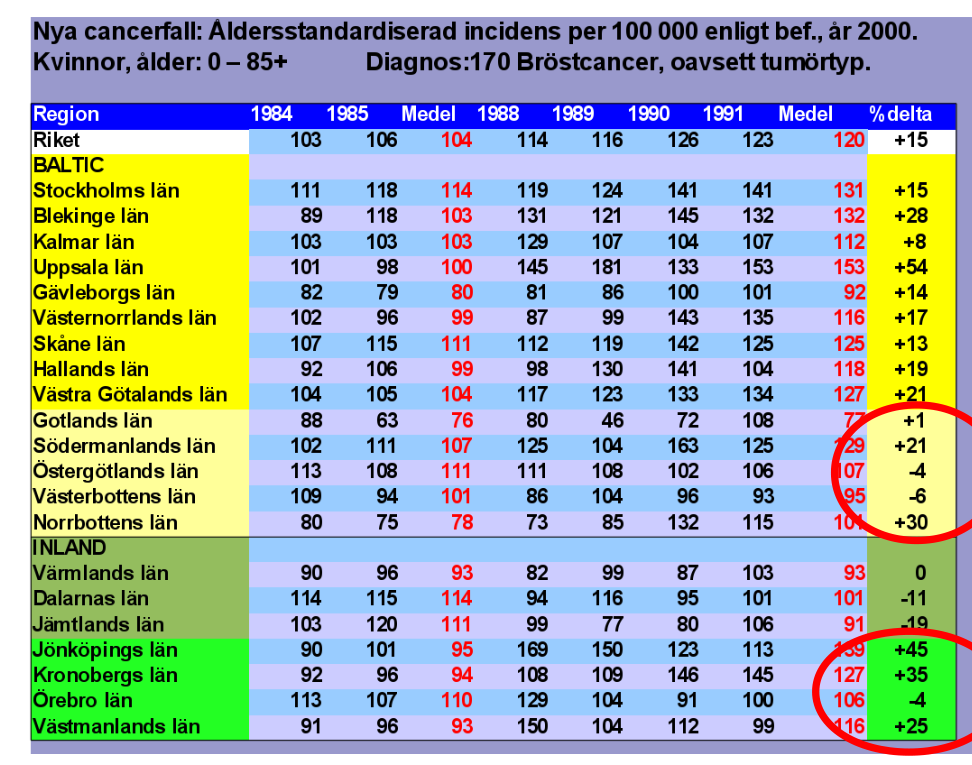
  • The second is Chris Busby’s attempt to scare the population around the Baltic Sea with data from Socialstyrelsen’s cancer statistics data base (available to the public here), where he claimed an increase in breast cancer in counties bordering the Baltic Sea, while there was no increase in inland counties. It turned out to be a very lousy attempt of cherry-picking, where he (1) disregards the data that falsifies his theory, (2) does not correct for the general linear increase of breast cancer that is evident in the data from 1970 and on, (3) ignores the fact that breast cancer screening was introduced in some of the counties during the time period, giving a temporal increase in the incidence rates, and (4) makes an alarmistic press statement about his so called research findings. Below is a picture showing the data used by Busby, but I have added the counties that he did not include. More information is given in my report from the BSRRW meeting in Stockholm, August 2010 (here).
Chris Busby's table for breast cancer from 2010, added are the counties that Busby "forgot" to include. Interestingly, more than half of the forgotten counties do not agree with Busby's thesis


So to claim that there are good evidence for “ill health due to radioactive contamination following Chernobyl effects in Sweden” is a bit…wrong.

And if they really think that the public is left uninformed about some issues (the real ones that is, not the fake ones made up by Busby), why not write to the public opinion pages on newspapers and bring it up for public debate, rather than starting off with writing complaints to the Chancellor of Justice?


  • 2. Such discussion and consultation is essential to inform on the potential harm of this contamination.

Sure, we need to discuss the environmental status along the Baltic Sea, and possible health effects. Once we have dealt with the high levels of dioxine, the PCBs, the eutrophication, the over fishing, the annual problems with the algea, and the occasional oil spills, then we can start asking ourselves if the radioactivity in the Baltic Sea is something to worry about, i.e. if there is something that the HELCOM studies have missed. But the radioactivity in the sea is not an issue just because a certain self-proclaimed expert and his fan club happens to say so. It could be worth listening to if he had had a serious approach to the issue. Instead he cheated (or was extremely careless in how he handled the data, very remarkable for a person who claims to be professor and scientist) with publicly available data and made an alarmistic press statement about his conclusions. So we can happily have a discussion about the Baltic Sea and its environmental status. But will we learn anything by inviting Chris Busby and the BSRRW supporter club to the meeting? I seriously doubt it. The link below is an example of where BSRRW clearly shows that they, at best, would be a comical side show:

http://www.bsrrw.org/?page_id=89

They refer to a study by SKB and the Risö Laboratory where uranium contents in the ground, in sea water, and in plants, have been measured near the Forsmark nuclear plant. After the link to the report comes a very funny comment: “BSRRW: The conclusion that Uranium isotopes around Forsmark NPP do not exceed the natural backgound radiation are based on the wrong ICRP model.” Yep. They actually state that there is something wrong with the measurements because of Busby’s claims about the ICRP model being corrupt when it comes to radiation risk. In other words, they refer to Busby’s claims but clearly show that they have no clue about what it is that he is saying. Some supporter club indeed, or should we say sect?


  • 3. Many informational aspects of the contamination levels are not available or have not been obtained through measurements, e.g. (i) sea to land transfer of radionuclide particles and inhalation in coastal environments (ii) concentration of uranium particulates in coastal environments.

Besides once again ignoring all the work through HELCOM, and the SKB/Risö study mentioned above, this is just another shameless attempt to push forward Busby’s cherished idea about a coastal effect. He claims that there is an effect, again on a very loose foundation. When we looked into his claims about Hinkley Point we found that he tried to fit a curve to data that were clearly from a random distribution in order to claim that this effect is real. In the present case we should credit Busby for not referring to any of his earlier claims, it is just words, words, words.

The second point about uranium particulates is a bit ridiculous, not the least when considering the SKB/Risö study mentioned above. Furthermore, Busby and his gang could start with the exercise of estimating how much uranium that is brought into the Baltic Sea every year from the Swedish rivers, they will probably be surprised.


  • 4. Private industry continuing contamination of the Baltic (e.g. Studsvik, Fortum, E.ON, Vattenfall, etc) has not been properly made subject to any of the procedures on public participation in decision-making.

No public participation? I don’t know what they are smoking in this case, but if it is not ignorance then it is a lie. The nuclear industry (and some other industries as well) repeatedly has meetings with locals on various issues, including environmental effects (so called “samråd”). There is a continuous process of informing local stakeholders on these issues, and the stakeholders can make their voices heard. This does not mean that the opinions of the local stakeholders will be followed, but they get the chance to get heard, and may appeal to higher instances if they feel that their rights have been sidestepped. Besides that, all the activities are regulated through laws and regulations in order to protect the interests of the people. It is up to goverment authorities, such as the Swedish Radiation Safety Authority (Strålsäkerhetsmyndigheten) to inspect that these issues are properly handled by the industry. And in case that somebody has missed it, these government authorities are implementing the policies and laws that have been decided in the parliament of Sweden, which since 1921 is a representative democracy with universal suffrage. We can forgive Busby for not being aware of it, but maybe the supporter club could have briefed him on it before they embarked on this ridiculous path?


  • 5. Methodology for assessing the effects of such environmental contamination is suspect and has not been opened for discussion e.g. the International Commission on Radiological Protection (ICRP) vs. the European Committee on Radiation Risk (ECRR) (1). The Swedish national competent authority SSM (Strålsäkerhetsmyndigheten) is criminally highly irresponsible in that it has not incorporated developments in radiation risk assessment and many recent post-Chernobyl studies which show clearly that its current methodology is unsafe for radiological protection of the public.

I fail to see that Chris Busby’s methods shown so far are any less suspect. SSM is “highly criminally irresponsible”, wow! And their crime turns out to be: they prefer to trust the main scientific knowledge about radiation effects instead of believing in Busby and his methods. Well, put me on the same stand when it is time for the trial.


  • 6. Regarding the question of disputed methodology for radiation risk assessment it is a matter of serious conflict of interest that the Medical Officer of Health for Sweden, the head of Socialstyrelsen, is Lars-Erik Holm who was previously head of SSM (previously SSI) and also President of ICRP whose risk model is used to inform risk from such radiation exposure. This is similar to the recent conflict of interest scandal of professor Anders Ahlbom at the Karolinska Institute and mobile phone radiation safety [cf. http://www.monanilsson.se/document/AhlbomConflictsIARCMay23.pdf].

Hm, maybe they should investigate Holm’s job description before they start complaining about it. And once again it would be nice if the supporter club briefed Busby on how the Swedish authorities work, if they know that is. From what we see in the letter of complaint, and what Busby says in the road movie, they are probably convinced of that Lars-Erik Holm is personally deciding on who will get access to the data base.

Besides the fact that Busby has shown himself incapable of not mistreating public data, the road movie gives no hint that he has done anything more than stepping in to Socialstyrelsen with the demand: “I want your data on cancer!” If he had a valid claim in the letter of complaint he would show that he was denied the data after having submitted a well thought out research plan where he intends to investigate blah blah blah, motivated by earlier studies by blah blah blah on blah blah blah, and he intends to perform the research in the following manner, publishing the results in journals such as blah blah blah. Such an application, together with the written refusal from Socialstyrelsen, would be included in the letter of complaint. We have no hint of any of this, all we get is blah blah blah. Some scientist he is, and some supporter club he has, there are motorcycle gangs that behave better than this.


  • 7. Small area cancer and other disease incidence data which would inform on these issues is seen as information on the environment and should be subject to the above human rights declarations yet is kept confidential by Socialstyrelsen and Statistiska Centralbyrån in Sweden.

This is an interesting issue. Personally I would prefer if public health data were publically available to a larger extent than what it is today. The reasons for restricting them is mainly due to privacy issues (and to avoid that every self-proclaimed expert makes a lot of fuss by interpreting data in ways that they are clearly not competent to do?). So, what stance to take on the fact that Socialstyrelsen denied Busby access to the detailed data? Considering that he last year used the part of the data that are publically available, and managed to fail big time with handling them in a responsible way, there is no reason to believe that he would manage to handle more detailed data any better. Until he learns how to handle the public data properly, and without making an alarmistic press statement about his findings (whatever they may be), there is no reason for Socialstyrelsen to give him anything. Furthermore, if he has not even requested the data according to the formal procedures, then there are certainly no reasons to sympathize with him and his complaint to the Chancellor of Justice. But we can condemn him for making such a fuss about nothing, and pity him for having such worthless advice from the local fan club on how to deal with government authorities in Sweden.

In some sense, by denying Busby the data, they treat him like a child who needs to learn some manners before being trusted with the good stuff. Chris Busby is 66 years old, so treating him like a child may sound a bit ridiculous. On the other hand, when Socialstyrelsen isn’t giving him the candy that he wants, he goes whining to the Chancellor of Justice, threatening to bring the case to international court. Grow up, kid!


Mattias Lantz – member of the independent network Nuclear Power Yes Please


P.S. For those who didn’t like the road movie above, here is the original. Enjoy the song and the scenery. Just remember to exchange the word “room” for “cancer statistics” in the end and we probably have a fairly good account of the conversation between Chris Busby and the staff at Socialstyrelsen.

6 Comments
sociala frågor röjer kärnskraftsopinion

Igår träffade vi en man som heter Mykola. Han arbetar som ambulanssjuksköterska på ett av Kievs statliga sjukhus. Mykola visade oss fallfärdiga byggnader som ingen av oss hade gissat var sjukhusbyggnader, tillsammans med teknik och resurser som kan dateras till minst 20 år tillbaka i tiden. Men det var en sak som sjukhuset satsade på, nämligen att läkarna skulle ha goda kunskaper i engelska. Dessa läkare tjänar omkring 2500-4000 svenska kronor i månaden och är högutbildade akademiker. Vi fick följa med på en engelsklektion för dessa läkare, då Mykola såg möjligheten för oss att få ställa frågor. Hela lektionen på en timma och trettio minuter ägnades åt att prata politik, kärnkraft, miljö och EU-medlemskap. Under lektionen skämtade en man om att han borde arbetat med “tuffens” istället, då syftade han på en politisk karriär.

Vi fick berätta om vår tes och vårt projekt. Jämförde även med Tyskland och deras starka opinion mot kärnkraft. Att med sviterna relativt färskt i minnet av Tjernobyl borde opinionen vara stark och misstänksamheten stor mot kärnkraftverk i Ukraina. Men vi har fått tänka om, jag och Sara. Doktorerna (och andra vi pratat med) berättar om överlevnad när matpriserna ökar, om hopplösheten efter orangea revolutionen och om oron för framtiden.

Det blev nästan pinsamt att fråga om ukrainier är miljömedvetna, då miljömedvetenhet  har blivit en klassfråga. En bastant man med hårigt bröst och guldring sade: “Tjernobyl hade varit en större katastrof i erat land idag om det hade inträffat där 1986. Här är det någonting som inträffade 25 år sedan.”

Den miljömedvetenhet som finns tolkar jag som en längtan från människor att bli en del av västeuropa. Där miljömedvetenhet är en livsstil som kan uppnås vid välfärd. Och det är välfärden de ukrainier vi pratat med önskar men inte vågar hoppas på för mycket.

En sak som som uppdagades som en möjlig konsekvens av Tjernobylolyckan var en ökad frekvens av cancerpatienter. Men dokterna blev väldigt oeniga (och började prata ukrainska istället) då ökad stressnivå, alkolism, AIDS-fall och bristsjukdomar också måste tas med i sådant resultat. En annan kvinna ansåg emellertid också att kärnkraft var bra då det var billigt och effektivt men att ukrainska staten inte hade sett över säkerheten  sedan Tjernobylolyckan tillräckligt och därför var kärnkraft något dåligt. Annars var det ingen av doktorerna som varken uttalade någon ståndpunkt i frågan, då de alla höll med om att andra frågor är så mycket viktigare.

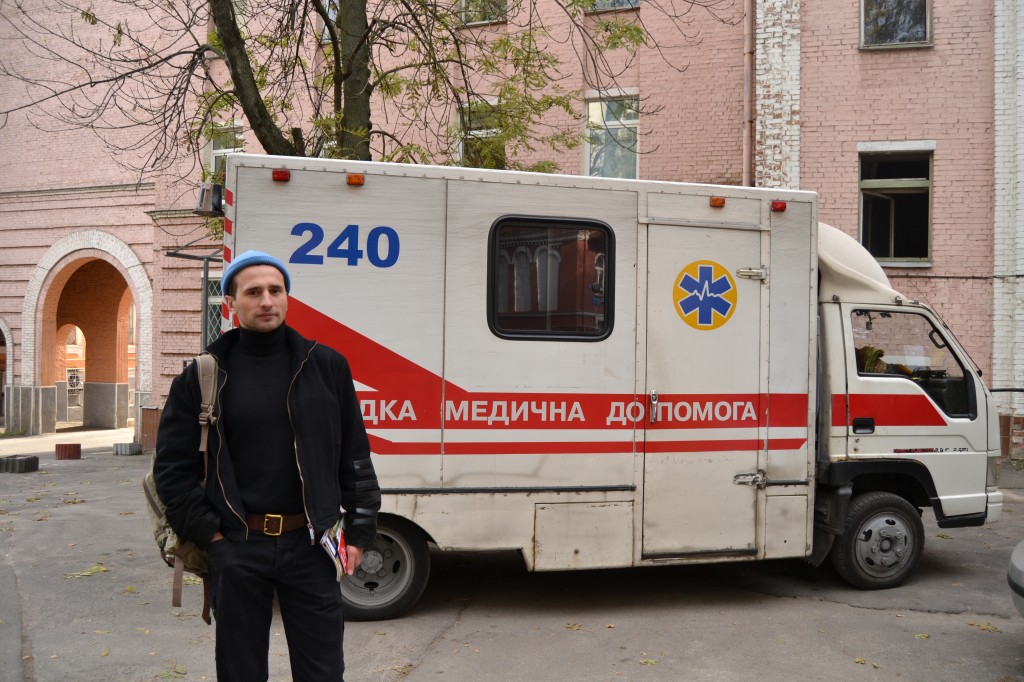
Det var ett starkt möte på deras engelsklektion, de var nyfikna på oss och ville gärna veta varför vi var där. Av hänsyn kände vi inte fotografera dem då vi hade pratat om väldigt känsliga ämnen och lovat dem att vara anonyma. Men vi tog ett kort på vår kontaktperson Mykola bredvid en av sjukhusets ambulanser.


Comments closed
Blandade åsikter om kärnkraft i Kiev

Dag 2 i Ukraina snart avslutad. Idag har vi upplevt Kiev mycket ingående då vi bland annat hamnat på en engelskkurs för ukrainier på en sportbar i ett gigantiskt köpcentra. Vi började dagen med att åka (fel) till Universitetet och genomförde två mycket lyckade fältstudier i den varma höstsolen. Frågorna som studien rörde var :
1. Är du miljömedveten?
2. Vet du om vilka energikällor Ukraina använder sig av och vad tycker du om det?
3. Vad tycker du om kärnkraft?

Vi valde att göra frågeställningen öppen (utom fråga tre, som kom till efteråt) och visst kunde de flesta svara på våra frågor, men de flesta av svaren kom att handla om det politiska läget och sociala frågor. De tendenser vi kan se av våra fältstudier från idag är
– De vi pratade med upplever att de inte blir lyssnade till av politikerna även om de skulle ha en åsikt om kärnkraft
– Kärnkraft ska inte ägas utav “fel personer”
– Kärnkraft är bra för då är Ukraina inte beroende av den ryska oljan
– Det finns ett intresse för miljöfrågor, men det finns ingen organisation som för en debatt kring energikällor (kärnkraft, vindkraft etc)
– Det finns andra frågor som prioriteras högre (både bland folket och politiskt) eftersom det råder ett missnöje kring hur den politiska, ekonomiska och sociala stabiliteten sköts.

Sedan gick vi på Tjernobylmuseet och det gav oss en nytt perspektiv på den fakta vi har. Bland annat insåg vi att okunskapen kring effekten av strålning och kärnkaft var så låg vid katastrofen att man tog till ett religiöst begrepp för att förklara händelsen. Museet var fyllt av religiös symbolik i form av bland annat änglar, äppelträn och ikoner. Vi träffade en väldigt intressant man från Sidney som forskade kring myter kring arkeologiska platser. Han hjälpte oss att förklara mytbilden som finns kring Tjernobyl, där människor såg strålning som Döden i materia. Även idag finns det en misstänksamhet mot Tjernobylområdet då Sideykillen berättade om en klasskamrat som  bott hemma hos en dam i Kiev, åkt på en dagstur till Tjernobyl och när han/hon kom hem så hade damen burit ut alla dennes möbler på balkongen.

Kvällen spenderades på en sportbar där vi också passade på att göra några fältstudier, men också att lära känna ungdomar. De var jättetrevliga och vi är nu hembjudna på ukrainsk middag hos en tjej som heter Julia. Vi fick även hjälp att skaffa ett ukrainskt simkort = hurra!
Dagen i bilder:

Comments closed

Kyiv

Nu är vi landade och klara. Tullen var ungefär en fjärdedelen så nogrann som växlingskontoren där man fick ett fint certifikat på att vi klarade av uppgiften. Det märks att vi är i forna Sovjetland, landet saknar egen kultur och använder mycket rubel. Vi bor i en lägenhet som är ganska fin, ett stort betongkomplex mitt i blaffan bland bilvägar och supermarkets. Imorgon ska vi besöka Tjernobylmuseet och göra fältstudier (för mer info om vårt projekt – se tidigare inlägg från oss). Det är lite oroväckande att engelskkunskaperna är så låga här. Vi hade inte väntat oss att kunskaperna skulle vara speciellt fenumenala, men efter att ha försökt konversera/fråga om hjälp av framför allt flera unga, har vi insett att det här med kommunikation kommer bli en utmaning! Det är dock inget som slår ned oss, och vi hoppas på att kunna skrapa ihop rikligt med material om attityder till kärnkraft här i Kiev och Tjernihiv. Vi tänkte ställa oss utanför Universitetet och fråga folk, vi tror att engelskakunskaperna kan vara fler där. Vi träffade dock en tjej i Kiev idag som kunde engelska, hon skulle förövrigt till Stockholm imorgon för att spela bordtennis (!!?!). Nu ska vi sova och invänta morgondagen 🙂

2 Comments

Ukraina och kärnkraft = ?

Hej!
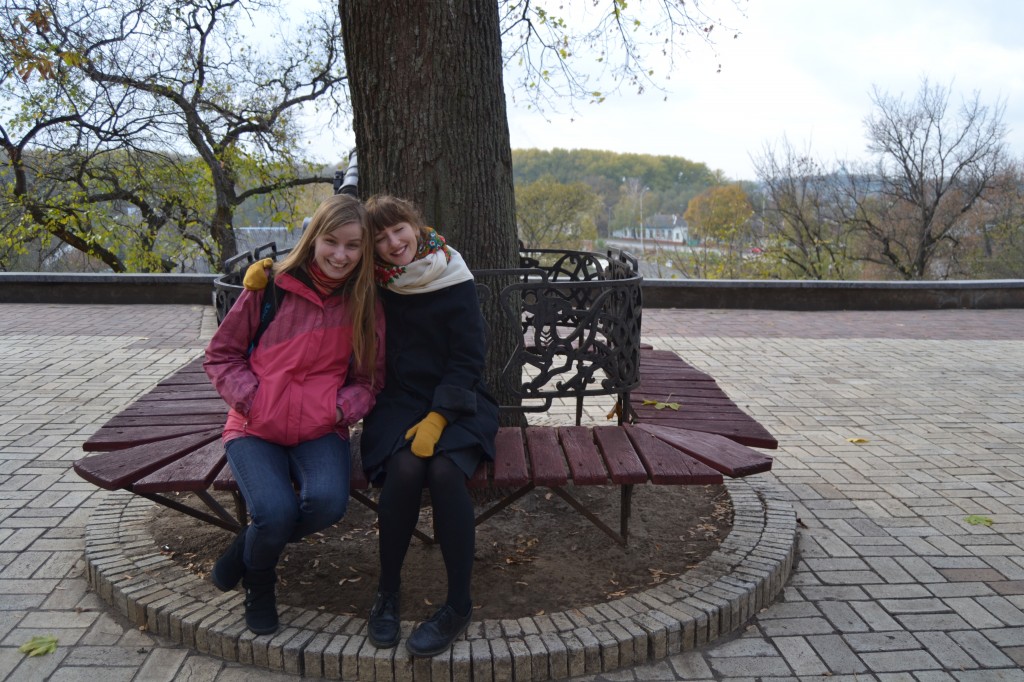
Vi har fått den stora äran att gästblogga på denna organisations website. Det tycker vi ska bli väldigt trevligt! På måndag vecka 42 lyfter Aerosvit VV270 från Arlanda terminal 5, som ska ta oss till Ukrainas stolta huvudstad Kiev. Anledningen till att vi ska bege oss dit är för att göra vårt projektarbete, som skall genomföras i årskurs tre på gymnasiet. I Ukraina ska vi bo hemma hos Olga i Tjernihiv, besöka Tjernobyls mark, möta ställföreträdande ambassadören Mårten och en ambulanssjuksköterska med flera!

Varför ska vi utsätta oss för strålning, försöka förstå kyrilliska alfabetet utan att komma vilse och fråga människor på gatorna om de är miljömedvetna? JO: Vårt syfte med projektarbetet är att undersöka attityder till kärnkraft i Ukrainas norra region Polissia.

Vi som ska genomföra detta projekt är:
Vi utanför våran skola Falu frigymnasium

Namn (från vänster): Sara Gommel & Alice Grudd
Ålder: 18 respektive 18 år
Program och skola: Samhällsvetenskapliga programmet, inrikting beteendevetenskap, Falu frigymnasium, Falun
Politisk ideologi: Liberal respektive partipolitiskt obunden vänster
Inställning till kärnkraft: Positiv respektive negativ

Följ oss gärna då vi kommer uppdatera våra intryck och upplevelser under vår tid i Ukraina. Detta kommer bli både en reseskildring och åsiktsventilatör kring kärnkraft och vårt projekt.

Vi hörs! / Sara Gommel & Alice Grudd, Falun, Sverige

Comments closed