Skip to content

Nuclear Power? Yes Please Posts

Scientific articles about releases from Fukushima

A bit of casual reading for the Easter holidays is offered here:

There are now a few scientific articles available from the arXiv preprint server. We may put some more detailed comments on them as soon as we have had the time to look at them closer ourselves, but they may be of interest to a broader audience.

The articles are (click on the link for each article in order to reach the arXiv page, then download the article as pdf or other format from the box in the upper right corner):

In an earlier blog post there were discussions in the comments regarding the difficulties in correctly identifying which isotopes that are found in the releases. These articles show some nice examples of pulse-height spectra from gamma spectroscopy measurements (incidentally, it is Figure 1 in all three papers). Figure 1 in the paper about analysis of rainwater in the San Franciso Bay area (page 6) clearly illustrates how difficult it can be to correctly identify relatively small peaks on a large background. The samples taken in the water pools at the Fukushima power plant have an even more complicated mix of radioactive nuclides, so this is part of the explanation to why there have been some strange reports regarding identified isotopes.

The last paper surprised me first due to the low levels of Iodine-131 detected, there was a peak value of 2.5 milli-Becquerel per cubic meter of air observed on 6 April, only slightly higher than the peak value observed in Stockholm on 30-31 March (2.15 milli-Becquerel per cubic meter, a tiny amount as explained here (in Swedish only)) and the other data are much lower, around 0.1-0.2 milli-Becquerel per cubic meter. The reason is due to the geography, Tokushima is located on the island Shikoku far to the south-west of Fukushima. Due to the dominating wind pattern, the detected radioactive nuclides have mainly traveled around the entire planet before reaching Tokushima, and therefore have much lower activity. However, the peak around 6 April is due to a temporary change in the wind pattern. Calculations from the Central Institute for Meteorology and Geodynamics (ZAMG) in Austria show examples of the wind patterns. Here is an example from 6-7 April for Iodine-131.

If anybody has any questions related to the articles, you are welcome to post them here and we will try to answer.

/Lantzelot

4 Comments

Tankeförbudets skapare yttrar sig

Birgitta Dahl(s) har yttrat sig i DN med 3 partikamrater.

Kortfattat tycker jag att någon som varit med som att köra Svensk kärnkraft i botten genom dåliga politiska beslut knappast skall försöka läxa upp andra om kärnkraftspolitik.

Birgitta Dahl, du är ansvarig för att Tankeförbudslagen skapades. När du fick veta att man ville ersätta Sveriges äldsta reaktorer med nyare och säkrare varianter, skapade du en lag som gjorde det förbjudet att ens sätta på papper en tanke om vad det skulle kunna kosta, eller hur en sådan reaktor kunde se ut.

Det hela slutade med att dina partikamrater kröp till korset 20 år senare och med skammens rodnad på kinderna erkände att den lag du skapat hade skadat Sveriges kärnkraftssäkerhet, och dessutom var minst sagt tveksam ur ett demokratiskt perspektiv.

Sossarna hade 25 år på sig att genomföra nedläggningen av Svensk kärnkraft genom att ordna ersättare. De misslyckades. Nu försöker en av huvudingenjörerna bakom det misslyckandet att läxa upp andra om kärnkraftspolitik med samma typ av trams-argument som de förstörde den svenska kärnkraften med…

Och Lena Sommestad, du säger på din blog: “Våga välja en hållbar energiframtid

Tja… vad sägs om att du börjar med att ta dina egna ord till hjärtat? Föregå med gott exempel genom att släppa den trygga, men unkna snuttefilt som är ditt kärnkraftsmotstånd. Våga se bortom en över 30 år gammal åsikt.

Vi har i Sverige sedan 2002 Hållbar Utveckling inskriven i grundlagen. Definitionen av Hållbar Utveckling beskrivs i Brundtlandkommissionens rapport Our Common Future. Läs speciellt kapitel 2, stycke 12.

Enligt den definitionen är avveckling av kärnkraft helt oförenligt med Hållbar Utveckling.

Hållbar Utveckling handlar bland annat om resurshushållning. Du företräder en politk som vill att uran, thorium och använt kärnbränsle skall vara skräp och oönskade restprodukter som inte duger till annat än att döda andra människor i krig med. Dessutom låser du fast oss vid en avfallslösning som måste hålla i 100 000 år, d.v.s. 3 000 generationer.

Med vidareutvecklad kärnkraft blir istället uranet, thoriumet och – framför allt – vårt använda kärnbränsle istället en energitillgång utan dess like, som i ett slag hjälper till att avlasta den enorma press vi sätter på klimatet, miljön och våra globala resurser. Dessutom kan vi med vidareutvecklad kärnkraft förinta DU-vapen och atomvapen precis som redan idag sker till viss skala. Dessutom kapar vi avfallslösningen från 100 000 år / 3 000 generationer, till 500 år / 15 generationer.

När man kan förvandla skräp och vapen till energiproduktion i människans tjänst, samtidigt som man besparar tusentals generationer att sitta barnvakt åt våra atomsopor, så är det omöjligt att säga nej till det, speciellt om man åberopar Hållbar Utveckling.

Lena Sommestad, före detta miljöminister… om du vill åberopa Hållbar Utveckling som argument för din föreslagna politik, se då till att du först har förstått innebörden av det du säger… för ditt eget argument tvingar dig att göra motsatt det du föreslår.

Erik Pelling har fått svar på sin blogg

Erik…

…eftersom du inte törs stå för dina ord eller tro på dem, varför skall jag tro på dem? Om du ärligt anser att kärnkraften är en tickande bomb, varför begär du inte snabbstopp nu?

Dahl och Sommestad får sina svar här.

Ett mer lämpligt svar till dig – eftersom du kör på skrämselspåret – hittar du här: Nedlagd kärnkraft kräver ansvar av motståndarna. Det är addresserat till Per Bolund, men eftersom din argumentation är densamma så kan du också känna dig träffad.

Sammanfattning: du har två alternativ…

Antingen begär du snabbstopp direkt…. nu… idag. Lägg motionen omgående att svensk kärnkraft måste snabbstoppas inom en månad.

Eller så tar du ansvar för att ersättare för det fossila och kärnkraften kommer på plats, med garantier och hårt förbundet personligt ansvar.

Gör du inget av detta skall du lämna kärnkraften ifred och istället ge den ditt fulla stöd så att den kan fungera bra.

32 Comments
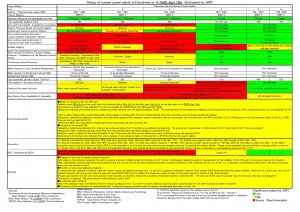
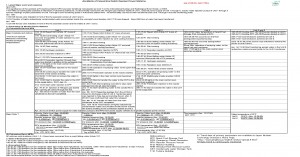
Day 39: TEPCO’s plan to restore cooling

It seems like TEPCO has realized it will take some time for them to restore the internal circulation pumps in reactor 1-3. The equipment has been drenched in salt water for some time now and the highly radioactive water in the turbine halls makes it very hard to do any kind of work. The normal cooling works by having water circulating through the core, then going through a heat exchanger that transfers heat from the water to an outer circulation loop that transports the heat to some kind of heat sink (in this case the ocean). The form of cooling that TEPCO has been doing since this accident started is to simply pump water into the cores, where it boils and creates steam that they then blow down into the wetwell. This means water is going into the building, but not leaving it. As anyone can realize that can’t go on forever until water comes out somewhere because the wetwell and containment doesn’t have infinite volume to store water. All the crap water that has been leaking into the sea is a result of this cooling method.

Since they have to try to prevent more leakage into the sea and they can’t get the internal cooling working TEPCO was left with the choice to build a new closed loop with new heat exchangers. All one really need is a pipe where one can put water into the reactor and another pipe where one can take the water out. Connect that to a heat exchanged and voila you have new circulation cooling without any need to fill the wetwell with steam. That is exactly what TEPCO is going to do.

That isn’t a solution without problems though. The reactor circulating through the core will become very radioactive due to the partially melted fuel, so any pumps and pipes used will be dangerous to approach. Everything has to be set up in such a way that once started it will run quite reliably, because repairing things won’t be easy. It would also be quite dirty if the pipes or pumps starts leaking so they better make them tight.  Still it seems like a better and more long term solution than what they doing right now and it seems to be necessary in order to get rid of the radioactive water in the turbine halls, in order to get access to the real pumps and restore/replace them. Right now water is leaking out as quickly as they can pump it away.

The above strategy is a part of a bigger plan to stabilize all the reactors, stop all leakage of radioactive material and put all 3 reactors into cold shutdown. TEPCO estimates it will take 6-9 months before its all finished. Among other things TEPCO will build up storage and processing facilities for the radioactive water, build covers over the damaged reactor buildings , somehow repair the breach in the number 2 wetwell (one article mentioned “sticky concrete”) and inject nitrogen into all the containments.  Atomic Power Review has a nice short list.

It is positive that TEPCO seems to have a long term plan, lets hope they will be able to proceed with all the steps without to many unexpected problems.

TEPCO has driven around inside the reactor buildings with a robot equipped with radiation detectors and the dose rates within the buildings are around 50 mSv/hour. A worker could only work there for 5 hours before they exceed the maximum allowed dose limit. I wonder how they plan to deal with that and I also wonder how they have measured it.

The status of the reactors are fairly unchanged. Temperature going down in the number one reactor.

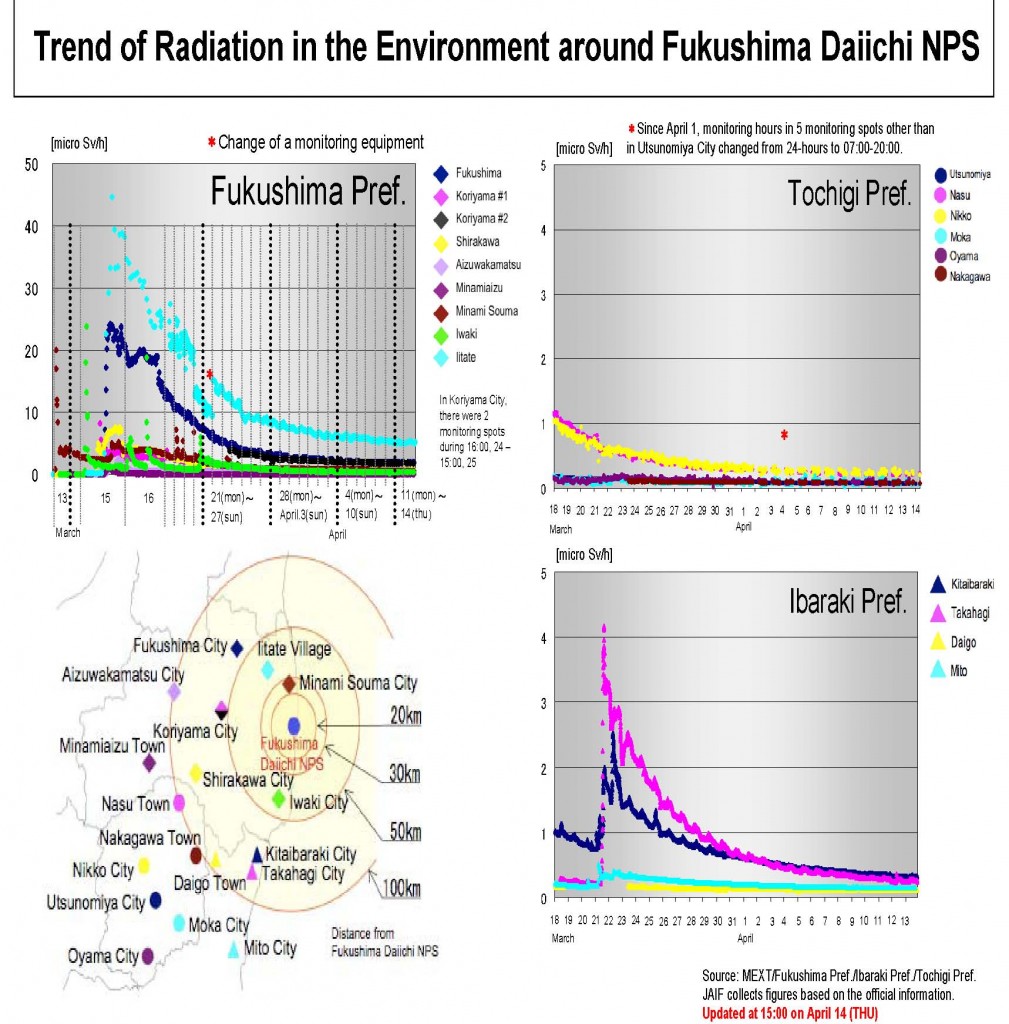
Dose rates are going down, the gamma dose rates are according to IAEA

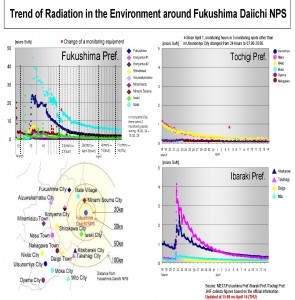
Gamma dose rates are measured daily in all 47 prefectures. The values tend to decrease over time. For Fukushima, on 18th April a dose rate of 1.9 µSv/h was reported. In the Ibaraki prefecture, a gamma dose rate of 0.13 µSv/h was reported; in all other prefectures, reported gamma dose rates were below 0.1 µSv/h.

Dose rates are also reported specifically for the Eastern part of the Fukushima prefecture, for distances beyond 30 km from Fukushima-Daiichi. On 16th April, the values in this area ranged from 0.1 to 25 µSv/h.

Only in a few prefectures, I-131 or Cs-137 is detectable in drinking water at very low levels. As of 16th April, one restriction for infants related to I-131 (100 Bq/l) is in place in a small scale water supply in a village of the Fukushima prefecture.


The areas with a ground contamination of more than 1 MBq/m^2 of Cs-137 sounds quite limited, seems like there are some hot spots west of Fukushima. From IAEA:


Only in a few prefectures, I-131 or Cs-137 is detectable in drinking water at very low levels. As of 16th April, one restriction for infants related to I-131 (100 Bq/l) is in place in a small scale water supply in a village of the Fukushima prefecture.

On 15th and 16th April, the IAEA Team made measurements at 44 different locations in the Fukushima area at distances ranging from 20 to 58 km, West from the Fukushima nuclear power plant. At these locations, the dose rates ranged from 0.6 to 37 µSv/h. At the same locations, results of beta-gamma contamination measurements ranged from 0.03 to 2.8 Megabecquerel/m2. The highest values were observed at distances of less than 30 km from the power plant.

On 17th April, the IAEA Team made measurements at 17 different locations in the Fukushima area at distances ranging from 20 to 62 km, North and Northwest from the Fukushima nuclear power plant. At these locations, the dose rates ranged from 0.4 to 3.3 µSv/h. At the same locations, results of beta-gamma contamination measurements ranged from 0.03 to 0.27 Megabecquerel/m2.

I hope someone will soon release maps of ground contamination so one can get a sense for how much land will be unusable.


Links(English)
World Nuclear News Robots investigate Fukushima reactors
World Nuclear News Roadmap for Fukushima Daiichi restoration
Reuters  Opposition to huge India nuclear plant hardens
Reuters Special Report: The nuclear industry’s trillion dollar question
Reuters Japan nuclear operator aims for cold shutdown in 6-9 months
Reuters Inside Fukushima

Blogs(English)
Atomic Power Review Tepco plans further details
NEI Nuclear Notes UCS Science: How Many Cancers Did Airlines Really Cause
Idaho Samizdat Fukushima’s future blueprints are incomplete, danger persists
Idaho Samizdat Impact of Fukushima on new U.S. reactor projects?
Depleted CraniumTerrified of Nuclear Energy, Germany Goes for Fossil Fuel

Links(Swedish)
DN debatt ”S uppdrag är att skrota kärnkraften”

Blogs(Swedish)
Mats Engström Granska Strålsäkerhetsmyndigheten
Begrundat och plitat Twitter om Fukushima och Tepcos plan (som just presenterades) radioaktiviteten ner om 3 månader
Flute Hänt i veckan 10-17 april, del 1
Sven Tycker Avveckla kärnkraften
Dr Angel Sanningen om Fukushima – vi klarar bara små doser åt gången
Motvallsbloggen Fukushima? Vadå, vi har ju inga jordbävningar här?

5 Comments

Nedlagd kärnkraft kräver ansvar av motståndarna

Av Michael Karnerfors, publicerad på SVT Debatt, 2011-04-18
Rubriken är annorlunda där för att SVT Debatt satte en annan rubrik än den jag valde.

Miljöpartiets energipolitiske talesman Per Bolund skriver på SVT Debatt att vi har goda förutsättningar att avveckla kärnkraften. Han understödjer sitt resonemang med samma argument som vi hörde 1980. Men den här gången går jag inte på det, tomma löften räcker inte. Det skriver Michael Karnerfors, Medgrundare av nätverket Nuclear Power Yes Please.

Miljöpartiets energipolitiske talesman Per Bolund frågar på SVT Debatt: ”Vad krävs då för att det ska vara möjligt att stänga svensk kärnkraft?  De svenska kärnkraftsförespråkarna har ett ansvar att leverera ett svar i  debatten: Vilka förutsättningar krävs egentligen för att det ska vara  aktuellt att avveckla kärnkraftsreaktorer i Sverige?”

Per Bolund, svaret du efterfrågar är enkelt:

– Det krävs att ni som inte vill ha kärnkraften tar bort de fossila bränslena först, för de dödar oss.
– Det krävs att ni tar ansvar för att ersättare för det fossila och kärnkraften kommer på plats.
– Det krävs att ni visar att ni tror på det ni säger, och inte bara kommer med tom skrämselretorik.

Sista punkten är den som avslöjar falskheten bakom din artikel Per  Bolund. Precis som när du i riksdagen gjorde dina anföranden inför  kärnkraftsbeslutet 17 juni 2010, går denna artikel ut på att skrämmas.  Ditt budskap till läsarna och svenska folket är ”Var rädd och känn skräck för kärnkraft”. Du använder dig av skrämselpropaganda.

Samtidigt säger du ändå inte ”Lägg ned all kärnkraft idag”. Du försöker  påstå att kärnkraften är skrämmande och oacceptabel, men – för att  parafrasera Tage Danielsson – bara nästan(!) oacceptabel, det är det som  är det konstiga. Efter alla skräckhistorier du framför vågar du ändå  inte framföra kravet att kärnkraften skall läggas ned idag.

Riksdagsledamoten Cecilie Ternfjord-Toftby (m) satte fingret på denna hyckleriets motsättning när hon 17 juni frågade dig:

”Om Miljöpartiet verkligen tycker att kärnkraften är ett potentiellt  katastrofscenario tycker jag att ert argument om att avveckla  kärnkraften successivt är oansvarigt, ansvarslöst och extremt cyniskt.  Eller är det så att er argumentation i dag bara är ren retorik?”

Om du verkligen hade trott på dina ord hade du krävt ett snabbstopp nu, i  denna sekund. Men det gör du inte. Alltså är du inte ens själv  övertygad att dina egna ord bär vikt. Du vill bara utnyttja dessa falska  påståenden för att sprida skräck och genom rädsla få svenskarna att  anpassa sig till er politiska linje om kärnkraften. Eftersom inte du  tror på orden tänker inte heller jag tro på dem. Varför skulle jag göra  det när du själv inte har övertygelse nog att faktiskt agera efter dem?

Att orden faktiskt är falska bekräftas dessutom av fakta, när vi  gemensamt ser vad dessa påståendevis ”fruktansvärda” olyckor faktiskt  (inte) har ställt till med. Harrisburg, Tjernobyl och Fukushima har  hittills dödat färre människor än vad som dör i trafikolyckor i världen  under en helt vanlig dag. Vad som är än värre är att under samma dag dör  tio gånger så många människor av luftföroreningar, främst orsakade av  fossila bränslen. I Sverige allena dör 5 000 människor per år en för  tidig död på grund av fossil bränslanvändning. Inte ens FNs mest  pessimistiska prognoser över Tjernobyl kommer upp i de siffrorna totalt  räknat.

Ändå vill du, Per Bolund, och ditt parti att allt eventuellt överskott  vi får i energiproduktionen skall användas för att lägga ned kärnkraft;  inte för ersätta de 200 TWh fossila bränslen Sverige fortfarande  använder varje år; inte för att sälja el till våra grannländer Tyskland,  Danmark, Polen, Estland, Lettland och Litauen, vars energiproduktion är  80 till 100% beroende av  fossila bränslen. Du och andra  kärnkraftsmotståndare tycker att överskottet i den svenska  energiproduktionen enbart skall läggas på att jaga bort Sveriges  koldioxidsnålaste och renaste kraftkälla, kärnkraften.

År 1980 blev vi i Sverige lovade av landets kärnkraftsmotståndare att  till år 2010 skulle de fossila bränslena och kärnkraften vara borta,  detta dessutom utan att de orörda älvarna byggdes ut. Vi vet idag att  det var ett tomt löfte. Kärnkraften finns kvar. De fossila bränslena  utgör fortfarande 1/3 av tillförseln till den svenska energibalansen.  Påståendena om att det är lätt att avskaffa det fossila och kärnkraften  uppfylldes inte.

Nu försöker ni, Per Bolund, dina partikamrater och andra  kärnkraftsmotståndare, att dra samma vals igen. ”Det går att”,  ”vi har  potential att”, vi kan ”utan problem” stänga ned kärnkraften. Samma ord  som vi hörde då. Samma löften. Och samma avsaknad av garantier.

Den här gången går jag inte på det. Per Bolund, du och alla  kärnkraftsmotståndare måste visa att ni tror på det ni säger och att ni  håller det ni lovar. Den här gången räcker det inte med tomma löften.  Prognoser är inte gott nog. Skräckhistorier är inte tillräckligt.

Vill ni – du Per Bolund, Miljöpartiet och andra kärnkraftsmotståndare –  lägga ned Sveriges renaste och säkraste kraftkälla krävs följande  förutsättningar. Antingen…

– Krav på totalt snabbstopp nu. Ni lägger snarast en motion att alla Sveriges tio reaktorer skall vara nedstängda inom en månad.

…eller…

– Ett helt fossilfritt Sverige.
– Att ersättare för kärnkraften finns på plats och är i drift.
– Personligt ansvar av alla som krävt och tagit besluten.

Dessa är förutsättningarna som krävs. Tänker ni inte ställa upp på dessa  krav stänger ni inte en enda reaktor i det här landet, utan ger  kärnkraften ert fulla stöd och arbetar för att den skall fungera väl.  Detta är valet ni har att göra och ansvaret ni har att ta för era krav,  annars är era ord tomma och inget värda.

3 Comments

German economy minister: “To prevent paper cuts, we must cut off our arms”

Ok, now it is official: Germany has gone batshit crazy.

Power firms should invest massively in coal and gas-fired power technology and renewable energy sources, Harry Voigtsberger, economy minister of Germany’s most populous state North Rhine Westphalia, said in the Financial Times Deutschland.

The original article can be read here (in german).

Angela Markel seems to be agreeing

In a document from Friday’s meeting obtained by Reuters, Merkel and her ministers laid out a six-point plan that includes a 5 billion-euro credit programme to support renewables.

It will also require building new gas and coal plants, Merkel said. “Gas and coal power plants were discussed… an accelerated exit from nuclear energy will lead to replacement power stations,” she said.

Why? So they can get rid of nuclear power…

This is about as stupid an idea as to say that in order to prevent paper cuts to your finger you should cut off your arms!

Sure… you achieve what you aimed for… but did you really concider the side effects before you took a knife and started carving?

Diese dummen Deutschen…

13 Comments

Day 35: Parts of the fuel has fallen to the bottom of the vessels

10:00(CET)/08:00(UTC)/17:00(JST)

Just a short update for today. The number 2 turbine building basement is filling up with water as quickly as TEPCO is pumping it out. No word is said about how the similar work in number 1 and 3 is proceeding. Temperatures are on a downwards trend in all reactors. Pressure in the number 1 pressure vessel continues to climb slowly, containment pressures are stable. Not much new happening on that front.

The Japanese Nuclear Society has reported that their analysis shows that parts of the fuel of all 3 reactors has melted and dropped down to the bottom of the vessels. Small parts of molten fuel has according to their analysis dropped from the rods, solidified when hitting the water and then sunk to the bottom forming small grains. The grains are easily cooled since they have large surface area to volume ratio and they don’t form a geometry that is prone to re-criticality.

They also state it is unlikely that there is a large amount of molten fuel at the bottom due to the low temperature readings in the bottom head. Nothing really surprising there either and I pointed it out some time ago. None of this is really surprising.

Zeolite containing sandbags have been put outside the water intake for the number 2 reactors. Zeolite is a porous material that readily adsorbs different molecules (adsorbption is the process of molecules sticking to the surface layers of a material, as opposed to absorption that means its sucked into the material itself). It was used to clean contaminated water within the TMI power planet after the meltdown there.

TEPCO has ordered storage tanks from the US to use to store radioactive water in. IMO I think TEPCO is trying to do perfect when perhaps they should think about doing things adequate. It seems like the volume of water is so large that temporary solutions, like erecting temporary pools, should be considered. But then again it is always easy to be an armchair quarterback on opposite side of the Eurasian continent (other seems to share my general idea though). I haven’t seen any new published analysis of the radionuclide content of the water in the number 2 basement, it would be interesting to see what it contains. The dose rates from the water should be going down due to the I-131 decay. Over 95% of the I-131 has decayed now.

Nitrogen injection into the number 1 containment continues, but pressure in the containment has stabilized. Meaning there must be a leakage somewhere. The leakage can’t be very large however.

The radiation levels in the groundwater is increasing in the plant area. Otherwise radiation trends are all downwards around Fukushima. From IAEA

Gamma dose rates are measured daily in all 47 prefectures. The values tend to decrease over time. For Fukushima, on 13 April a dose rate of 2.0 µSv/h was reported. In the Ibaraki prefecture, a gamma dose rate of 0.14 µSv/h was reported. The gamma dose rates in all other prefectures were below 0.1 µSv/h.

Dose rates are also reported specifically for the Eastern part of the Fukushima prefecture, for distances beyond 30 km from Fukushima-Daiichi. On 13 April, the values in this area ranged from 0.2 to 26 µSv/h.

In addition to the 7 measurements referred to in yesterday’s brief, (note- these measurements were made at distances of 25 km and 33 km not 32 km and 62 km as reported), 13 more measurements were made on 12 April at distances of 25 to 33 km, West and Northwest from the Fukushima Nuclear Power Plant by the IAEA team. At these locations, the dose rates ranged from 0.5 to 16.5 µSv/h. At the same locations, results of beta-gamma contamination measurements ranged from 0.05 to 2.1 Megabecquerel/m2.

Analytical results related to food contamination were reported by the Japanese Ministry of Health, Labour and Welfare on 13 April that covered a total of 98 samples taken on 4 and 11 to 13 April. Analytical results for 76 of the samples of various vegetables, pork, seafood and unprocessed raw milk in nine prefectures (Chiba, Fukushima, Gunma, Ibaraki, Kanagawa, Miyagi, Niigata, Saitama and Yamagata) indicated that I-131, Cs-134 and/or Cs-137 were either not detected or were below the regulation values set by the Japanese authorities. In Fukushima prefecture on 11 April, twenty samples of various vegetables were above the regulation values set by the Japanese authorities for Cs-134/Cs-137, and one sample of seafood (sand lance) and one sample of spinach were above the regulation values set by the Japanese authorities for both I-131 and Cs-134/Cs-137.


Links(English)
Reuters Burrial of reactors tricky

Blogs(English)
Depleted Cranium Fukushima: Now a level 7, but nothing changes
All things Nuclear What Happened at Fukushima Dai-Ichi?
Atomic Power Review Brief update: Temperatures at Fukushima Daiichi 1,2,3
Atomic Power Review Fukushima Daiichi: Reactor cores
Atomic Power Review FACTS: Decommissioning of nuclear power plants

Links(Swedish)
Newsmill Japanska strålsäkerhetsmyndighetens INES 7-gradering endast temporär
Newsmill Brittisk miljöaktivist: Antikärnkraftslobbyn har bluffat om strålningens hälsorisker
Newsmill Japans unga revolterar mot kärnkraften
DN debatt ”Vi fattar inga panikbeslut om kärnkraften”
DN debatt”Att stänga två reaktorer skadar svensk basindustri”

Blogs(Swedish)
Rättvisan framför allt Långsiktighet, var god dröj.
Lotta Olsson Energipolitik är långsiktig…
In Your Face Kan du vika tranor?
Dr Angels blog Fukushima är ännu en mardröm

5 Comments

Day 33: What does INES 7 mean?

22:00(CET)/20:00(UTC)/05:00

Not much newsworthy to report today. JAIF report as usual on the status of the reactors. No new NISA update on the reactor status in English but in Japanese, some values are taken from IAEA rather than NISA. Links to graphs are links to the blog #FNPP1 and Irradiation. Pressure is continuing to rise in the number one reactor but still quite low. Seems like there is some kind of leakage out of the containment in number one, otherwise one would have expected higher pressure due to the nitrogen injection. Pumping of water from the number 2 turbin building basement is ongoing but slow, TEPCO say the work can take weeks.


Reactor 1 Reactor 2 Reactor 3
Water level (meter)* -1.65 -1.5 -2.2
Flow rate(liters/min) 100 116.67 116.67
Core pressure (kPa) 1034 100*** 100***
Containment pressure (kPa) 190 100*** 100***
Wetwell pressure (kPa) 165 168
Feedwater nozzle temp (Celsius) 204.5 166.9 92.2 **
Bottom head temp (Celsius) 119.0 208.0 116.0
Containment dose rate (Sv/hour) 27.9 16.9
Wetwell dose rate (Sv/hour) 10.3 0.653 0.653
*Distance from top of assembly
– broken gauges or missing data
** Probably faulty reading
*** IAEA states atmospheric pressure

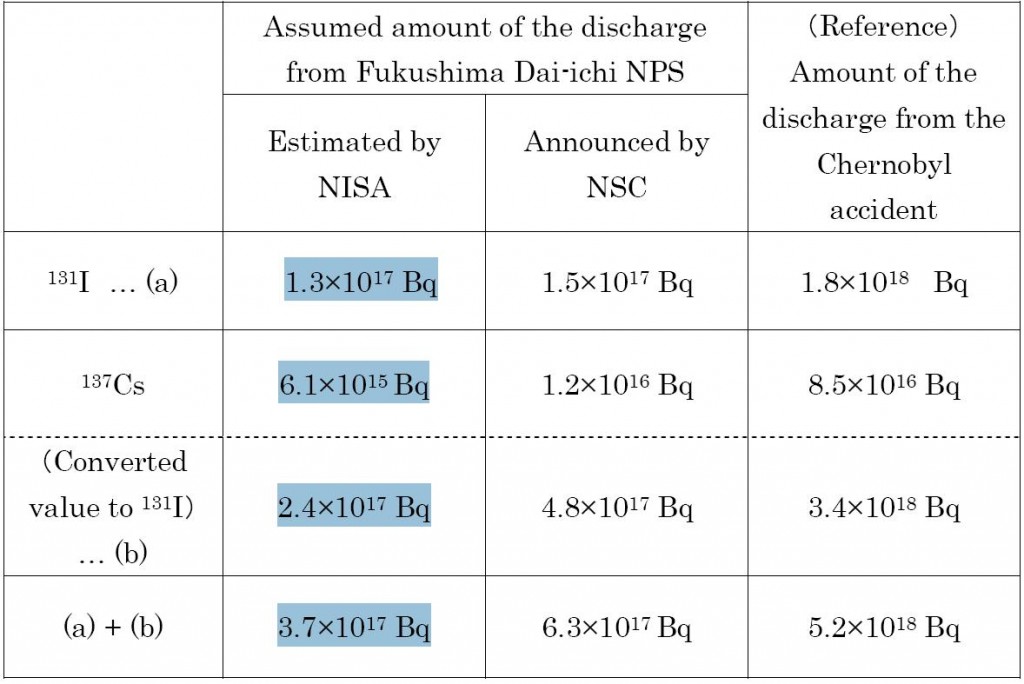
Yesterday NISA released this info about how much activity has escaped from the Fukushima reactors and compare it to Chernobyl.

Like I said yesterday its roughly 10%. The move from 5 to 7 on the INES scale has gotten a lot of media attention, but what does it really mean? Nothing became worse yesterday than it has been, no dramatic event changed the rating etc. What happened is that NISA estimated that the release of I-131 and Cs-137 is beyond a treshold of what is considered “Major release of radioactive material” acording to the level 7 definition:

Level 7.

  • Major release of radio active material with widespread health and environmental effects requiring implementation of planned and extended ­countermeasures

That is all, NISA hasn’t made any statement about health impacts. They certainly don’t claim the effects will be as severe as the effects where from Chernobyl. One can at this point exclude the possibility that Fukushima will be as severe. So what are the differences?

  1. In Chernobyl 134 workers got exposed to high enough radiation(over 1 Sievert) to develop symptoms of acute radiation sickness, 28 of them died during the first year following the accident,  two others died from injuries not related to radiation. A lot of kids got exposed to I-131 due to no quick warnings not to drink milk and no supply of iodine pills. 4000 kids got thyroid cancer and 15 died due to it. 600 000 liquidators where exposed to doses around 100 mSv.

    In Fukushima so far 22 workers have been exposed to over 100 mSv, the highest getting 198 mSv, thus there where 30 000 times as many people exposed to 100 mSv or more in Chernobyl compared to Fukushima so far! The only two deaths at the power plant was direct deaths due to the tsunami. No one has died due to the nuclear accident itself, not from any of the explosions, not from radiation etc. Dose estimates for the people outside of the evacuation zone, especially the people within 30km, has not been given so far.

  2. In Chernobyl the radionuclide release was directly into the atmosphere and it was going on for several days driven by the graphite fire. Other radionuclides than I-131 and Cs-137 could easily escape and was spread (even though Cs-131 is the biggest issue). The areas around Chernobyl where not quickly evacuated. The core blew apart due to a runaway chain reaction(a inherent weakness to that design that was well know, but the Russians ignored it and built them anyway),

    In Fukushima it is still not entirely clear what caused the majority of release, it was either the venting of the containments or due to the breach in the number 2 wetwell. Regardless of the cause the atmospheric emissions was much smaller in magnitude, took place during a shorter time period, after the civilian population had already been evacuated! We are seeing pretty much only Iodine and Cesium(trace levels of other radionuclides have been detected, but no large release of them has been reported). The cores are largely intact, two of the containment vessels are likely breached but by far from cracked open like eggs. The cause of the emissions are partial meltdowns of the cores, a much slower process than the runaway explosion in Chernobyl. After the first few days of venting where over the majority of leakage goes into the sea, although that is not a “good” thing it is unlikely it will have any measurable impact on health. Anything going into the sea will get diluted fairly quickly. Even if the total release will increase to the same size as the ones from Chernobyl the different release path means it will have much less impact on public health or the environment.

Those two points alone mean that Fukushima is not another Chernobyl. The public health effects will not be as large and the environmental impact will be smaller. It remains to be seen how large surface areas have gotten high Cs-137 fallout, that will be the determining factor in how large areas will be unfit for farming or living on.


Links(English)
Reuters Japan struggles with nuke plan
World Nuclear News Fukushima workers start emptying trench water

Blogs(English)
Atomic Insights Rational Answer to Carl Pope’s Dismissal of Nuclear Technologies
Depleted Cranium Shameful Reporting From the New York Times
NEI Nuclear Notes Wednesday Update
Atomic Power Review Boiling Water Reactors Part 1 and Part 2
Atomic Power Review Fukushima Daiichi developments… Tuesday evening
Atomic Power Review A couple of afternoon updates….

Links(Swedish)
Aftonbladet Tyvärr har jag fått rätt
SvD Fukushima inte lika allvarligt som Tjernobyl

Blogs(Swedish)
Den blinde Argus
Kortsiktighet, instabilitet och populism
Begrundat och plitat Fukushima, risken för nya olyckor, och sanningens ögonblick
Tänkvärt? Eller inte Fukushima likvärdig med Tjernobyl.
SNF’s blog Fukishima kan vara värre än Tjernobyl
Nolow Kärnkraftverk
Hovbergs blog Nukleära utrymningsområden<
Röda Berget Skräcken för strålning skapar nya offer
Harald i Uppsala Reflektioner 13 april

41 Comments

“Mummy, mummy, there’s a nuclear monster!”

One of the frustrating parts about being a proponent of nuclear power is when people rag at you for showing them facts that nuclear accidents aren’t that big a deal. After all… “everyone knows” that a nuclear accident is a catastrophe unlike all others and that a “meltdown” means instant death to thousands of people, cancer to millions and huge tracts of land made uninhabitable for centuries… as told by various groups out there.

So when you point out to them that the TMI meltdown had zero casualties, that the Fukushima triple meltdown and explosion/fire in a fuel pool is presently holding the zero and that the prognosis is slowly starting to look hopeful, and that the current death toll from Chernobyl correspond to the number of people killed in US motor vehicle accidents in one day, people tend to take great offense at you questioning the supposed “truth” about nuclear power. I have been called quite a few unflattering things for this heinous crime of not being upset about nuclear accidents and – even more blasphemous – trying to calm other people about them as well.

Therefore it was with a great sense of recognition I read Lewis Page’s piece “Mummy, mummy, there’s a nuclear monster!” in “The Register today. I won’t steal his glory but I will point out two core pieces and quote them:

This is the problem that everyone faces, who describes nuclear incidents as they really are – that is: insignificant. You are accused of being heartless, of failing to care about or empathise with people who are terribly frightened. You have committed the same sin as bracingly telling a toddler that there is no monster under his bed and that he should go back to sleep.

Part of the problem here is that in the case of nuclear dangers it is rather as though the toddler had a mentally troubled aunt or uncle who, in addition to telling the kid fairytales at story time, insists that the monsters in the stories are real.

The people in charge of story time here are the media, and like many of us finding ourselves troubled by bizarro in-laws, the media fails – seldom really even tries, often enough – to prevent the mad aunt telling the kids rubbish.

[….]

Some of us at least are getting a bit sick of the idea that you simply aren’t allowed to tell frightened people quite bluntly to act their age – and we’re getting more than just a bit sick of irrational or unscrupulous fairytale-spinners making them frightened in the first place.

That is pretty much it: you are considered a villain for telling people “Oh stop whining you baby, it’s just a nuclear accident!”. You’re being painted as an arsehole for not playing along with paranoia and prejudice. They are calling you foul names and questioning your moral character for trying to make people less scared.

It’s one of those things that makes me want to bang my head against the desk and tell people to go overdose on their stress- and angst-hormones if they are so much in love with them. It feels like getting yelled at by a drunk relative for taking his/her bottle away. Why would I bother?

Well… I must, because it’s the right thing to do. If I didn’t, then I’d be an arsehole for real, wouldn’t I? If I firmly believe that someone is wrong in their actions and beliefs, and that they are hurting because of these beliefs, would you suggest I play along? Or should do as I would to the same human being if they had been 25-75 years years younger, by telling them that there is no monster waiting to eat their toes?

The worst part is – of course – that some people have a very strong self-interest in keeping others scared of the nuclear monster under the bed. Let me show you another example…

With “information” like that, is it any wonder that people are frightened? Those who made that video are the ones that should be called heartless, for using and abusing people’s fears simply to advance their position and get more influence.

But good news are no news. It’s easier to sell a story of Doom & Destruction than telling people that things are actually not very bad at all. You’re considered the weird one for not being a paranoid alarmist professing the impending end of life as we know it.

What can we do to break the trend? How can we make people stop being scared of things that are not scary, and focus on the real dangers out there, such as fossil fuels that are killing literary millions of people every year?

Facts… keep speaking the facts… that’s how you eradicate fear, prejudice and misconceptions. I have so far not met a single person who have learned the facts about nuclear power and who has since remained genuinely scared of it! Keep pushing the facts…

Let me close up this post with a video of a fellow swede that has opened up many people’s eyes and minds by showing the cold hard facts in a very funny and interesting manner: Hans Rosling. Enjoy… I did. 🙂

EDIT: as commented below… there is more on www.gapminder.org. 😉

18 Comments

Miljöpartiets kärnkraftsutspel förkastlig populism

Världens kärnkraftsmotståndare har kastat sig över olyckan i Fukushima med ohöljd frenesi. Innan man ens lyckats få hejd på olyckan och börjat samla in fakta eller göra analyser börjar ropen skalla på avveckling. Miljöpartiets Maria Wetterstrand och Lise Nordin säger i Dagens Nyheter 2011-04-08 “Det är hög tid att även den svenska regeringen drar några slutsatser för den svenska energipolitiken”. Att dra förhastade slutsatser och komma med ogenomtänkta beslut är det som sänkt svensk kärnkraft. Och nu vill Miljöpartiet begå samma misstag igen.

Skillnaden mellan en kärnkraftsmotståndare och någon som arbetar med eller förespråkar kärnkraft är att för motståndaren är Fukushima slutet på diskussionen, medan för arbetaren och förespråkaren så är det början. Miljöpartiet vill redan nu, innan olyckan i Japan ens är till ända, kasta fram politiska beslut om kärnkraften i Sverige. Detta är inte bara förhastat, det är farligt. Det var exakt den typen av beslut som efter händelserna på Three Mile Island och i Tjernobyl gjort att svensk kärnkraft nu fungerar sämst i Europa.

Nordin och Wetterstrand säger att man “utan problem” kan stänga två reaktorer under mandatperioden. Inte en enda villaägare som nu svär över elräkningen efter att en (1) reaktor krånglade i vintras håller med om det. De ser att förslaget inte är “utan problem”.

I vintras gick den svenska effektreserven och importen för fullt för att täcka upp bortfallet av reaktorn. Smutsig olja och gas ökade i ett slag de svenska utsläppen av koldioxid med upp till 40 000% per kiloWatt-timme. Det är inte “utan problem”.

Tyskland har i panik efter Fukushima stängt åtta reaktorer i tre månader. Men varje TWh kolkraft och olja som ersätter kärnkraft dödar 25-35 personer på grund av luftföroreningar. Det tyska beslutet dödar alltså 5-7 personer per dag och upp till 450-650 totalt. Detta medan Fukushima, trots tre pågående härdsmältor och en explosion i en bränslepool, inte annat än lätt skadat några i räddningsstyrkan och ingen i allmänheten. Det förhastade tyska beslutet är allt annat än “utan problem”.

Ända sedan 1970-talet har vi i Sverige lyssnat på vackra löften ifrån politiker som Wetterstrand och Nordin; politiker som lovar stort i energifrågan men levererar lite. För 30 år sedan hette det att till 2010 kommer det förnybara att kunna ersätta kärnkraften och det fossila. Vi vet att det inte blev så. Men ingen av de politiker som tog detta verklighetsfrånvända beslut finns idag kvar att utkräva ansvar ifrån.

Nu säger det avgående språkröret Maria Wetterstrand att det “utan problem” går att stänga fler reaktorer, trots att den sortens löften havererat svensk kärnkraftsindustri. Det kan hon göra, för hon vet att inte ens under denna mandatperiod kommer hon att behöva ta ansvar för vad som händer om beslutet är dåligt.

Vi säger att det räcker nu. “Prognoser” är inte gott nog. “Potential” är inte gott nog. Att politiker i en debattartikel påstår att nedstänging är “utan problem” är inte gott nog.

Maria Wetterstrand och Lise Nordin, om ni vill stänga svensk kärnkraft kräver vi att ni tar personligt och fullt ansvar för att ersättare kommer på plats. Era vackra ord ger oss inte en enda kiloWatt-timme. Kraftverk är vad som ger oss energi, inget annat. Först när ni har sett till att dessa finns på plats och är i produktion är det tillfälle att kräva nedstängning av reaktorer i Sverige, inte en sekund tidigare.

Tvåhundra TWh fossil energi går in i den Svenska energibalansen varje år, energi som årligen dödar ca 5 000 svenskar och orsakar miljardkostnader i sjuk- och hälsovård. Det påstådda energiöverskottet på 23 TWh som Maria Wetterstrand och Lise Nordin utlovar kommer att lämna 90% av det fossila kvar. Trots detta vill de istället stänga ren svensk kärnkraft. Det är inte “utan problem”.

för det oberoende nätverket Nuclear Power Yes Please

Michael Karnerfors, civ. ing, Lund
Johan Kihlberg, fysikstuderande, Stanford
Mattias Lantz, forskare i fysik, Uppsala universitet
Johan Kreuger, ekonomistuderande, Handelshögskolan i Stockholm
Nils Rudqvist, doktorand i strålningsfysik, Göteborgs universitet
Klas Färd, Elektroingenjör Stockholm

Bloggar om artikeln:

92 Comments

Day 32: Fukushima raised to 7 on the INES scale

11:20(CET)/09:20(UTC)/18:20

NISA has increased the level of the Fukushima accident to 7 on the INES scale, 7 is the highest level on the scale. Before Fukushima only Chernobyl was on that level,  the descriptions of levels 5, 6 and 7 are these

Level 7.

  • Major release of radio active material with widespread health and environmental effects requiring implementation of planned and extended ­countermeasures

Level 6.

  • Significant release of radioactive material likely to require implementation of planned countermeasures.

Level 5.

  • Limited release of radioactive material likely to require implementation of some planned countermeasures.
  • Several deaths from radiation.
  • Severe damage to reactor core.
  • Release of large quantities of radioactive material within an installation with a high probability of significant public exposure. This could arise from a major criticality accident or fire.

The levels are as you can see quite loosely defined. We have been expecting it to be be increased from 5 but it has not been clear if it was gonna end as a 6 or a 7. Up until today Fukushima was a 5 on the scale due to the severe core damage(any one of the items on the list for INES 5 is enough by itself to classify it as a 5). Now NISA has upgraded it due to the large releases of radioactive material, even though there is yet no assumption that the release will lead to large scale health effect.

World Nuclear News has published a map from IAEA of the fallout from Fukushima (attached at the end) and writes this about how much radioactive materials has been released in total.

“As a result of re-evaluation, total amount of discharged iodine-131 is estimated at 1.3×10¹⁷ becquerels, and caesium-137 is estimated at 6.1×10¹⁵ becquerels. Hence the Nuclear and Industrial Safety Agency has concluded that the rating of the accident would be equivalent of Level 7.”

One can see from the map that the majority of fallout has landed in a limited area, it remains to be seen how large parts of that area wont be fit for agriculture anymore.

Chernobyl released 17.6*1017 Bq of I-131 and 85*1015 Bq of Cs-137, so compared to Chernobyl we are looking at around 10% of release of the volatile fission products.

However TEPCO also announced today that the total amount of radioactive material released might exceed that of Chernobyl if they can not stop the leakage of radioactive water. It is good to keep in mind though that this release is going into the sea where it will quite quickly dilute, in Chernobyl everything went into the air and then could be spread over farmland, cities etc. Anything going into the sea will have very limited, if any, health impact.

Chief cabinet secretary Edano made this statement about the INES level.

“The change in the level reminds us the accident is very big. What’s different here from the Chernobyl accident is that we have not yet seen a direct impact on the health of the people as a result of the nuclear accident. The accident itself is big, but we will make, as our first priority, our utmost effort to avoid any health impact on the people.”

This statement is very important and it highlights a fact that media now seems to neglect, the raising of the INES level is due to the total amount of radioactivity released (most if it was released during the first week), not due to expected or already occurring health consequences. So far the Fukushima accident has not killed a single person and it seems unlikely the radiation dosages to the public have been so large that they can cause any significant(i.e detectable) increase in cancer rates. The increase on the INES scale doesn’t mean the situation has turned dramatically worse, it is just a raising of the level due to the high releases that occurred initially.

The Neutron Economy has a very good blog post, Fukushima Daiichi to INES Level 7 – Some Numbers on Why, about the INES rating, Fukushima and eventual consequences if one applies the Linear No Threshold model of the risk of radiation exposure.


Links(English)
CNBC Nuclear Power Fears at New Heights Despite Safety, Viability
World Nuclear News Fukushima moved to Level 7
CNN Japan nuclear disaster tops scale
BBC Fukushima: What happened – and what needs to be done
Reuters Japan raises nuclear crisis to same level as Chernobyl

Blogs(English)
NEI Nuclear Notes “Years of Unchallenged Mythology”
Depleted Cranium On the Ground Pictures of Fukushima
Atomic Insights As Fukushima gets moved from 5 to 7 remember that 0 (deaths) is still an applicable number
Idaho Samizdat Fukushima accident rating from 5 to 7 on INES?
Atomic Power Review Fukushima Accident: Level 7.
Atomic Power Review Level change note…
Atomic Power Review APRA Special: Observations on Fukushima Daiichi

Links(Swedish)
SvD Fukushima inte lika allvarligt som Tjernobyl
Aftonbladet Lika allvarligt som Tjernobyl
Expressen Japan skakat av nya skalv idag
SvD Japan uppgraderar kärnkrafthaveriet
DN Fukushimaolyckan på Tjernobyl-nivå

Blogs(Swedish)
Röda Malmö Vidden av katastrofen växer
APSO sverige Spridningen av Cesium 137
Blott sverige svenska preppers har Fukushima på samma nivå som Tjernobyl
Den svenska argus Sjuan kom

22 Comments